Almost nobody drives past a good facility to reach a better one. The search radius for self-storage is tight, often a handful of miles, and it collapses further in dense metros. That geography changes everything about the campaign: a facility competes against maybe four or five real alternatives, the map pack is close to the entire battlefield, and small differences in reviews, hours, and how clearly prices are presented decide the rental.
The trigger is almost always a life event with a deadline attached. A lease ends, a house closes, a student moves out in May, a parent downsizes, a marriage ends, a contractor needs somewhere for tools. That means the searcher already knows they need storage and is not being persuaded of anything. They are checking three things in order: does a unit that fits exist, what does it cost, and can it be reserved now. A site that makes any of those three hard loses to one that does not.
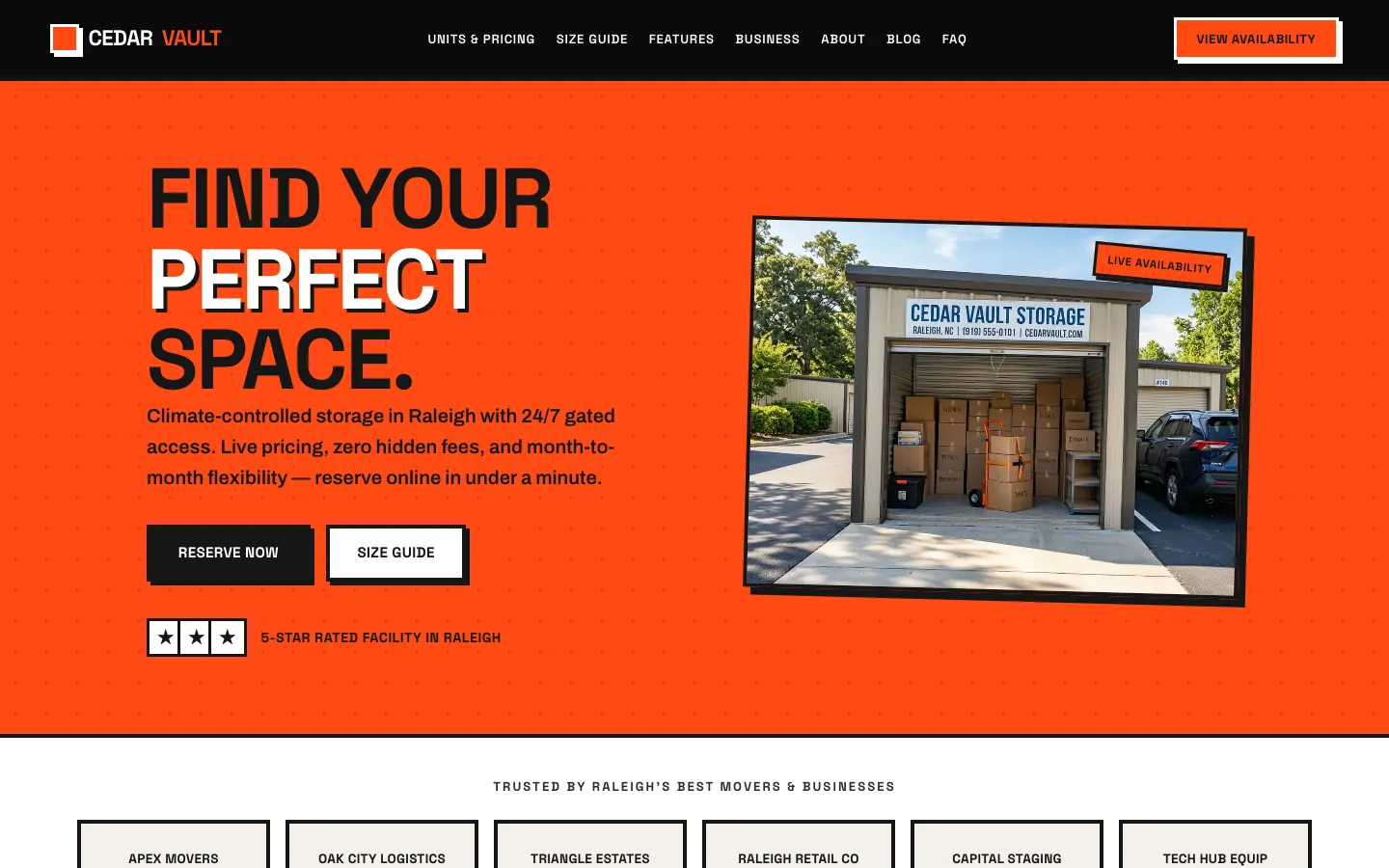
The structural threat is the aggregator. Marketplace listing sites bid aggressively on exactly the terms operators want, rank well organically, and then charge for the tenant they intercepted. Operators can win that traffic back, but only by being unmistakably better on the things a marketplace cannot fake: real photos of the actual property, live availability, a size guide that answers the question the marketplace listing does not, and pricing that is visible without a phone call.