Growth campaigns · Boutique Hotel

Growth campaigns for boutique and independent hotels

A guest types your property name, sees an agency listing above you, and books the same room through somebody else's checkout. Winning that click back is the least glamorous job in hotel marketing, and the events business sitting behind it is one no agency can sell for you at all.

Live Boutique Hotel demo

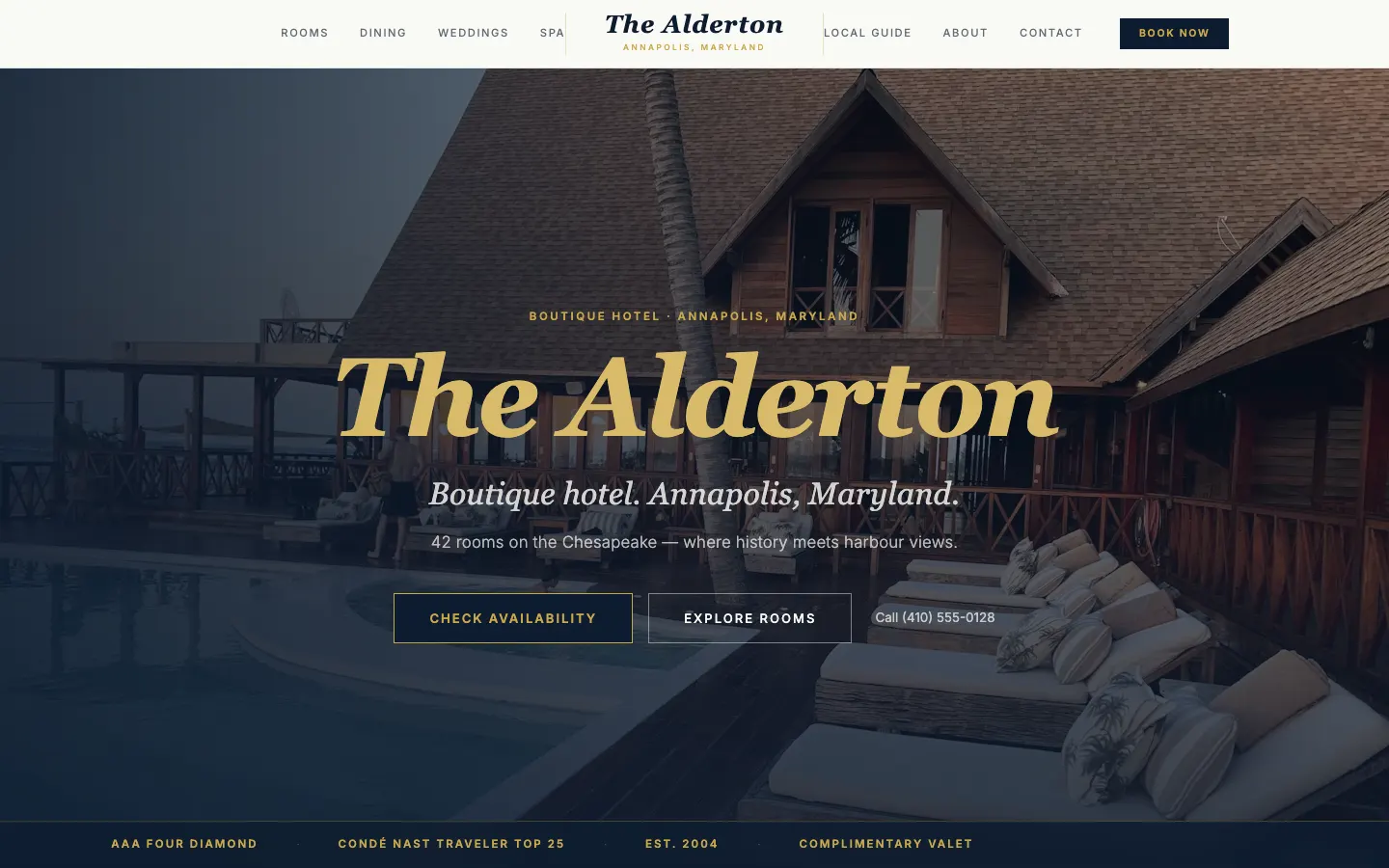
The Alderton

42-room Annapolis harbour hotel: direct-booking availability widget, room gallery, weddings inquiry flow, and a Chesapeake local guide.

Direct Booking + Weddings Flow. The Alderton makes the direct path the easy one: availability a traveller can actually work on a phone, a weddings and room-block enquiry flow the agencies cannot sell against, and neighbourhood guides that reach travellers weeks before dates are fixed.

Open the live demo → Boutique Hotel websites

The Alderton — live boutique hotel website built on WorkspaceCMS
Where the demand is

How boutique hotel buyers actually search

No other business in this cluster loses so much margin to intermediaries. A boutique hotel typically finds that the travel agencies bid on its own brand name, so a guest who searched specifically for the property still arrives through a channel that takes a commission on the stay. The first job of a campaign here is unglamorous and immediately measurable in margin: make the direct path the obvious one for people who already know your name, then widen out from there.

The research pattern is long and multi-device. A traveller starts on a phone weeks out with a destination and a rough date, moves to a laptop to compare, opens six or seven tabs across the agencies, review sites and property sites, and books days later. Along the way they are not comparing room rates alone. They are reading about the neighbourhood, working out what is walkable, checking parking, and deciding whether the property has a point of view. Independent hotels win that comparison on character, and character does not survive an agency listing template.

Underneath rooms sits the revenue an agency cannot sell for you at all: weddings, room blocks, corporate meetings, and small events. Those enquiries come through search with completely different language, arrive from planners rather than travellers, and carry a sales cycle measured in months with a site visit in the middle. Add hard seasonality shaped by your local calendar, a boating season, a graduation weekend, a festival, and shoulder periods where paid spend earns much more than it does when you are already full.

The keyword clusters we build around

  • Branded and near-brandedYour property name, plus name with booking, rates, or reviews. The highest-margin traffic you can get, and the traffic agencies compete hardest for. Protecting it is the first win.
  • Destination and neighbourhood stayHotels in the historic district, waterfront hotel, walkable to the harbour. Travellers orienting themselves geographically before they know any property names.
  • Weddings and events venueWedding venue with rooms, rehearsal dinner, room block for a wedding. Planner language, long cycle, high value, and completely outside the agency channel.
  • Occasion and trip-type staysAnniversary weekend, dog-friendly hotel, romantic getaway, business travel with meeting space. The searcher has a constraint that filters most properties out, and a page that answers it wins them.
  • Local guide and things to doWhat to do in the area, best restaurants nearby, seasonal events. Top-of-funnel content that gets you into a traveller's research long before dates are fixed.
The campaign

Three ways we go get the traffic

Local SEO, AI-assistant visibility and paid media, run by the agency team that has been doing it since long before WorkspaceCMS existed.

Local SEO

Travellers orient by place long before they know a single property name: walkable to the harbour, somewhere near the convention centre, anywhere with parking on a festival weekend. Those are the queries an independent can win while the agencies fight over rate grids. So we build the neighbourhood and trip-type pages that get you into the research phase, structure room types, check-in windows and pet policy so the map result carries your version rather than a syndicated listing, and give weddings and room blocks their own pages, because a planner shortlists from what she can read without contacting anybody.

AI search visibility

Itinerary planning is now handed to ChatGPT or Claude outright: four nights, a dog, no car, near the old town. The assistant answers from properties whose specifics are written down, so the winning detail is dull and precise. Walking minutes to the places guests actually ask about, what the parking arrangement really is, which rooms take a second dog, whether the lift reaches the top floor, when someone is on the desk. Copy about a lovingly restored building gives an assistant nothing quotable, and AI Overviews cite the property that stated it plainly.

Paid media

Two things reliably earn on a hotel account and very little else does. The first is holding your own name on the screen where agency listings sit above you, because that traveller has already chosen the property and only the checkout is still in question. The second is events, where one wedding or room block is worth a run of room nights and the planner is searching venue language nobody else bids on. Pacing then follows occupancy: heavier through the shoulder weeks and the quiet midweek, restrained when the property is already filling itself.

Campaigns are an add-on to a WorkspaceCMS plan and start from $499/mo. The plan itself is a monthly subscription. The build is included, the platform is not free. Local SEO campaigns are scoped to single and multi-location businesses rather than national or global SEO. Paid search management covers service businesses rather than online stores; ad spend is billed by Google or Meta directly to your own account. Full campaign scope → · Plan pricing →

What gets in the way

Six things that hold boutique hotel sites back

01

Paying commission on guests who searched for you by name

Someone types your property name and books through an agency listing on the first screen. The stay happens either way, but the margin does not. A direct-booking campaign starts by making sure your own booking path is the fastest, clearest answer to your own name.

02

A booking widget that loses people mid-flow

Availability that takes three clicks to reach, a calendar that fights a phone, a rate that changes on the confirmation screen. Travellers abandon quickly and go back to the interface they already trust. The direct path has to be easier than the agency one, not merely present.

03

Character that disappears in the comparison set

The reason a guest picks an independent over a chain is specific: the building, the bar, the view, the neighbourhood. On an agency listing all of that flattens to a star rating and a thumbnail. Your own pages are the only place that argument can be made properly.

04

Weddings buried behind the room inventory

Event enquiries need capacities, layouts, seasons, catering arrangements and a real gallery, and planners want to shortlist before contacting anyone. When weddings live as one line in the navigation, the property never enters that shortlist.

05

Shoulder season treated the same as peak

Running identical spend and identical messaging in a sold-out month and a quiet one wastes budget in the first and misses the second. The calendar should drive both the offers and the paid pacing rather than being noticed after the fact.

06

Review presence split across the platforms guests read

Guest sentiment lives on travel sites, map listings and social, and rarely surfaces on the property's own site where it would influence a booking decision. Pulling that evidence into the pages travellers actually land on closes the gap.

Campaign add-ons

Pick the campaign that fits the market

Every package below is bought from your dashboard once your site is live. Names, prices and deliverables are read from the catalog at page load, so what you see here is what you would be buying.

Questions

Boutique Hotel marketing, answered

Can you stop the travel agencies bidding on our property name?

Not entirely, because much of that bidding is written into the distribution agreements you already signed. What changes is the screen itself: your own result made the clearest one on it, and availability reachable in fewer taps than the listing offers.

Do you touch our rates, allocation or channel manager?

No. Revenue management, rate parity and inventory stay with your team and the systems you already run. We work the demand side and make sure the site hands a traveller to your booking engine without losing the dates they had already chosen.

Our booking engine is awkward on a phone. Is that our problem or yours?

It becomes the campaign's problem straight away, because a traveller who fights a calendar widget retreats to the agency interface they already trust. We work with your engine's embed so availability opens in one tap from every room and offer page.

We sell out in high season without help. What is the campaign doing then?

Working on the months that do not fill themselves. Peak weeks need little beyond holding your own name, while shoulder season, midweek business travel and the wedding calendar are where content and spend genuinely earn their place.

Guests leave reviews on the travel sites rather than with us. Does that matter?

It matters that the sentiment never reaches the page where the booking happens. Bringing verified guest reviews onto the room and property pages puts that argument in front of a traveller at the exact moment they are weighing you against a listing.

Your free site is one click away

Ready to grow a boutique hotel business?

Get the site built, then put a campaign behind it. Start online, or talk it through with a strategist first.

Want the full picture? See what a campaign includes