
Growth campaigns · Winery & Vineyard

Growth campaigns for wineries and vineyards

Almost nobody visits one winery. They plan a day, pick three, and book the one whose tasting page answered their questions first. The visit is the start of the relationship, not the revenue.

Live Winery & Vineyard demo

Stonebridge Vineyard & Winery

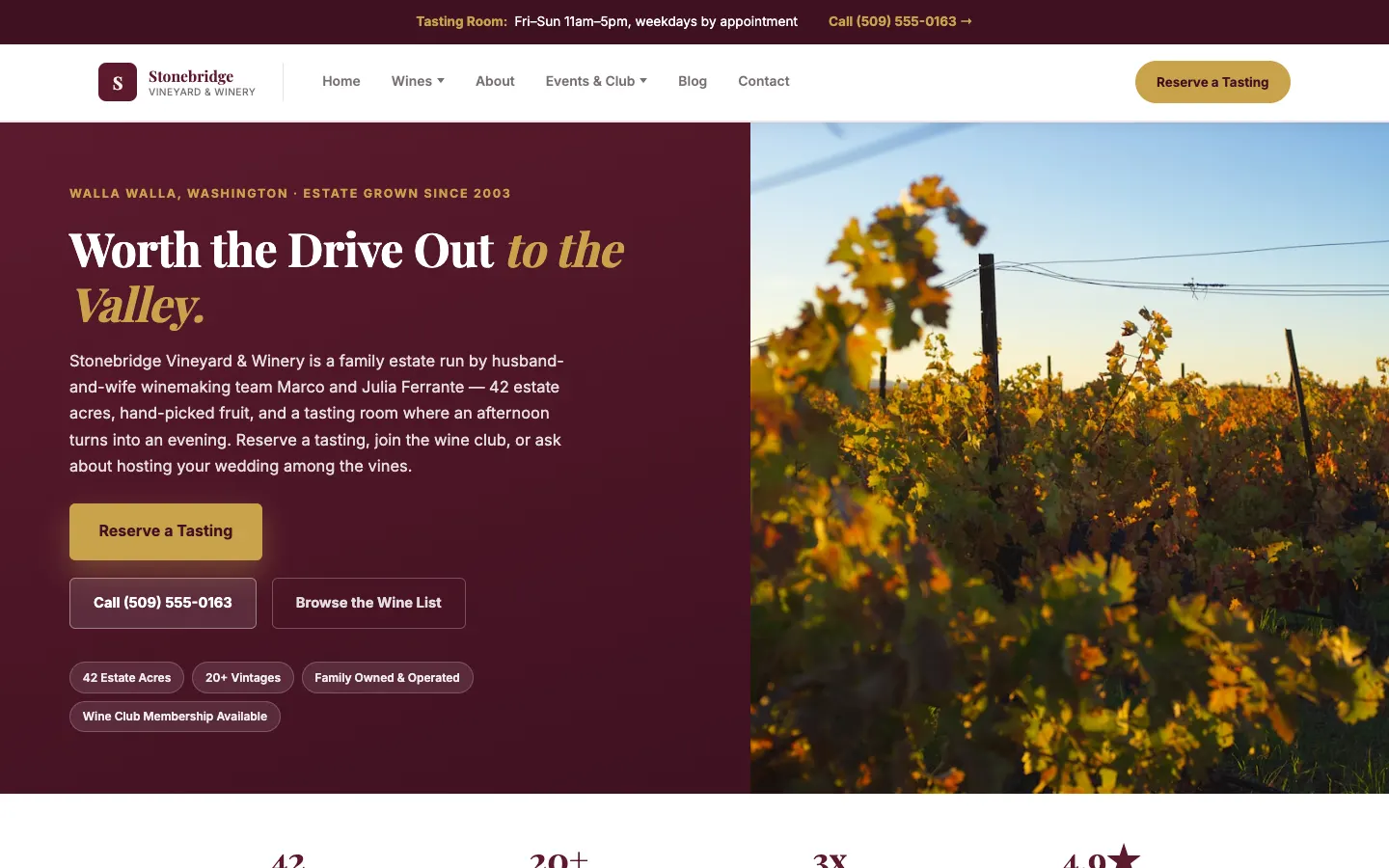
A warm, upscale burgundy-and-gold estate winery site for Walla Walla, WA: tasting-room hours and reservations, a wine list by type, and a private-event/wedding and wine-club inquiry path.

Tasting Reservations + Wine Club & Private Event Inquiry. Stonebridge Vineyard & Winery puts the whole funnel on one site: tasting-room hours and reservations for the trip planner, wines organised by type for the enthusiast, and a club and private-event enquiry path for the revenue that comes after the visit.

Open the live demo → Winery & Vineyard websites

Stonebridge Vineyard & Winery — live winery & vineyard website built on WorkspaceCMS
Where the demand is

How winery & vineyard buyers actually search

Winery demand is trip-shaped. Visitors plan a route through a region, usually for a weekend, and the region gets searched long before any estate does. That makes wine trail, appellation and things-to-do-in-the-area queries far more valuable here than they would be for a business people visit alone. It also means your competition for that first click is not only other estates but tourism boards, tour operators and travel publications, all of whom outrank an estate site that has published nothing about its own region.

The economics push in a very particular direction. A tasting fee rarely justifies the cost of acquiring the visitor. What justifies it is what happens afterwards: club signups, direct shipments, repeat visits, and the wedding the couple booked because they liked the view. So the campaign is judged on downstream value rather than on the tasting reservation, and the site has to carry the visitor from a hillside photo to a club page that explains allocations, shipping and cancellation without making anyone email to ask.

Seasonality is severe and unusually asymmetric. Harvest and the crush months drive a spike in interest and are simultaneously the period when the tasting room has the least staff capacity, while winter needs demand generation and gets the least. Events run on their own calendar entirely, with weddings and private hire booking a year ahead through planners. Add an advertising environment with real alcohol restrictions, and direct-to-consumer shipping rules that vary by state and shape what you can even offer a visitor from out of the area.

The keyword clusters we build around

  • Regional trip planningWineries in the valley, wine trail, tasting rooms near a town, weekend itinerary. Searched days or weeks ahead of the visit, and the biggest source of first-time visitors.
  • Tasting reservationsBook a tasting, walk-in tasting, private tasting, group reservations. The searcher has picked you and needs hours, fees, party size limits and a booking path that works on a phone.
  • Wine club and shippingWine club membership, allocation, shipping to a given state, cancellation policy. The audience that actually carries the business, asking practical questions before joining.
  • Weddings and private eventsVineyard wedding venue, rehearsal dinner, corporate retreat at a winery. Planner-driven, booked a year out, and the single highest-value enquiry an estate receives.
  • Varietal and estate specificsEstate cabernet, single vineyard syrah, tasting notes and vintages. Enthusiasts and trade researching specific bottles, who read far more deeply than a casual visitor.
The campaign

Three ways we go get the traffic

Local SEO, AI-assistant visibility and paid media, run by the agency team that has been doing it since long before WorkspaceCMS existed.

Local SEO

The organic strategy is regional first. Trail, appellation and itinerary content earns the visits that later become tastings, and it is where estates most often cede ground to tourism sites. Alongside it we build the practical pages that convert: tasting reservations with real policies, a club page that answers the objections, an events and weddings section with the detail planners shortlist from, and estate and varietal pages for the deeper readers.

AI search visibility

Trip planning is one of the things people ask assistants for most, and a winery gets recommended when it has published facts to quote: tasting hours and fees, reservation and group policies, accessibility, whether children or dogs are welcome, club terms, shipping states, and varietals with honest tasting notes. Add a live review corpus and a real FAQ. Estates that publish only lyrical vineyard prose are the ones assistants skip.

Paid media

Alcohol advertising carries certification, age gating and targeting rules that shape the account from the first day rather than being bolted on later, and getting that wrong stops a campaign before it starts. Within those limits the demand worth buying is visit-shaped: tastings, tours, private events and weddings, weighted heavily toward the seasons somebody would actually drive out. Wedding enquiries deserve their own campaign entirely, since that buyer is planning a year ahead.

Campaigns are an add-on to a WorkspaceCMS plan and start from $499/mo. The plan itself is a monthly subscription. The build is included, the platform is not free. Local SEO campaigns are scoped to single and multi-location businesses rather than national or global SEO. Paid search management covers service businesses rather than online stores; ad spend is billed by Google or Meta directly to your own account. Full campaign scope → · Plan pricing →

What gets in the way

Six things that hold winery & vineyard sites back

01

Winning the region before winning the estate

Visitors search the valley, not your name. If tourism sites and tour operators own every regional query, an estate only ever gets found by people already told about it. Publishing genuinely useful regional and trail content is how an estate enters that plan.

02

Tasting reservations that leak to the phone

Group size limits, seated versus standing, pet and children policies, cancellation windows. When those answers are missing, the enquiry becomes a phone call to a tasting room that is pouring for twelve people. A booking flow that answers up front protects both the staff and the conversion.

03

The club page that explains nothing

Club membership is where the lifetime value sits, and it is often a paragraph and a signup button. Allocation frequency, price bands, shipping states, pickup options and how to pause or cancel all have to be published, because those are exactly the questions that stop someone joining.

04

Weddings competing against dedicated venues

Vineyard weddings are searched heavily and answered by venues with full capacity charts, floor plans, seasonal pricing structures and galleries. An estate with one photo and a contact form does not get shortlisted, however good the site is.

05

Harvest demand hitting the least available months

Interest peaks exactly when the winery has no capacity to host, then falls away in the quiet season when it needs visitors most. Without deliberate off-season programming and pacing, the calendar amplifies its own worst pattern.

06

Shipping rules left for the customer to work out

Direct-to-consumer wine shipping varies by state, and a visitor from out of the area will not join a club they suspect cannot ship to them. Stating clearly where you ship and what the limits are removes a silent, common reason people abandon.

Campaign add-ons

Pick the campaign that fits the market

Every package below is bought from your dashboard once your site is live. Names, prices and deliverables are read from the catalog at page load, so what you see here is what you would be buying.

Questions

Winery & Vineyard marketing, answered

Can you run ads for our online wine sales?

The Local Paid Search package covers service businesses, which here means the tasting room, events and weddings. Paid media for a wine store or shipping club as an eCommerce channel is outside that scope. Bring it up with the team so it gets handled properly rather than assumed.

Is advertising alcohol even allowed on these platforms?

Yes, subject to each platform's alcohol policies. That involves certification where required, age gating, and limits on some targeting and creative. It constrains the tactics available but it is entirely workable, and the account gets built around those rules from day one.

What actually moves wine club signups?

Usually removing objections rather than adding persuasion. Publishing allocation frequency, price bands, shipping states, pickup and cancellation terms in plain language, then making the club a natural step from the tasting reservation confirmation rather than a separate page nobody visits.

We are one estate with a second tasting room in town. Does that fit?

Yes. Local SEO and AI campaigns cover single and multi-location businesses, so the estate and the town tasting room each get their own pages and profile and compete in their own local result set.

Do weddings need their own campaign?

They do, and it is often the most valuable one you will run. A couple books a venue a year ahead on entirely different criteria from a tasting-room visitor, so that enquiry deserves its own pages, imagery and follow-up rather than a line on the events page.

Your free site is one click away

Ready to grow a winery & vineyard business?

Get the site built, then put a campaign behind it. Start online, or talk it through with a strategist first.

Want the full picture? See what a campaign includes