
Growth campaigns · Fashion & Apparel

Growth campaigns for fashion and apparel brands

Marketplaces and department stores own every head category term, and resale listings of your last collection can outrank your current one. This campaign builds the fabric, fit and editorial depth that makes a label findable for what it actually makes.

Live Fashion & Apparel demo

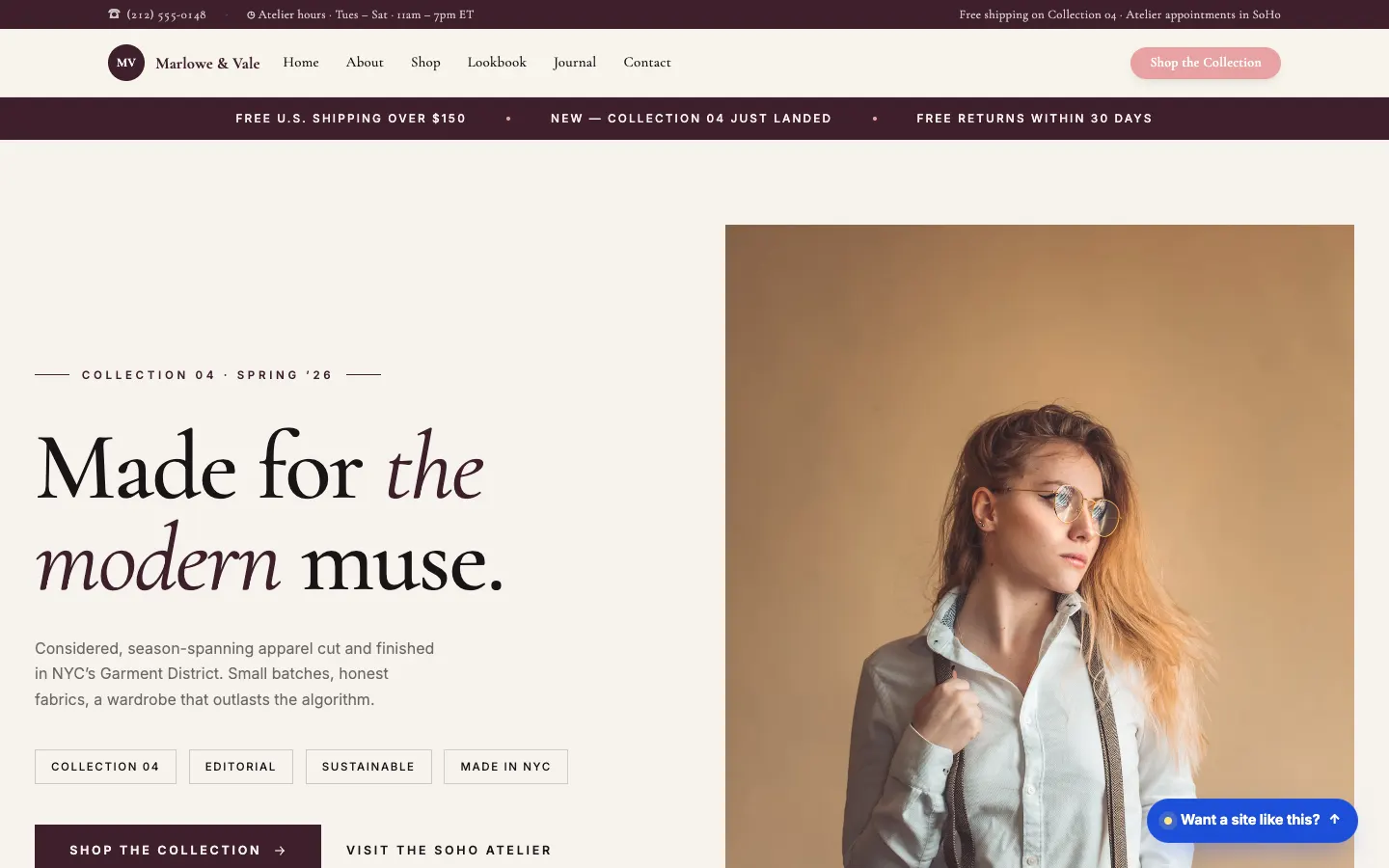
Marlowe & Vale

NYC editorial apparel boutique: asymmetric lookbook, small-batch atelier story, and a Garment-District shop pickup CTA.

Editorial Lookbook + Atelier Shop. Marlowe and Vale runs an editorial lookbook beside its atelier shop, so a styling piece that ranks feeds straight into the garment it is styling instead of dead-ending in a journal archive.

Open the live demo → Fashion & Apparel websites

Marlowe & Vale — live fashion & apparel website built on WorkspaceCMS
Where the demand is

How fashion & apparel buyers actually search

Apparel demand splits sharply between people shopping a category and people shopping a brand, and the two behave nothing alike. Category searchers (linen trousers, wide-leg denim, wool overshirt) land in a results page owned by marketplaces, aggregators and department stores with vastly more domain authority. Brand searchers already know you, and everything downstream of that search converts. The strategic question for a smaller label is never how to beat a marketplace on a head category term; it is how to own the long, specific end of the category and convert enough of it into brand memory that the second search names you.

Fit and fabric are where that long tail lives. Returns in apparel are driven by fit uncertainty, and every question a customer would have asked in a fitting room becomes a search: how a cut runs, what a fabric does after washing, whether something works between seasons, how a piece sits on a particular body. Brands that answer those in writing, per garment, build pages that rank and simultaneously cut the return rate. Brands that publish a two-line product description and a size chart are relying entirely on paid traffic and photography.

Then there is the rhythm. Apparel runs on drops and seasons, which means the search landscape resets several times a year and the previous season's best pages go quietly obsolete. Add secondhand platforms now ranking for brand-plus-item queries, and a brand's own product pages can end up beneath resale listings of its own past collections. The brands that hold position treat editorial and fabric content as permanent infrastructure rather than as campaign assets that expire with the lookbook.

The keyword clusters we build around

  • Garment plus attributeFabric, cut, occasion and season combinations rather than head category terms. This is where an independent label can realistically rank against marketplaces.
  • Fit and sizing questionsHow a piece runs, what to size for between measurements, how a fabric behaves after wear. Ranks well, converts well, and reduces returns at the same time.
  • Materials and productionFabric origin, small-batch production, care and longevity. The searches that justify a price point without you having to argue it on the product page.
  • Styling and occasionWhat to wear to a specific occasion or how to build around a piece. Top-of-funnel editorial that seeds the brand search happening later.
  • Brand and store discoveryYour name, plus local searches if you have a physical shop or pickup point. The highest-converting terms you own outright.
The campaign

Three ways we go get the traffic

Local SEO, AI-assistant visibility and paid media, run by the agency team that has been doing it since long before WorkspaceCMS existed.

Local SEO

Terms like wide-leg denim belong to aggregators, so the work goes downward into ground a label can hold: fabric, cut, occasion and season combinations, and the fit questions a customer would otherwise have asked in a fitting room. Product pages get composition, garment measurements, how a cut runs between sizes and what the fabric does after washing, writing that ranks and reduces returns in the same move. Editorial is organised around occasions and styling rather than drop dates, so a collection selling through does not take the traffic out with it.

AI search visibility

Someone asks an assistant for a brand making an unlined linen jacket in a weight that will not be creased to nothing by lunchtime. The answer assembles from structured product data, written composition and care, model and garment measurements, honest fit notes, and reviews specific enough to quote a line from. A style name, a price and three adjectives match no constraint at all, so ChatGPT or an AI Overview names the label that wrote down how the shoulder sits.

Paid media

Creative is the campaign in apparel: the same fabric, fit and styling material the organic work produces, cut for feeds where a garment can be seen moving on a body. The structural risk in this category is a brand whose entire demand is rented, since a rise in acquisition cost lands on revenue the same week and a drop arrives into silence. Point paid traffic at pieces that have real written depth behind them, so a click meets the page answering the fit question rather than bouncing back to the marketplace it came from.

Campaigns are an add-on to a WorkspaceCMS plan and start from $499/mo. The plan itself is a monthly subscription. The build is included, the platform is not free. Local SEO campaigns are scoped to single and multi-location businesses rather than national or global SEO. Paid search management covers service businesses rather than online stores; ad spend is billed by Google or Meta directly to your own account. Full campaign scope → · Plan pricing →

What gets in the way

Six things that hold fashion & apparel sites back

01

Marketplaces own every head category term

A search for a common garment returns aggregators, department stores and marketplaces before any independent label. Competing there directly is a budget sink. The winnable territory is attribute-specific, editorial and brand search, built patiently.

02

Product pages that say nothing indexable

A style name, a price and three adjectives give search engines and AI assistants nothing to work with. Fabric composition, cut, measurements, care and how it actually wears are what turn a product page into something that can rank and be quoted.

03

Each season resets your best pages

When a collection sells through, the pages built around it decay and the traffic goes with them. Without evergreen fabric, fit and styling content underneath, the site starts from zero every season while competitors compound.

04

Resale listings outrank the brand

Secondhand platforms rank strongly for brand-plus-item searches, so your own past pieces can appear above your current collection. The counter is depth on your own domain: archive pages, provenance, care, and a reason to buy first-hand.

05

Fit uncertainty absorbed as returns

Every unanswered fit question becomes either a lost sale or a return shipment. Written fit notes per garment, model measurements and honest guidance on how a cut runs are cheaper than the logistics of guessing wrong.

06

All demand rented, none owned

Brands built on paid social have no organic floor, so a rise in acquisition cost or an algorithm shift hits revenue immediately. Organic and AI visibility are the part of the mix that keeps working when the ad account is paused.

Campaign add-ons

Pick the campaign that fits the market

Every package below is bought from your dashboard once your site is live. Names, prices and deliverables are read from the catalog at page load, so what you see here is what you would be buying.

Questions

Fashion & Apparel marketing, answered

Can an independent label rank for a term like linen trousers?

Not against marketplaces and department stores, and we will not pretend otherwise. Paired with a fabric weight, a cut, a season or an occasion, those searches are winnable, and the people running them are much closer to buying.

Our collections change every season. Does the content go stale?

Only the collection-specific part. Fabric behaviour, fit guidance, care and styling are evergreen and carry the site between drops, which is why that layer is built before anything tied to a single lookbook.

Resale listings of our older pieces outrank our new ones. What do we do?

Build depth the platforms cannot hold: archive pages with provenance, care guidance that keeps a garment wearable, and a stated reason to buy first-hand. You will not remove them from the results, but you can stop being absent from them.

How much fit detail belongs on a product page?

Enough to replace a fitting room. Garment measurements as well as body sizing, how the cut runs between sizes, the model height and the size worn, and what the fabric does after a wash and a full day on.

Who writes the garment copy, us or you?

The knowledge has to come from your side: why a fabric was chosen, how a shoulder was drafted, what happens to it over a season. We turn that into pages, and it is the material no competitor can copy.

Your free site is one click away

Ready to grow a fashion & apparel business?

Get the site built, then put a campaign behind it. Start online, or talk it through with a strategist first.

Want the full picture? See what a campaign includes