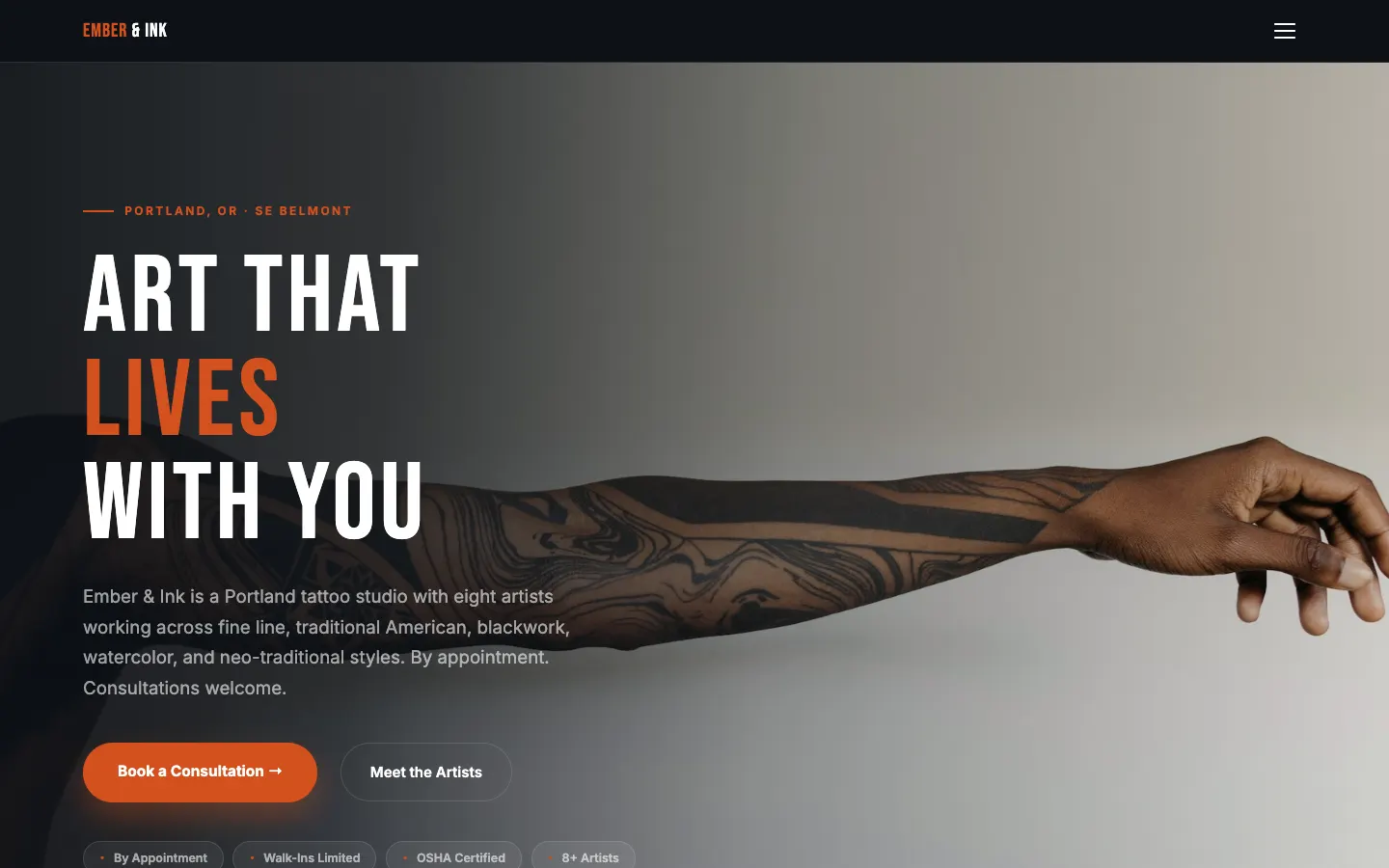
The buying cycle here is longer than anything else in beauty and it is style-first. Someone planning a sleeve spends weeks or months collecting references, learning the vocabulary, and narrowing down to an artist whose portfolio matches what they want. They search fine line, blackwork, traditional, realism, script, cover-up, and they judge on the work before they ever look at the studio. That reverses the usual local search logic: the artist's portfolio is the landing page, and the studio is what the client accepts in order to book them.
Trust carries unusual weight because the decision is permanent. Clients research licensing, hygiene practice, aftercare and studio policy with a seriousness they would not apply to a haircut, and cover-up and correction enquiries in particular come from people who have already had a bad experience. Content that addresses those anxieties directly, what happens at a consultation, how deposits work, minimum age and identification, healing and aftercare, is not filler. It is the material that converts a cautious researcher into someone willing to send a reference photo.
Advertising for this category also has real limits. Some platforms restrict or scrutinise tattoo-related ads, and the audience is difficult to target on intent alone because the search happens long before the appointment. That pushes weight onto organic style pages, artist pages that can rank for a name, and content that circulates. Seasonally, spring and early summer bring a surge as clothing changes, guest artist appearances and convention dates create sharp short spikes, and January carries its own wave of cover-up enquiries.