Growth campaigns · Beauty & Cosmetics

Beauty and cosmetics campaigns built on how shoppers research

A serum gets bought on the fourth visit, not the first. The shopper learns the actives, checks what conflicts with the acid already in her routine, then goes hunting for a second opinion. We build the search and AI presence that is there for all of it.

Live Beauty & Cosmetics demo

Vellum Beauty Co.

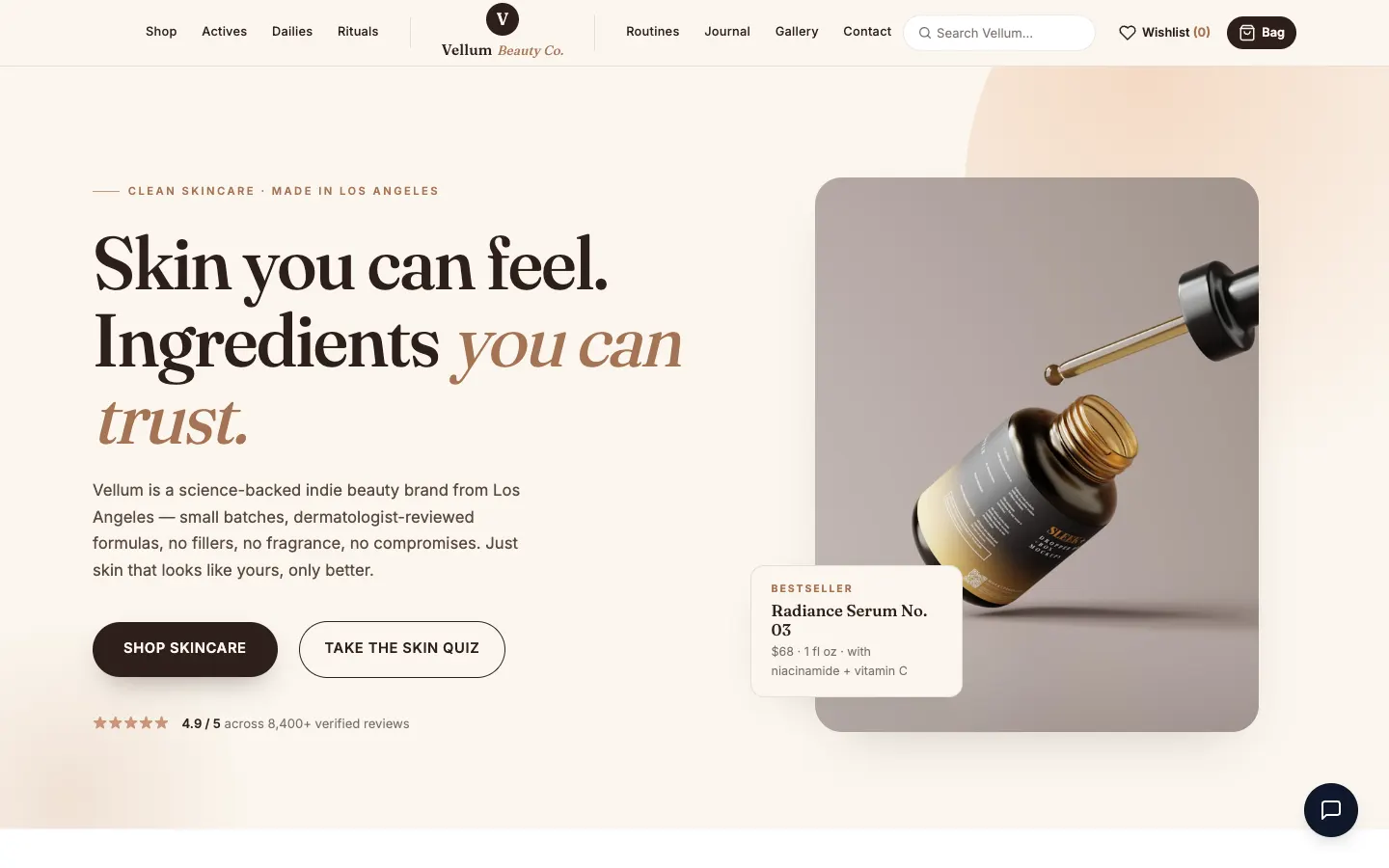
LA clean-beauty house with a routine builder, shop-by-concern grid, and dermatologist-reviewed serums front and center.

Build-Your-Routine in 3 Steps. Vellum Beauty Co. shows the structure these campaigns feed: a shop-by-concern grid, a routine builder that sequences products, and ingredient detail sitting where an active-name searcher actually lands.

Open the live demo → Beauty & Cosmetics websites

Vellum Beauty Co. — live beauty & cosmetics website built on WorkspaceCMS
Where the demand is

How beauty & cosmetics buyers actually search

Beauty buying is a research habit before it is a purchase. A shopper hears about an ingredient, searches it, compares concentrations, checks whether it conflicts with something else in their routine, then looks for a brand that answers all of that in plain language. The searches that precede a first order are almost never branded. They are niacinamide versus azelaic acid, retinol for sensitive skin, what to use with vitamin C. A brand that only publishes product pages is invisible for the entire research phase and only shows up once the decision is already made.

The second thing that defines this category is that the reviewer sits between the brand and the buyer. Editorial roundups, dermatologist accounts, Reddit threads and video comparisons carry more weight here than in almost any other retail vertical, and shoppers actively search for third party verdicts before buying. That means content has to hold up to scrutiny: named actives, concentrations where you are willing to state them, formulation reasoning, and honest statements about who a product is not for. Vague claims read as marketing and get discounted immediately.

Demand also arrives in defined waves. Seasonal skin concerns drive predictable swings, dryness and barrier repair through winter, sun protection and texture through summer, plus the gifting spike late in the year and the routine-rebuild surge in January. Launches compress attention into short windows, so the content that supports a launch has to exist before the launch, not after it, or the interest lands on a competitor's explainer instead of yours.

The keyword clusters we build around

  • Concern-led discoveryShoppers describing a problem rather than a product: dullness, redness, texture, hyperpigmentation, barrier damage. These map to a shop-by-concern path, not to a single product page.
  • Ingredient researchIngredient names, pairings and conflicts. The searcher wants to understand before they buy, so we answer thoroughly and link the routine that uses it.
  • Routine buildingMorning and evening ordering, layering rules, what to introduce first. This is where a routine builder converts a reader into a multi-product basket.
  • Comparison and alternativesShoppers weighing two actives, two formats or two brands. We publish honest comparison content that states who each option suits.
  • Formulation and standards termsFragrance-free, dermatologist-reviewed, non-comedogenic, cruelty-free. Buyers filter hard on these, so the claims need their own indexable pages.
  • Branded and post-purchaseProduct name searches, how to use, how long until results, reordering. Owning these protects the customer you already paid to acquire.
The campaign

Three ways we go get the traffic

Local SEO, AI-assistant visibility and paid media, run by the agency team that has been doing it since long before WorkspaceCMS existed.

Local SEO

Nothing in a product catalog answers whether niacinamide can sit under vitamin C, which is why the organic programme is built as concern and ingredient hubs first and product pages second. Each active gets an explainer naming the format, the strength you are willing to state, and who should skip it. Each concern (texture, redness, pigmentation, a compromised barrier) gets a hub that sequences products into an actual routine. Comparison pieces say plainly which of two actives suits which skin, and the product pages then receive that reader with matching detail on finish, undertone and layering.

AI search visibility

Assistants will not repeat an ingredient claim they cannot ground, and skincare is one of the categories where they hedge hardest. Quotability comes from specifics a machine can lift: full INCI listings, format and size in structured product data, marked-up FAQs answering conflicts, patch testing and pregnancy suitability, and testing or dermatologist review stated as fact rather than implied by a badge. A brand willing to publish who a product is not for gets named by ChatGPT, Claude, Perplexity and Google AI Overviews far more readily than one claiming it suits everybody.

Paid media

Paid creative in this category collides with ad policy sooner than most brands expect: before-and-after skin imagery, personal-attribute targeting and anything reading as a health claim all draw review. The work sits inside those limits: angle testing against concern-led messaging rather than promises, creative that shows texture, application and where a product falls in a routine, and landing experiences that continue the exact argument the ad made instead of dropping a researcher on a generic shop page. Launch windows get their own creative plan, because attention on a new formula spikes early, briefly, and does not wait for assets.

Campaigns are an add-on to a WorkspaceCMS plan and start from $499/mo. The plan itself is a monthly subscription. The build is included, the platform is not free. Local SEO campaigns are scoped to single and multi-location businesses rather than national or global SEO. Paid search management covers service businesses rather than online stores; ad spend is billed by Google or Meta directly to your own account. Full campaign scope → · Plan pricing →

What gets in the way

Six things that hold beauty & cosmetics sites back

01

Product pages cannot rank for research questions

The searches that start a beauty purchase are questions, not product names. A catalog of well-photographed PDPs has nothing to answer them with, so the brand enters the buyer's consideration set late or not at all.

02

Ingredient claims that will not survive a sceptic

Beauty shoppers cross-check. Copy that gestures at science without naming actives, formats or who the product is unsuitable for gets dismissed, and increasingly gets flagged in the review threads buyers read before ordering.

03

Marketplace listings outrank your own store

Retail and marketplace listings for your own SKUs often sit above your site. Without content the resellers cannot replicate, routines, education, founder and formulation detail, you compete for your own brand name on someone else's margin.

04

Launch attention arrives before the content does

A launch concentrates search interest into a short window. If the explainer, the routine placement and the FAQ go live after the launch, the traffic has already found a competitor's answer to the same question.

05

Shade, texture and skin type matching is unanswered

Undertone, finish, oiliness and sensitivity decide the purchase and drive the returns. Sites that leave matching to a swatch photo lose the cautious buyer and pay for it again in exchanges.

06

Repeat purchase is treated as email's problem alone

Replenishment is where beauty margins live, but the searches around running out, upgrading strength and adding a step are organic opportunities. Leaving them entirely to a flow means competitors intercept your own customers mid-routine.

Campaign add-ons

Pick the campaign that fits the market

Every package below is bought from your dashboard once your site is live. Names, prices and deliverables are read from the catalog at page load, so what you see here is what you would be buying.

Questions

Beauty & Cosmetics marketing, answered

Our strongest searches are ingredient questions with no purchase intent. Worth publishing?

In skincare, yes. The ingredient explainer is where a brand joins the consideration set, weeks before the basket, and it is the one asset a marketplace reseller of your own SKUs has no way to copy.

How do you keep copy inside what our regulatory reviewer will approve?

By writing only from what you can evidence: named actives, formats, patch and consumer testing, dermatologist review statements you already stand behind. No outcome promises, and nothing that quietly turns a cosmetic into a drug claim.

Stockist listings for our own products outrank our store. What changes that?

Content a stockist has no access to. Formulation reasoning, routine sequencing, founder and sourcing detail, honest guidance about who a formula is wrong for. A reseller can copy your product description but not your education library.

Should launch content be ready before the announcement or after it?

Before. Interest in a new formula arrives with the announcement and fades within weeks, so the explainer, the routine placement and the FAQ need to be indexed and ranking when the first wave of curiosity hits.

Shade and texture mismatches drive most of our returns. Can search work help?

It can, by settling the matching question before checkout: undertone guidance, finish comparisons, how a formula behaves on oily versus dehydrated skin, and swatch context written as text an assistant can read back to a shopper.

Your free site is one click away

Ready to grow a beauty & cosmetics business?

Get the site built, then put a campaign behind it. Start online, or talk it through with a strategist first.

Want the full picture? See what a campaign includes