Growth campaigns · Enterprise SaaS Platform

Growth campaigns for enterprise SaaS platforms

Nobody signs alone. A champion finds you, an analyst builds the comparison grid, a security reviewer sends a questionnaire and finance reads the commercial model. Every page has to hand one of them something they can forward to the next.

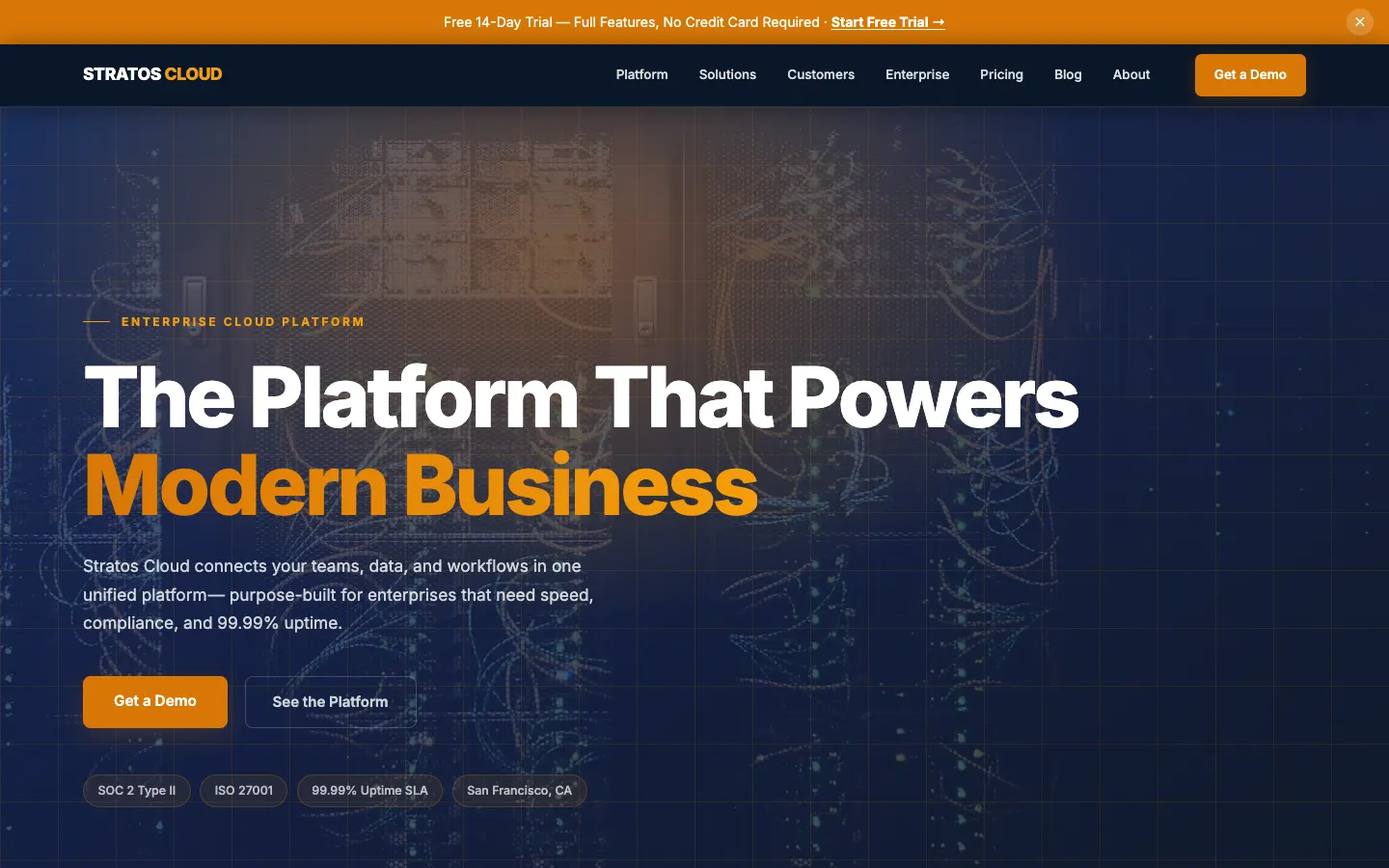
Live Enterprise SaaS Platform demo

Stratos Cloud

Enterprise cloud platform unifying data, workflows, and security for 12,000+ companies worldwide. SOC 2 Type II certified, 99.99% uptime SLA.

Data Fabric + Workflow Engine + Security Layer. Stratos Cloud shows the surface a buying committee has to move through, with the capability story, the trust posture and the booking path already sitting in the right order.

Open the live demo → Enterprise SaaS Platform websites

Stratos Cloud — live enterprise saas platform website built on WorkspaceCMS
Where the demand is

How enterprise saas platform buyers actually search

The most valuable searches in enterprise SaaS are not category searches at all. They are comparison and displacement searches: your competitor's name paired with alternatives, a legacy system paired with migration, an integration pairing, or a specific failure the buyer is living with. Those searchers are past the education stage and inside an evaluation, and whoever has published a straight, unembarrassed comparison page gets to frame it. Category terms still matter for the top of the funnel, but they attract students, job seekers and analysts as much as buyers.

Committee dynamics rewrite what content is for. A champion needs something they can forward, an analyst needs a feature and integration matrix, security needs a trust page that answers questionnaire items before the questionnaire arrives, and finance needs to understand the commercial model. Pages that exist purely to capture an email and gate everything behind a form work against this, because the champion cannot forward a gated asset to the person who has to approve it.

The cycle is long enough that attribution lies. Quarters can pass between the first documentation visit and a signature, with the buyer moving through review sites, communities, a peer conversation and back through your own docs several times. The practical consequence is that documentation, changelogs and integration pages carry real acquisition weight even though they sit outside the marketing site in most organisations, and treating them as engineering property leaves the strongest content unmarketed.

The keyword clusters we build around

  • Comparison and alternativesCompetitor names with alternative, versus and migration modifiers. Late-stage traffic, and the page that exists frames the decision.
  • Problem and job to be doneThe operational failure that starts the search, described the way an operator would describe it rather than the way a category analyst would.
  • Integration and stackYour platform paired with the systems it must live beside. Narrow, technical, and highly qualifying.
  • Trust, security and complianceCertification, data residency and access-control questions searched by security reviewers mid-evaluation. Answering publicly shortens the review.
  • Role and use caseThe same platform framed for the specific function that will own it, so each committee member finds a page written for them.
The campaign

Three ways we go get the traffic

Local SEO, AI-assistant visibility and paid media, run by the agency team that has been doing it since long before WorkspaceCMS existed.

Local SEO

The highest-value organic surface is not the category page. It is displacement: a competitor name with alternatives beside it, a legacy system with migration beside it, an integration pairing, or the operational failure a buyer is living with right now. Those searchers are already inside an evaluation, and whoever published a straight comparison gets to frame it. Alongside that sits a trust surface answering questionnaire items before the questionnaire arrives, and documentation treated as an acquisition asset rather than an engineering artifact, since evaluators and integrators read it continuously and nobody optimises it.

AI search visibility

Evaluations now open with an assistant. Which platforms do this job, how do these two vendors differ, what is the data residency posture. Those answers assemble from feature and integration detail in text, certifications stated openly, role-level use cases, and a commercial model explained rather than withheld. A vendor whose differentiators live in a demo recording and a form-walled deck is unquotable by ChatGPT, Claude, Perplexity and AI Overviews, and the champion who cannot forward that same deck internally is blocked by the identical decision.

Paid media

The paid work that fits a platform is aimed at defined buying roles rather than at geography: creative targeted by function, seniority and company stage, plus defensive coverage on the product name where review sites and competitors already bid. Category search attracts students, analysts and job seekers in bulk, so it needs heavy exclusion work before it earns anything back. Anything wider is worth scoping with the team first, because a committee purchase rarely proceeds from a cold click no matter how well the landing page reads.

Campaigns are an add-on to a WorkspaceCMS plan and start from $499/mo. The plan itself is a monthly subscription. The build is included, the platform is not free. Local SEO campaigns are scoped to single and multi-location businesses rather than national or global SEO. Paid search management covers service businesses rather than online stores; ad spend is billed by Google or Meta directly to your own account. Full campaign scope → · Plan pricing →

What gets in the way

Six things that hold enterprise saas platform sites back

01

Everything of value is behind a form

Gating the comparison sheet and the security overview stops the champion circulating them internally, which is precisely how enterprise deals move. The lead count looks healthy while the deal stalls.

02

Product pages describe architecture, not outcomes

Written by people who built it, for people who would have built it. The economic buyer reading the same page cannot work out what changes in their week, so the champion has to translate it and often does not bother.

03

Docs are the best content and the worst-treated

Documentation attracts evaluators and integrators continuously, yet lives on a subdomain nobody optimises, with no path back into a conversation with sales.

04

Review sites sit between you and your own name

A meaningful share of branded evaluation traffic goes through third-party comparison platforms first, so what those pages say becomes part of your positioning whether or not you participate.

05

Security review is a marketing problem in disguise

Repeated questionnaires answered by hand, one deal at a time. A published trust page turns weeks of back-and-forth into a link and removes the most common late-stage delay.

06

Positioning shifts faster than the site

Product moves quarterly, the website is rewritten annually, and the gap between the two becomes visible in a demo. Buyers notice when the page describes an older product than the one they are shown.

Campaign add-ons

Pick the campaign that fits the market

Every package below is bought from your dashboard once your site is live. Names, prices and deliverables are read from the catalog at page load, so what you see here is what you would be buying.

Questions

Enterprise SaaS Platform marketing, answered

Should we publish comparison pages naming competitors?

Someone publishes them either way, usually a review platform or the competitor. A factual, current comparison written by you at least describes the differences accurately and hands your champion something defensible to circulate to the analyst.

Can we market our documentation without ruining it?

Leave the writing alone and fix the structure around it: crawlable, on a path search engines can follow, linked to the relevant product pages, with an obvious route to a human. Nothing technical has to become promotional.

How much of our material should sit behind a form?

Less than currently. Gating the comparison sheet and the security overview stops the champion circulating them to the reviewer and the economic buyer, which is exactly how enterprise deals advance. The lead count looks healthy while the deal stalls.

Security review keeps adding weeks to our cycle. Is that a marketing problem?

Largely, yes. A published trust page covering access control, data residency and certification turns a repeated questionnaire into a single link, and it is the most common late-stage delay that content actually removes.

Our product ships quarterly and the site is rewritten annually. Does that matter?

Buyers notice during the demo when the page described an older product than the one on screen, and it undercuts everything else the site claimed. Publishing cadence has to track release notes rather than a marketing calendar.

Your free site is one click away

Ready to grow a enterprise saas platform business?

Get the site built, then put a campaign behind it. Start online, or talk it through with a strategist first.

Want the full picture? See what a campaign includes