
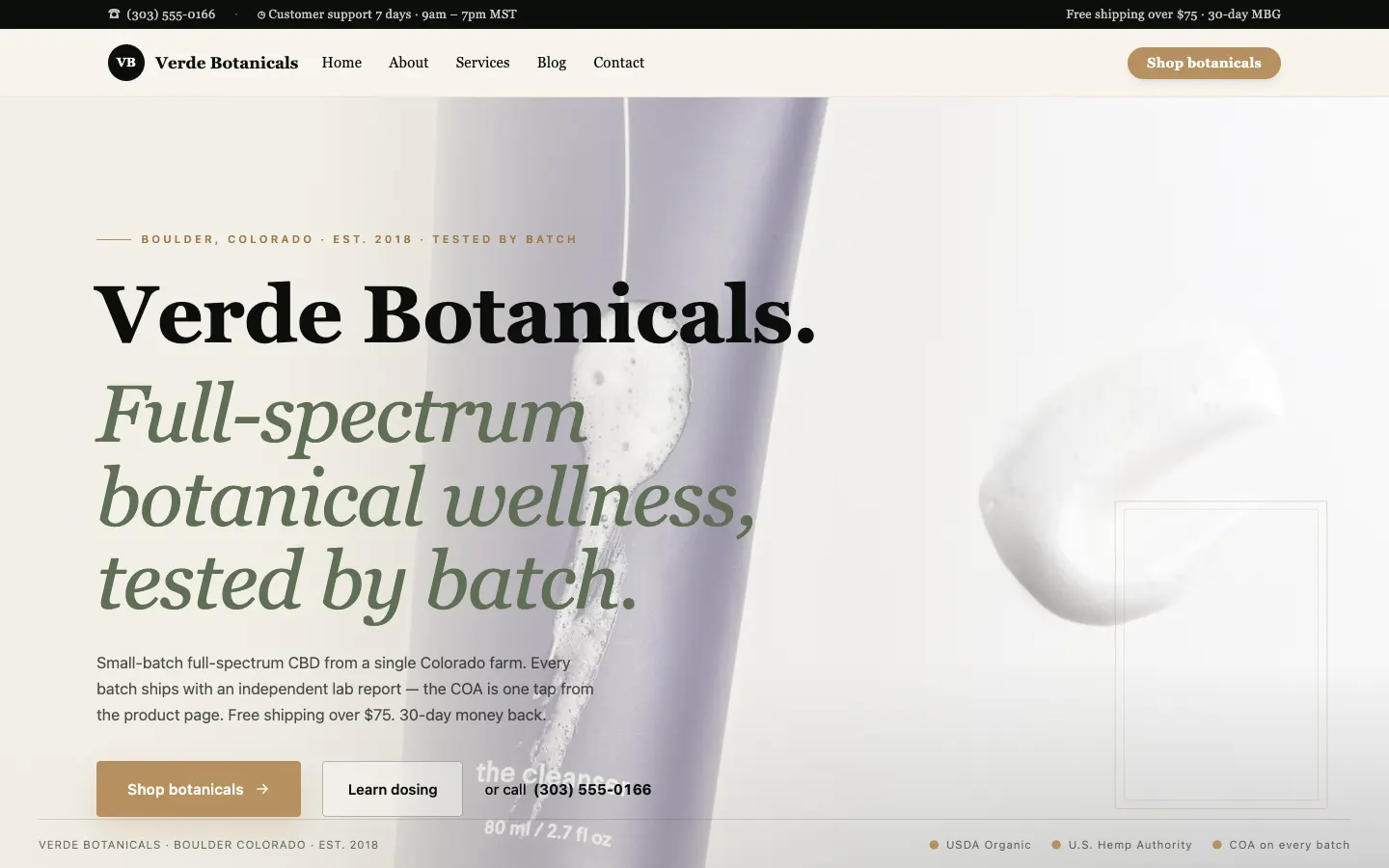
Almost nobody arrives at a CBD site ready to buy. They arrive suspicious. The searches that precede a first order are verification searches: people looking up whether a brand publishes certificates of analysis, whether hemp-derived cannabinoids are legal where they live, what full spectrum means next to broad spectrum and isolate, and whether the milligram figure on the label matches what a lab actually found. A brand that answers those questions on its own domain intercepts the research; a brand that does not gets read about on a forum instead, in a thread it has no say in.
Geography constrains this category in a way it does not constrain most online retail. Cannabinoid rules differ state to state and change mid-year, shipping restrictions follow, and a meaningful slice of demand is people trying to find a local stockist rather than order online. That makes a stockist locator, per-state shipping clarity and a real address on the site load-bearing commercial pages, not legal housekeeping. Retail partners search too, and they search differently: wholesale terms, minimum order questions, white-label queries.
Repeat purchase is where the money is, and it is earned by the same trust artefacts that won the first order. Buyers come back to look up the batch code on the tin they already own. Publishing that lookup, keeping old batch records live, and writing product education that describes the product rather than what it might do for a body is the whole discipline of the category. Marketing copy that drifts into claims is not just a compliance risk, it is what gets a payment processor or a platform account pulled.