
Search visibility
How Restaurants Get Found First on Google and in AI Search
When someone nearby searches "restaurants near me" or asks ChatGPT where to eat tonight, one place gets the table and the rest get scrolled past. For a restaurant, being found first isn't luck. It's a set of concrete, buildable signals. Here's exactly what lifts a restaurant up the results, and how WorkspaceCMS and the 1Digital team do that work for you.
Why diners pick the place they find first
Almost every meal out now starts with a search on Google, on a phone map, or increasingly inside an AI assistant. Hungry people don't compare twenty restaurants. They pick from the handful that show up first in the map pack, load instantly, and answer the only questions that matter right then: are you open, what's on the menu, and can I get a table or order now?
That makes your ranking the front door to your dining room. A restaurant sitting on page two of Google is invisible to the people deciding where to eat this weekend. The encouraging part: the signals that push you into the local pack and the top organic results are mechanical and fixable.
What actually moves a restaurant up the results
Local search visibility for a restaurant comes down to a few compounding factors. Miss them and you stall below competitors; get them right and you land in the results diners actually see:
- Local relevance signals: your restaurant name, address, phone, hours, cuisine type, and the neighborhoods you serve, structured so Google can confidently place you for "Italian near me" or "brunch downtown."
- Technical health. Clean, crawlable code and restaurant schema markup tell Google your cuisine, price range, hours, and menu. This is the layer diners never see but search engines read first.
- Speed and mobile experience, because nearly every restaurant search happens on a phone, often while people are already out. A site that loads fast and works flawlessly on mobile outranks a prettier one that stutters.
- Menu and content that answer real questions. A fast, readable menu, dietary options, hours, and location details are exactly what diners want and what AI assistants quote when they recommend a place to eat.
- Reputation signals: a steady flow of genuine Google reviews and consistent listings across the web reinforce that you're a trusted local choice worth the drive.
Getting found in AI search, not just Google
More diners now ask ChatGPT, Gemini, or Perplexity to "find a good spot for dinner near me" and act on the answer without ever seeing a list of blue links. These assistants read structured, well-organized sites and summarize them. If your site is fast, clearly marked up, and answers the obvious questions about cuisine, hours, menu, and how to book, you're the restaurant the AI recommends. If it isn't, you're simply not in the conversation.
WorkspaceCMS builds every restaurant site with the schema, structure, and clarity that both Google and AI assistants rely on, so you show up in the old search box and the new one. On the Premium plan, an AI Visibility Tracker even shows how often assistants surface your restaurant across ChatGPT, Claude, Perplexity, and Gemini.
How we do the getting-found for you
Every free restaurant site we build starts with the search foundation baked in: local SEO structure, restaurant schema, speed, and a mobile-perfect design from day one, not bolted on later. Technical SEO is handled from the start so you're never publishing on a shaky base. That's the platform doing its job.
When you want to actively climb for competitive terms like "best tacos [your city]" or "private dining downtown," a growth campaign puts the 1Digital team to work on your local SEO, menu content, and AI visibility. You get the strategy and the execution, with real people doing the ranking work, while you focus on the kitchen and the room.
Grow your practice
Guides for growing your restaurant
Practical guides to get found on search, book more appointments, and win new patients.
- Get found on searchShow up first when diners search for a place to eat
- Fill more tablesTurn website visitors into reservations and orders
- Win new customersWin new diners with campaigns run by a real team
- See examplesSee a real restaurant site built to fill tables
- Agency vs DIYWhy DIY sites rarely rank or convert diners, and what to do instead
See it in action
A real site, live on the web
A real site we designed and built, live on the web. This one is our Restaurant build. Explore it, then picture it with your services, your photos, and your words.
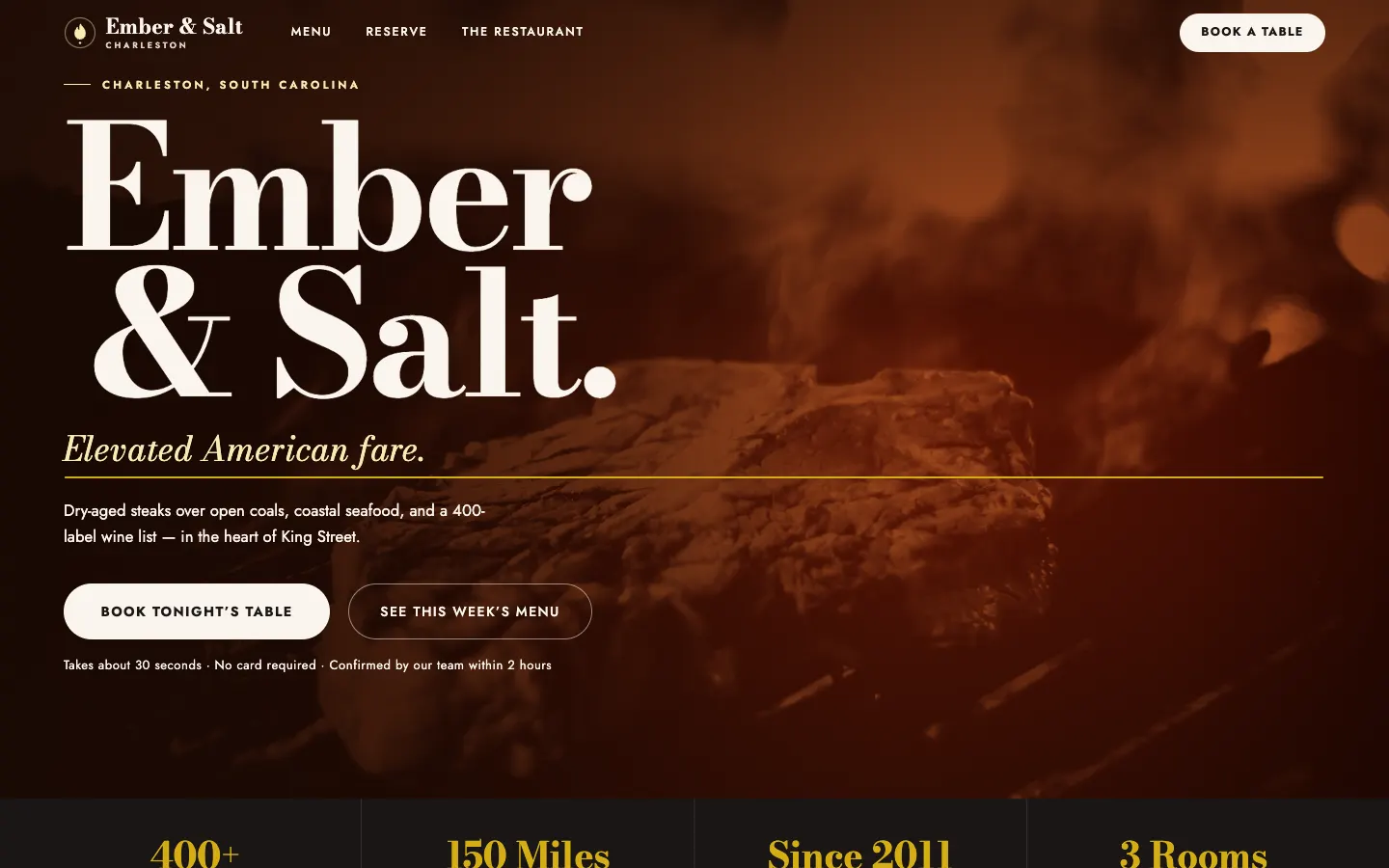
Restaurant Demo
Ember & Salt
- Live reservation widget (OpenTable / Resy ready)
- Full digital menu with seasonal sections
- Private dining inquiry form
- Chef profile and press mentions gallery
Questions,
answered.
How long does it take a new restaurant site to rank on Google?
A technically sound, well-structured site can start appearing for less competitive local terms within weeks, but climbing for competitive "best brunch [city]" style terms is an ongoing effort that compounds over months. We build the foundation on day one and, with a growth campaign, work the rankings continuously rather than treating SEO as a one-time setup.
Is AI search visibility handled as part of the build?
The groundwork is, yes. Clean structure, clear answers, and speed are what make a site quotable by assistants, and every build includes them. Premium adds tracking so you can see your visibility across the major AI tools over time.
Will you handle Google Business Profile and reviews too?
Your website is the foundation, and a growth campaign extends into the off-site signals that reinforce local ranking and put you in the map pack: listings consistency and review generation. It's handled by the team rather than left as homework for your host stand.
Ready to get your Restaurant website built, free?
Annual plan includes a free semi-custom website build: 3 to 12 pages, depending on your plan.
No setup fees · 12-month term, then month-to-month · 30-day money-back guarantee