
Growth campaigns · Florist

Florist marketing that keeps the order in your shop

Sympathy orders arrive with hours to spare, wedding enquiries arrive a year out, and Valentine's week arrives whether the site is ready or not. This campaign builds occasion pages your shop owns, so the order stops passing through an order gatherer on its way to your bench.

Live Florist demo

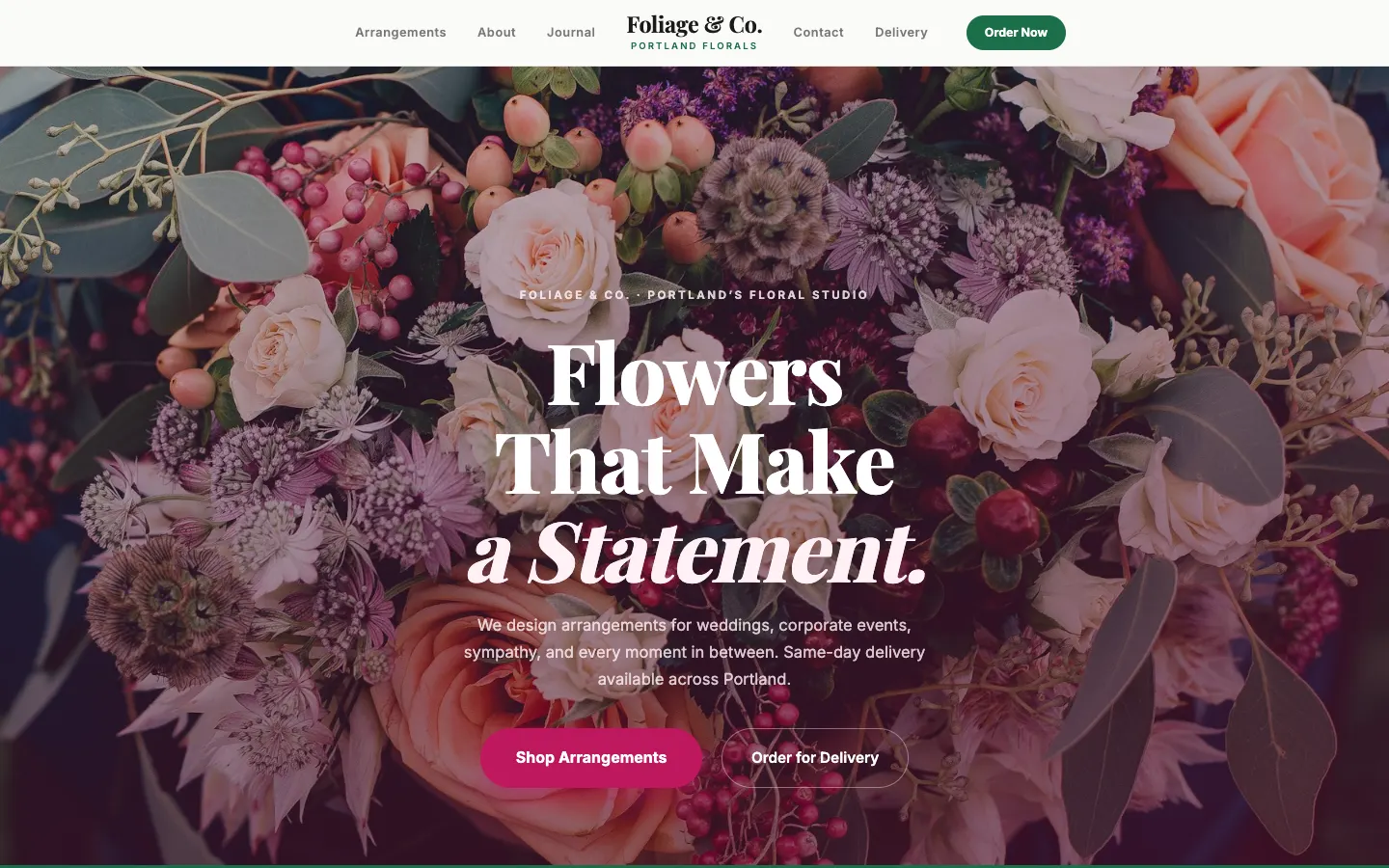
Foliage & Co.

A botanical green-and-ivory florist site with Playfair Display headings, occasion-based arrangement browsing, and featured seasonal designs.

Occasion-Based Arrangement Finder. Foliage & Co. is built the way this campaign argues a florist site should be, with occasion-led browsing and featured seasonal designs so the buyer lands on the reason she was searching.

Open the live demo → Florist websites

Foliage & Co. — live florist website built on WorkspaceCMS
Where the demand is

How florist buyers actually search

No other local retailer has a demand curve like a flower shop's. Valentine's Day and Mother's Day compress a meaningful share of annual revenue into two weekends, funerals produce same-day orders with no lead time at all, and wedding inquiries arrive a year ahead for a booking that closes months later. Three completely different clocks, three different pages, and one campaign that has to serve all of them without blurring into a single 'flower delivery' message.

Then there is the structural problem specific to this trade. Wire services and order-gathering sites buy the obvious local searches, present themselves as a neighborhood shop, and pass the order down for a fraction of the ticket. A customer who believes she bought from you often did not. Reclaiming those searches with your own shop pages, real arrangement photography and a checkout or inquiry path you control is the highest-value work available in florist marketing, and it compounds every holiday.

The occasions themselves also behave differently at the point of decision. Sympathy buyers want to know delivery will reach a specific funeral home before a specific service and are largely price-insensitive under time pressure. Romantic occasion buyers are comparing photographs. Wedding couples are evaluating a portfolio and a consultation. A site organized by product category rather than by occasion asks every one of them to translate, and a share of them simply leave.

The keyword clusters we build around

  • Same-day and local deliverySearches with a delivery deadline attached. The page has to state the cutoff time and the delivery zone plainly, because that is the only thing the buyer is checking.
  • Sympathy and funeralTime-pressured, etiquette-uncertain buyers who need to know what to send and whether it will reach the service in time. Deserves a dedicated section, not a category filter.
  • Holiday occasionsValentine's Day, Mother's Day and the seasonal peaks. Pages need to exist and be indexed weeks before the date, not published on the morning of.
  • Wedding and event floralA long-cycle inquiry driven by portfolio and consultation. Different page, different call to action, different follow-up than a delivery order.
  • Flower type and seasonalityPeonies in June, ranunculus in spring, what is available now. These bring in buyers who care about the flowers and tend to spend accordingly.
  • Corporate and recurring arrangementsOffice, restaurant and hotel accounts that buy weekly. Small search volume, excellent lifetime value, and almost never given a page of its own.
The campaign

Three ways we go get the traffic

Local SEO, AI-assistant visibility and paid media, run by the agency team that has been doing it since long before WorkspaceCMS existed.

Local SEO

Organise by occasion rather than by product, because nobody searches for mixed bouquets. Sympathy, romantic occasions, seasonal peaks, wedding and event work, and standing corporate arrangements each earn a real page with its own photography, its own delivery detail and its own call to action. Delivery zone and same-day cutoff appear on every one of them. Local signal comes from your shop address and the funeral homes and venues you genuinely deliver to, which is ground a wire service cannot occupy.

AI search visibility

What should I send to a funeral, what is in season this month, who delivers to that hospital: assistants answer from whoever wrote it down. Etiquette guidance in plain sentences, delivery zones and cutoff times as structured data, seasonal availability month by month, and arrangement descriptions written by your designers rather than pasted from a supplier feed. Feed copy appears word for word on hundreds of shop sites, so ChatGPT and AI Overviews have no reason to name yours instead of the order gatherer's.

Paid media

Paid work follows the occasion calendar rather than an even spread across the year. Creative comes from your own arrangement photography and is staged ahead of Valentine's Day and Mother's Day, because those auctions punish anything assembled the night before. Sympathy and romantic audiences stay apart, since the voice that suits an anniversary is entirely wrong for someone ordering for a service on Thursday morning. Wedding and event promotion runs on its own longer cycle, aimed at engagement season rather than at a delivery week.

Campaigns are an add-on to a WorkspaceCMS plan and start from $499/mo. The plan itself is a monthly subscription. The build is included, the platform is not free. Local SEO campaigns are scoped to single and multi-location businesses rather than national or global SEO. Paid search management covers service businesses rather than online stores; ad spend is billed by Google or Meta directly to your own account. Full campaign scope → · Plan pricing →

What gets in the way

Six things that hold florist sites back

01

Order gatherers intercept your local searches

National wire and order-gathering sites present as local shops, capture the search, and pass the order to you at a reduced margin. Ranking your own shop pages for your own city is the direct counter, and it protects the ticket as well as the customer relationship.

02

The site is organized by product, not by occasion

Customers do not shop for 'mixed bouquets'. They shop for a funeral on Thursday or an anniversary tonight. Occasion-led navigation matches how the search was phrased and stops making the buyer translate her own intent.

03

Holiday pages get published too late to rank

A Valentine's page that goes live in early February has no time to earn anything. The peak weeks need pages that exist, are indexed and have accumulated signal well ahead of the date, which means building against a calendar rather than a deadline.

04

Delivery zone and cutoff times are hidden

Same-day buyers abandon a site that will not tell them whether their address is covered and by when they must order. Stating the zone and the cutoff up front removes the single most common exit point on a florist site.

05

Sympathy buyers get a shopping experience

Someone ordering for a service needs etiquette guidance, funeral home delivery confirmation and a calm page. Dropping them into a general shop grid loses orders from a buyer who was ready to spend and short on time.

06

Wedding inquiries land in the delivery inbox

Event work is a consultation with a long cycle, not a checkout. Without a separate path and a form that captures date, venue and scope, wedding leads get answered like a bouquet order and the couple books elsewhere.

Campaign add-ons

Pick the campaign that fits the market

Every package below is bought from your dashboard once your site is live. Names, prices and deliverables are read from the catalog at page load, so what you see here is what you would be buying.

Questions

Florist marketing, answered

Can we win orders back from the wire services and order gatherers?

That is the central objective. They rank for your city while presenting as a neighborhood shop, so the counter is your own occasion pages ranking for the same searches with your delivery zone and cutoff stated plainly. It compounds across every holiday.

When do the Valentine's Day and Mother's Day pages need to be live?

Long before the week itself. A page published during the peak has no time to accumulate any signal, so those pages are built against the occasion calendar and left standing year-round rather than raised and taken down each season.

Sympathy buyers and anniversary buyers land on the same shop grid. Is that a problem?

It costs you the sympathy order, which is the one placed under time pressure with the least resistance to spending. That buyer needs etiquette guidance and confirmation that delivery reaches a named funeral home before the service, not a browsing experience.

We do weddings alongside daily delivery. Should that share the same path?

No. Event floral is a consultation that closes months after the first contact, so it needs its own portfolio page and an enquiry form capturing date, venue and scope. Answered like a bouquet order, the couple books the studio that replied properly.

Do we have to publish our delivery zone and cutoff time?

Those two facts are the whole decision for a same-day buyer, and hiding them is the most common reason someone abandons a florist site. Stating the zone and the cutoff also stops orders you cannot physically fulfil from reaching your bench.

Your free site is one click away

Ready to grow a florist business?

Get the site built, then put a campaign behind it. Start online, or talk it through with a strategist first.

Want the full picture? See what a campaign includes