Growth campaigns · Garden Center & Nursery

Garden center marketing built around your season

The season opens on the first genuinely warm weekend, whenever that lands, and the searches that fill it ask what is in stock, what grows in this zone and when to plant it. This campaign exists so those pages are standing before the weather turns.

Live Garden Center & Nursery demo

Willow & Root Garden Center

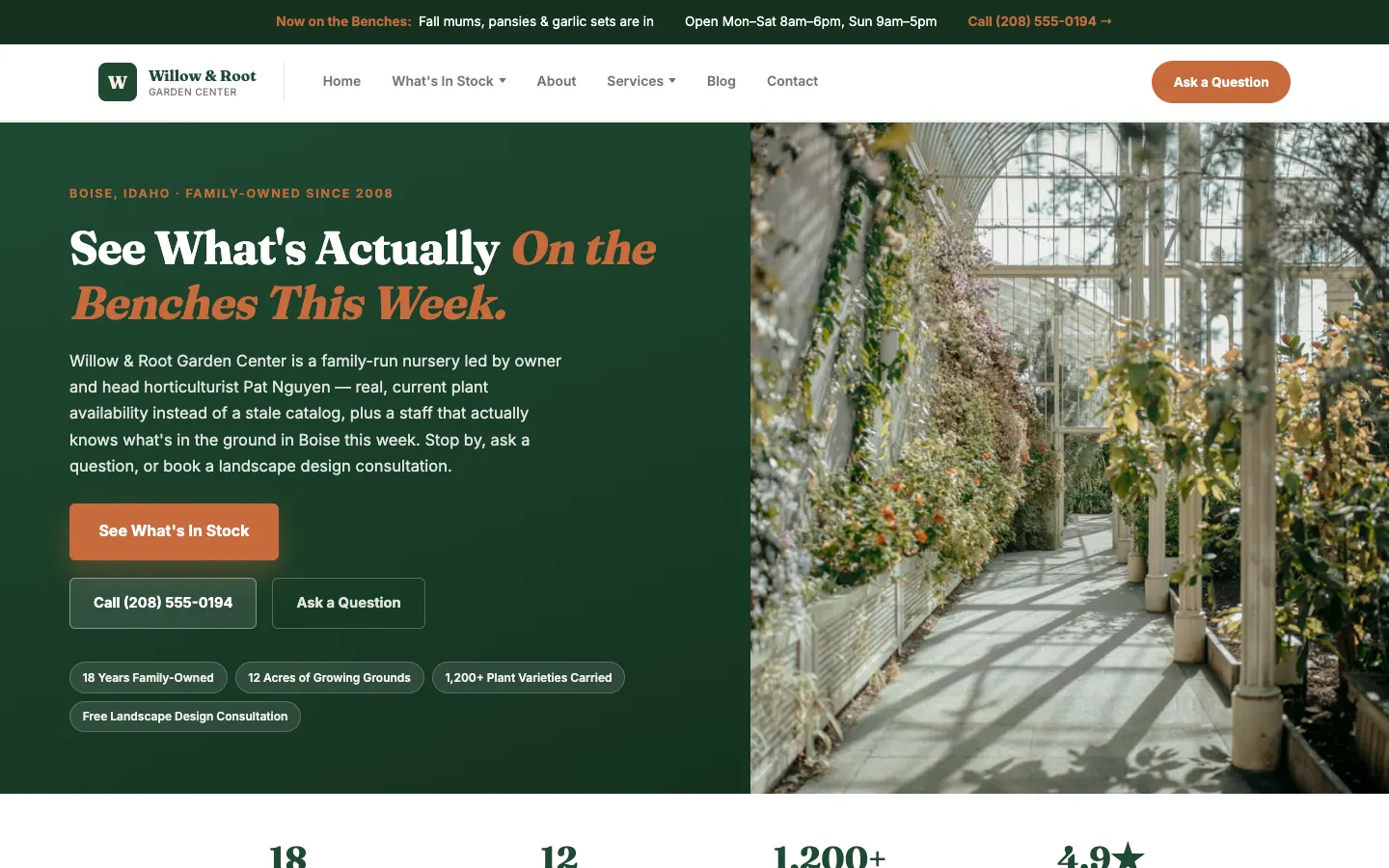
A warm forest-green-and-terracotta garden center site for Boise, ID: a seasonal “what's in stock now” availability showcase, plant care guides, and a landscape design/delivery/planting inquiry path.

Seasonal Availability Showcase + Plant Care Guides. Willow & Root Garden Center puts the argument on screen with a seasonal availability showcase, plant care guides and a separate design, delivery and planting enquiry path.

Open the live demo → Garden Center & Nursery websites

Willow & Root Garden Center — live garden center & nursery website built on WorkspaceCMS
Where the demand is

How garden center & nursery buyers actually search

Weather, not marketing, opens the buying season. The first genuinely warm weekend produces a spike that no other local retailer experiences, and it can shift by weeks from one year to the next. Everything the campaign builds therefore has to be in place before the weather turns, because a page published in the middle of the rush has no time to earn anything. Autumn brings a second, smaller wave for planting, bulbs and seasonal decor that most centers under-invest in entirely.

Search behaviour here is unusually knowledge-led. Gardeners search problems and questions long before they search products: what to plant now, why leaves are yellowing, which shrubs deer leave alone, what grows in a specific hardiness zone. Those searches are how a center becomes the local authority, and the answers are inherently regional. Advice written for a national audience is useless in a specific climate, which is precisely why a local nursery can win these searches against far larger sites.

The competitive reality is a big-box store within a few miles selling similar plants for less, which is why availability and expertise carry the whole argument. Shoppers drive past the chain for a rare cultivar, healthy stock and someone who can actually answer a question. Meanwhile many centers run real service lines alongside retail, landscape design, delivery, planting and maintenance, and those services follow a completely different, quote-led cycle that the retail side of the site tends to smother.

The keyword clusters we build around

  • What is in stock nowShoppers checking availability before making the drive, especially for specific cultivars. A live availability page is the single most useful thing a nursery can publish.
  • Plant care and problem solvingYellowing leaves, pests, pruning timing. Knowledge searches that build local authority year round and bring gardeners back when they are ready to buy.
  • Regional planting calendarWhen to plant what, tied to your zone and last frost. Nationally written advice fails here, which is exactly the gap a local center fills.
  • Landscape servicesDesign, delivery, planting and maintenance inquiries. A quote-led cycle that needs its own path rather than a line on the retail navigation.
  • Seasonal and holiday inventoryPumpkins, Christmas trees, spring bulbs, mulch season. Predictable demand that needs pages standing well before the season starts.
  • Specialty and native plantsNatives, pollinator plants, deer-resistant selections and unusual cultivars. Lower volume, highly motivated buyers, and the traffic a big-box store cannot serve.
The campaign

Three ways we go get the traffic

Local SEO, AI-assistant visibility and paid media, run by the agency team that has been doing it since long before WorkspaceCMS existed.

Local SEO

Two pillars carry a nursery. Availability, so a gardener can confirm you have the cultivar before driving across town, and knowledge content anchored to your hardiness zone, your last frost date and the pests your customers actually fight. Seasonal pages for bulbs, mulch, pumpkins and cut trees stand well ahead of each wave rather than appearing during it. The design, delivery and planting lines get their own quote-led path, because a homeowner scoping a border is not the visitor buying a flat of annuals.

AI search visibility

When do I plant garlic here, why are these leaves yellowing, what will the deer leave alone: assistants answer these constantly, and regional specificity is the whole game. Naming your hardiness zone, giving planting windows in real weeks, describing local pest pressure, publishing availability and service areas as structured data, all phrased as direct answers, gives a model something only you can supply. National gardening advice rewritten in your voice already sits in the training data under somebody else's name.

Paid media

Timing beats budget here, because the spike arrives with the weather rather than with a date, so campaigns are built and approved before that weekend rather than launched into it. Retail creative runs as seasonal social tied to what has just landed on the benches and moves out fast when a crop sells through. Landscape design, delivery, planting and maintenance are a different buyer on a quote-led cycle, so they run as their own search campaign against project phrasing rather than sharing attention with flats of annuals.

Campaigns are an add-on to a WorkspaceCMS plan and start from $499/mo. The plan itself is a monthly subscription. The build is included, the platform is not free. Local SEO campaigns are scoped to single and multi-location businesses rather than national or global SEO. Paid search management covers service businesses rather than online stores; ad spend is billed by Google or Meta directly to your own account. Full campaign scope → · Plan pricing →

What gets in the way

Six things that hold garden center & nursery sites back

01

The season opens with the weather, not the calendar

The first warm weekend can arrive weeks early or late, and it produces the year's biggest spike. Pages and creative have to be finished and indexed ahead of an unpredictable start, which means building against readiness rather than a launch date.

02

Nobody can tell what is actually in stock

Shoppers will not drive across town on a guess, particularly for a specific cultivar. A maintained availability showcase converts checking-first behaviour into visits, and it is the clearest advantage a nursery has over a big-box garden aisle.

03

Advice content is written for the wrong climate

Generic planting guidance is worthless to someone in your zone, and it is what most nursery blogs publish. Care and calendar content anchored to local conditions is what earns authority and what search engines have every reason to prefer locally.

04

Landscape services are buried under retail

Design, delivery and planting are quote-led with a longer cycle and a much larger ticket than a flat of annuals. Sharing navigation and a contact form with retail means those inquiries arrive without the site or scope detail needed to quote.

05

The autumn wave is left on the table

Fall planting, bulbs, mulch and seasonal decor represent real demand that arrives after everyone has stopped paying attention. Pages built for spring alone leave a whole second season without anything to rank.

06

The blog stops in July

Content published only during the rush signals a site that goes quiet for most of the year. Care and problem-solving questions run year round, and steady publishing is what keeps the site earning visibility before the next season opens.

Campaign add-ons

Pick the campaign that fits the market

Every package below is bought from your dashboard once your site is live. Names, prices and deliverables are read from the catalog at page load, so what you see here is what you would be buying.

Questions

Garden Center & Nursery marketing, answered

The season opens with the weather. How do we plan a campaign around that?

By building for readiness instead of a launch date. Everything for spring is written, indexed and earning visibility before the first warm weekend can arrive, because a page published in the middle of the rush contributes nothing to the rush it was written for.

How does an availability page work when stock changes daily?

Your team updates it directly, and it does not need to be a full inventory system to earn its keep. Even a maintained what-is-here-now page answers the question deciding whether a gardener hunting a specific cultivar makes the drive.

Is plant care content worth writing when national gardening sites already cover it?

Their advice is written for no particular climate, which is exactly the gap. Guidance tied to your zone, your frost dates and the problems in your customers' soil is something a national site structurally cannot produce and search engines have reason to prefer locally.

How do we stop the landscape design side being buried under retail?

It gets its own path and its own enquiry form capturing site, scope and timing. Sharing navigation and a contact box with the retail floor means project enquiries arrive without the detail your designer needs to quote, and larger tickets go cold.

Is there anything worth doing once spring is over?

Autumn is the wave most centers leave on the table. Fall planting, bulbs, mulch and holiday stock draw real demand after everyone has stopped paying attention, and care questions run through the whole year regardless of what is on the benches.

Your free site is one click away

Ready to grow a garden center & nursery business?

Get the site built, then put a campaign behind it. Start online, or talk it through with a strategist first.

Want the full picture? See what a campaign includes