
Growth campaigns · Furniture Store

Furniture store marketing that fills the showroom

Nobody buys a sectional without sitting on one, but the shortlist of showrooms worth a Saturday is built weeks earlier, online. This campaign is aimed squarely at that shortlist: the brands you carry, your room sets, your delivery towns and the lead time she can check before driving.

Live Furniture Store demo

Haven Home Furnishings

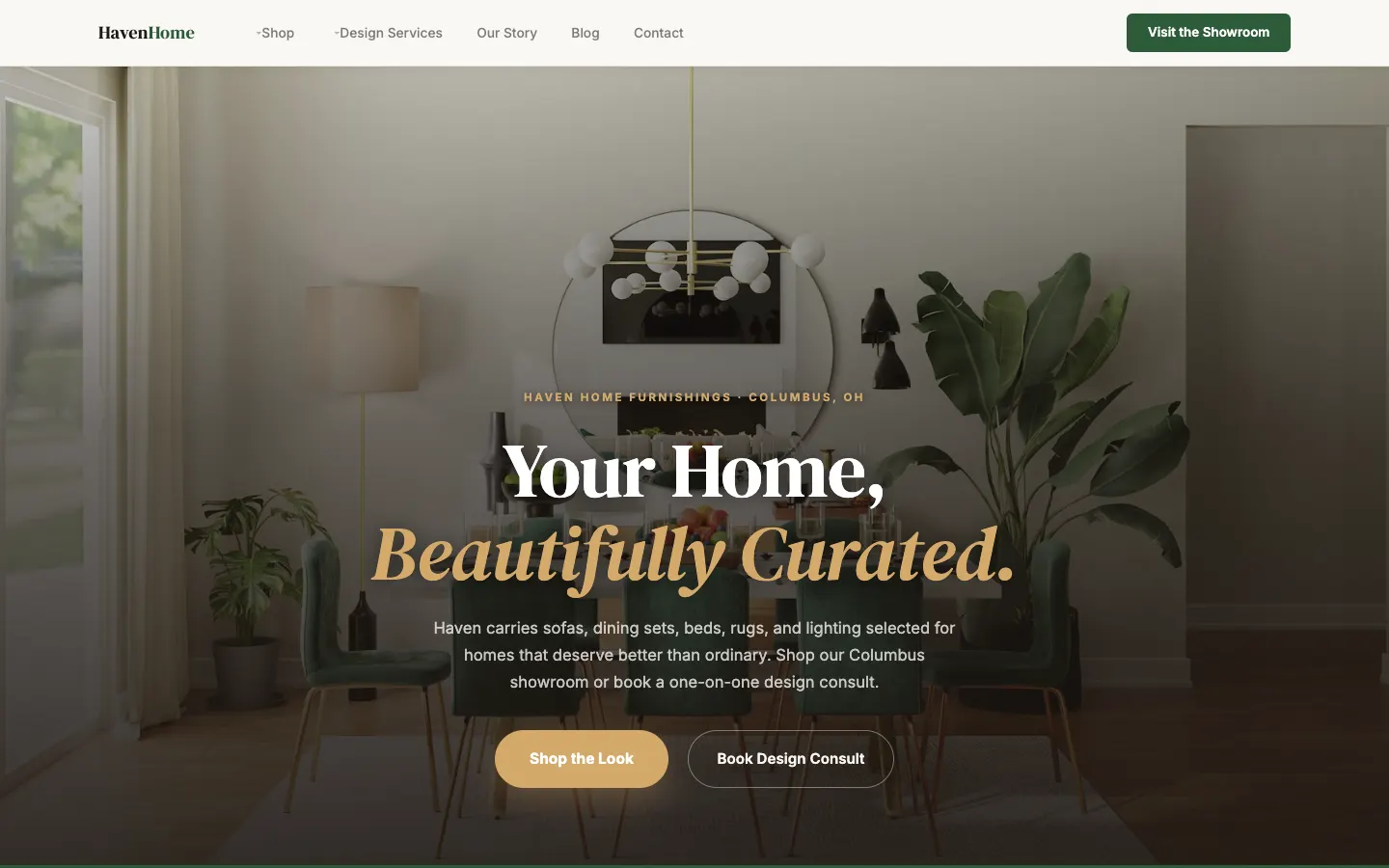
A warm sand-and-forest-green furniture store site with DM Serif Display headings, room-inspiration imagery, and category browsing.

Room Inspiration Gallery + Category Browsing. Haven Home Furnishings shows the structure this campaign builds on, with room-inspiration sets and category browsing that give style-led searches somewhere real to land.

Open the live demo → Furniture Store websites

Haven Home Furnishings — live furniture store website built on WorkspaceCMS
Where the demand is

How furniture store buyers actually search

Furniture sits in an awkward middle: too expensive to buy on impulse, too tactile to buy sight unseen, and researched almost entirely online before anyone walks in. A shopper will spend weeks on room inspiration, narrow to a style, check dimensions against a floor plan, and then visit two or three showrooms in a single Saturday. Everything the campaign does is aimed at being one of those two or three, which is a visit metric, not an add-to-cart metric.

The competitive picture is lopsided in a specific way. National chains and marketplaces dominate generic product searches with enormous catalogs and enormous budgets, and an independent retailer cannot win that fight head-on. What the independent can own is the local and the specific: a named brand carried within driving distance, a style category with real depth, a delivery radius, in-stock availability, and the design help nobody gets from a marketplace. Those searches convert at a rate generic product terms never will.

Retail rhythm shapes everything else. Holiday weekends carry a disproportionate share of the year, new-mover activity drives a steady undercurrent, and the delivery lead time question follows every conversation because a shopper burned by a long backorder will ask about it first. Financing availability is checked before the visit rather than at the counter. A site that answers stock, delivery window and financing structure up front removes the reasons a shopper crosses you off the Saturday list.

The keyword clusters we build around

  • Category plus citySofa, dining set or mattress paired with a location. These are the shopper's shortlist searches and the ones an independent can realistically win against national catalogs.
  • Brands carriedPeople search for a manufacturer and where to see it nearby. A page per line you stock captures high-intent traffic that marketplaces cannot answer locally.
  • Room inspiration and styleTop-of-funnel browsing by look rather than product. It earns the early visit and feeds the shopper into category pages once a style has been chosen.
  • Delivery, lead time and stockWhether it is available, when it arrives and whether you deliver to a given town. This decides the visit as much as the product does.
  • Financing and payment optionsChecked well before anyone comes in. Explaining how financing works, without quoting terms we cannot stand behind, keeps shoppers who would otherwise assume the answer is no.
  • Design consultationShoppers looking for help planning a room. It is the service marketplaces cannot offer, and it converts a browser into a booked appointment.
The campaign

Three ways we go get the traffic

Local SEO, AI-assistant visibility and paid media, run by the agency team that has been doing it since long before WorkspaceCMS existed.

Local SEO

Bare product nouns belong to the marketplaces and are not worth chasing. What an independent showroom wins is brand-plus-city and category-plus-delivery-town: a page for every line you stock, category pages tied to the towns your truck reaches, and room sets treated as landing pages instead of gallery decoration. Availability, delivery radius and lead time sit on those pages, because a shopper burned once by a backorder checks the wait before she checks anything else.

AI search visibility

Where can I see this brand near me, what is this style called, will a sofa that deep fit the room: assistants field the questions that come before a showroom visit. Retailers get named when the site publishes the lines genuinely carried, dimensions and materials piece by piece, delivery towns as structured data, and buying guides written as answers rather than as inspiration copy. A catalogue of supplier descriptions reads to a model as the same catalogue every other dealer uploaded.

Paid media

Creative here is your own room photography, and its job is a visit rather than a checkout, so it is judged on directions, calls and booked design consultations. The delivery radius sets the targeting boundary, since impressions beyond the towns your truck reaches end in a conversation that closes with an apology. Sale weekends carry a disproportionate share of the year, so their creative and landing pages are staged well ahead rather than assembled in the week when every retailer in the market is bidding at once.

Campaigns are an add-on to a WorkspaceCMS plan and start from $499/mo. The plan itself is a monthly subscription. The build is included, the platform is not free. Local SEO campaigns are scoped to single and multi-location businesses rather than national or global SEO. Paid search management covers service businesses rather than online stores; ad spend is billed by Google or Meta directly to your own account. Full campaign scope → · Plan pricing →

What gets in the way

Six things that hold furniture store sites back

01

Competing with national catalogs on generic product terms

You will not outrank a marketplace for a bare product noun. The winnable ground is local and specific: brand-plus-city, category-plus-city, delivery radius and in-stock availability, which is exactly the intent marketplaces answer worst.

02

Inventory changes faster than the website

Floor models rotate, lines discontinue, stock arrives and sells. A site showing pieces you no longer carry produces a wasted trip and a lost customer. Keeping the catalog honest is part of the ongoing work, not a launch task.

03

The campaign measures the wrong outcome

Judging a furniture site by online orders misses where the money is made. The meaningful conversions are directions, calls, appointment bookings and design consultations, and the reporting has to be built around those from day one.

04

Delivery radius and lead time are guesswork for the shopper

Two questions decide whether she visits: do you deliver to my town, and when would it arrive. Sites bury both. Stating them plainly removes the doubt that sends her to the chain store instead.

05

Room photography is used as decoration, not as landing pages

Inspiration imagery is the strongest asset a furniture retailer owns and it usually sits in a gallery that ranks for nothing. Turning room sets into indexable, shoppable pages captures style-led searches that product pages cannot.

06

Holiday weekends are planned late

The sale weekends carrying the year get promoted days out, which is too late for organic and expensive for paid. Building the seasonal pages and creative against a calendar spreads the cost and gives the pages time to earn visibility.

Campaign add-ons

Pick the campaign that fits the market

Every package below is bought from your dashboard once your site is live. Names, prices and deliverables are read from the catalog at page load, so what you see here is what you would be buying.

Questions

Furniture Store marketing, answered

We do not sell online. What is the campaign actually optimising for?

Showroom visits. The measurable version of that is directions requests, phone calls and booked design consultations, so reporting is built on those rather than on cart activity that would misrepresent how a furniture sale is actually made.

Can we outrank the national marketplaces for something like a sectional?

Not for the bare product term, and chasing it wastes the year. The winnable searches pair a brand or a category with a place, which is precisely the intent a marketplace answers worst and a showroom with a delivery truck answers best.

How should the brands we carry be handled?

Each line gets its own page. Shoppers commit to a manufacturer first and then look for somewhere nearby to sit on it, and that second search is one a national catalogue cannot answer for your town but your showroom can.

Floor models rotate constantly. How does the site keep up?

Your team updates availability and floor stock directly, without waiting on a developer. Listings showing pieces you no longer carry produce a wasted Saturday trip, so catalogue accuracy is treated as continuing work rather than a launch checklist item.

Should delivery radius and lead time be published?

They decide whether she visits at all. Two questions precede every showroom trip, whether you deliver to her town and roughly when the piece would arrive, and burying the answers sends her to the chain store that printed them on the page.

Your free site is one click away

Ready to grow a furniture store business?

Get the site built, then put a campaign behind it. Start online, or talk it through with a strategist first.

Want the full picture? See what a campaign includes