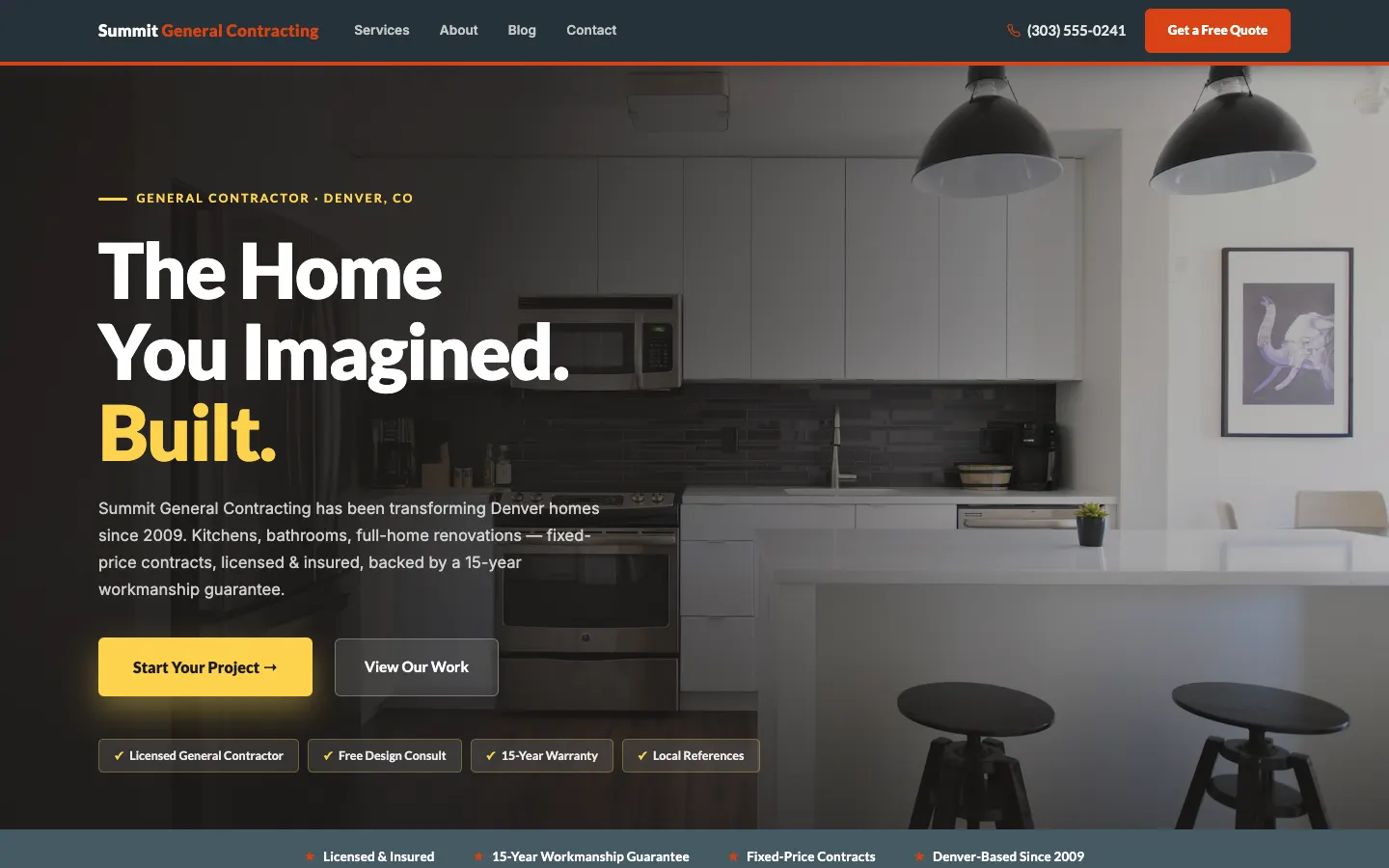
Remodeling has the longest and least linear consideration cycle in this cluster, and it is usually a two-person decision. A couple starts talking about a kitchen or an addition, one of them begins collecting images, and searches drift for months between design inspiration, cost ranges, permitting questions and finally contractor names. Referrals still open a lot of doors, but the referral is checked online immediately, so being findable and being credible are two separate jobs and the site has to do both.
Budget anxiety shapes every interaction. Buyers have read that remodels overrun, they have heard about a neighbour whose contractor disappeared mid-project, and they are trying to work out whether you are the kind of firm that manages a schedule. That is why process content outperforms sales copy here. A published sequence covering design, permitting, demolition, rough-in, inspection and finish tells a nervous homeowner what the months will actually look like, and it does more for conversion than any list of services.
The competitive picture is fragmented in a way that helps a well-organised firm. You are up against design-build studios with architects on staff, specialist remodelers who only do kitchens or baths, handyman operations claiming general contracting, and lead marketplaces that sell the same enquiry several times. Homeowners cannot tell which is which, and they are looking for signals: licensing and insurance, a permit history that suggests real work, project photographs with scope and timeline attached, and reviews that describe how problems were handled rather than how nice everyone was.