
Growth campaigns · Pet Grooming

Marketing for pet grooming salons

A good grooming client is a standing slot every few weeks for years, not a transaction. So the work is two-sided: winning the owner typing a breed name and a coat problem late at night, and quietly filling the Tuesday mornings that never sell themselves.

Live Pet Grooming demo

The Groomed Paw

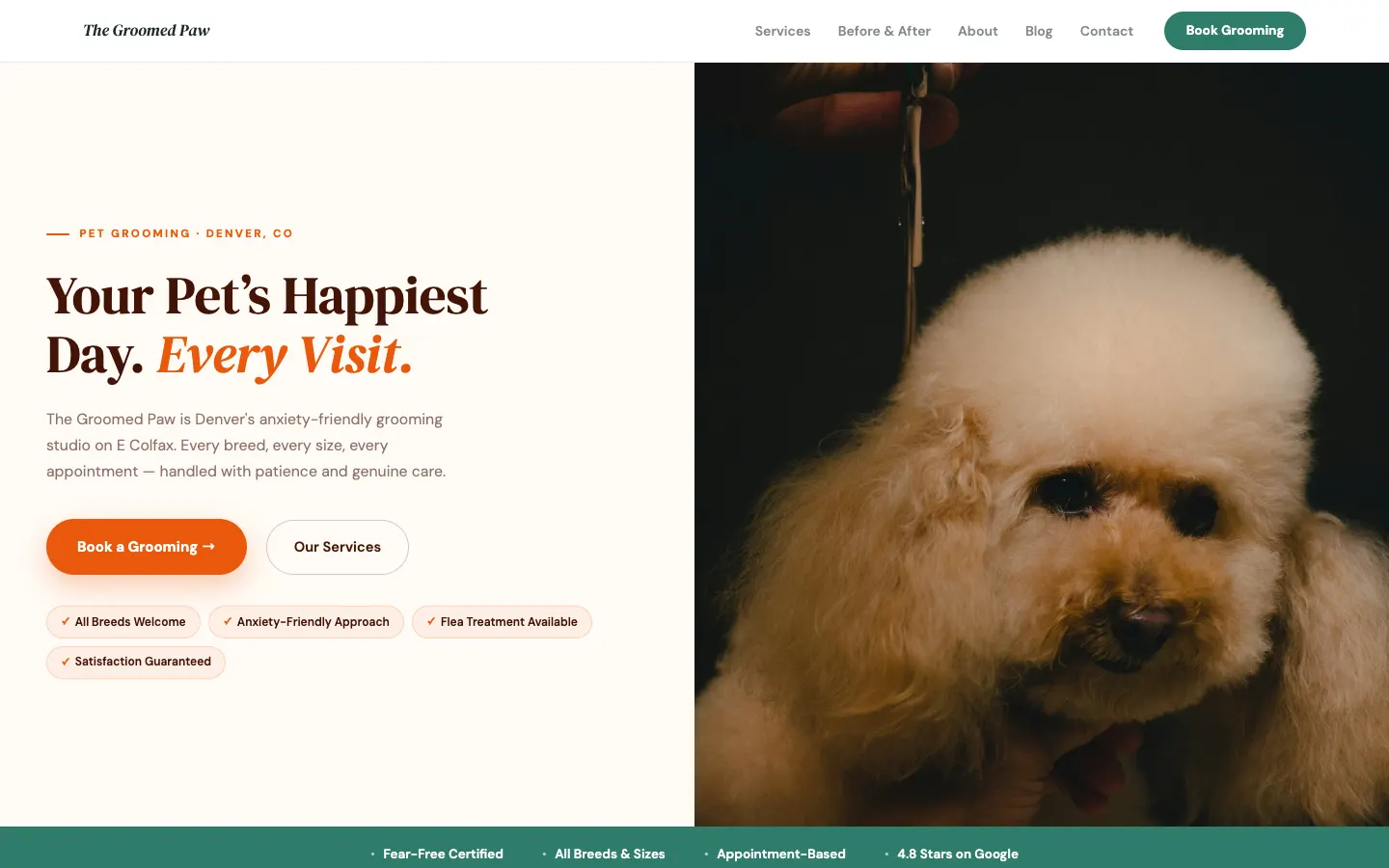
A fresh teal pet grooming site with DM Serif Display headings, breed-specific service cards, and before/after grooming transformations.

Breed Gallery + Before/After Grooming Showcase. The Groomed Paw is the reference build: breed-specific service cards, a before-and-after showcase sorted by coat problem rather than by date, and booking wired into the page instead of hidden behind a callback form.

Open the live demo → Pet Grooming websites

The Groomed Paw — live pet grooming website built on WorkspaceCMS
Where the demand is

How pet grooming buyers actually search

Grooming searches are unusually specific because owners describe their dog before they describe the service. Doodle coat, double-coated shed-out, hand stripping for a terrier, a cat that will not tolerate a dryer, a senior with hip issues who cannot stand for a full groom. Owners search that way because they have been turned away or badly served before, and they are screening for competence with the breed in front of them. A page that says we groom all breeds answers none of it.

The buying cycle is the other thing that makes this vertical different. A good client is not one appointment, they are a standing slot every several weeks for years, so the real economics sit in retention and in the referral that follows a first good groom. That changes what marketing is for. You are not chasing volume, you are chasing the right first appointment from an owner who will rebook, and then removing every reason to drift to whoever had an opening sooner.

Competition splits three ways and each one needs a different answer. Big-box salons win on convenience and hours and lose on continuity of groomer. Mobile groomers win on the anxious dog and the owner who cannot get across town. Independent salons win on skill and on knowing the animal, but only if that skill is visible before the booking. Seasonality then stacks on top: heavy shed-outs in spring and autumn, a hard crush before the winter holidays, and a summer wave of owners who have just decided the shaving question for themselves.

The keyword clusters we build around

  • Breed and coat-type searchesOwners search their breed plus a coat problem. Each breed or coat family that you genuinely specialise in earns its own page describing the cut, the tools, the time it takes and what you will and will not do to that coat.
  • Anxious, senior and difficult dogsThis is the highest-conviction search in the category and the least served. A page on how you handle fearful dogs, kennel-free drying, medical clearances and split appointments converts owners who have already been turned away somewhere else.
  • Near me and availabilityGeneric proximity searches with an urgent tail, often on a phone, often after hours. These need map presence, honest hours and an online booking path that shows real openings rather than a contact form promising a callback.
  • Service and add-on questionsDe-shed treatments, nail grinds versus clips, teeth, anal glands, flea baths, puppy first grooms. Owners price-check and worry-check these individually, so each deserves plain description rather than a line item on a menu.
  • Cat groomingA thin, badly served pocket of demand with almost no local competition in most markets. If you take cats, say so loudly, because owners searching for it are usually calling four places to find one that will.
The campaign

Three ways we go get the traffic

Local SEO, AI-assistant visibility and paid media, run by the agency team that has been doing it since long before WorkspaceCMS existed.

Local SEO

Owners describe the dog before they describe the service, so the site is organised the same way: a page per breed or coat family you genuinely specialise in, and problem pages for matting, heavy shed-outs, hand stripping, first puppy grooms and the anxious or senior dog another salon turned away. The map profile does as much work as the site here, because a grooming search closes fast and usually on a phone, so hours, service area, review velocity and current before-and-after photos all need maintaining rather than posting once. Coat-care writing between appointments catches owners earlier.

AI search visibility

Owners now ask ChatGPT and Google AI Overviews which local groomer handles a doodle coat, will take a cat, or works with a fearful rescue. Those answers are built from stated facts, so the breeds and coat types you take are named in text, your matting and shaving policies are written out rather than implied, and the awkward questions about senior dogs and medical clearances are answered directly. Grooming sites tend to be photo-led with almost no readable copy, which is exactly why so few of them get cited when an assistant is asked to recommend someone.

Paid media

Catchments are small in grooming and one standing client is worth years of repeat visits, so reach is the wrong thing to optimise toward. Search ads run on breed terms and near-me queries with tight geography, while paid social does the persuading copy cannot: a matted coat before, a clean trim after, filmed on your own table. The more useful lever is timing. Pointing spend at midweek and quiet-season availability rather than at Saturdays stops the campaign competing with a book that was already full, and pushes demand into the hours that actually need it.

Campaigns are an add-on to a WorkspaceCMS plan and start from $499/mo. The plan itself is a monthly subscription. The build is included, the platform is not free. Local SEO campaigns are scoped to single and multi-location businesses rather than national or global SEO. Paid search management covers service businesses rather than online stores; ad spend is billed by Google or Meta directly to your own account. Full campaign scope → · Plan pricing →

What gets in the way

Six things that hold pet grooming sites back

01

Skill is invisible until the dog comes home

An owner cannot judge a groomer from a price list, which is why they scroll photos instead. Before-and-after sets organised by breed and by problem, matting, shed-out, a first puppy groom, do the persuading that copy cannot. Shot consistently, they are also the single most reusable asset across search, social and the booking page.

02

The book fills unevenly and the gaps cost real money

Saturdays sell themselves and Tuesday mornings sit empty. Marketing that only drives raw enquiry volume makes that worse by pushing everyone toward the same slots. The campaign targets the softer windows deliberately, with midweek availability surfaced in ads and on the booking page rather than hidden behind a generic request form.

03

Big-box salons own the convenience search

Chains have hours, locations and a national brand people already type. Competing on the same terms loses. What beats them is continuity, the same groomer every visit, and specialisation that a rota-staffed salon cannot promise, made explicit on pages built around exactly those two things.

04

Rebooking depends on memory, not marketing

Most drift happens because an owner simply forgot they were due, not because they were unhappy. A site that supports rebooking at pickup, and campaigns timed to a coat's actual cycle rather than a monthly newsletter, recover appointments that were never really lost in the first place.

05

Price questions arrive before the dog is known

Grooming cost depends on breed, coat condition and behaviour, so a flat published price is either wrong or scares people off. Ranges tied to breed and coat, with the variables named plainly, answer the question honestly and filter out the callers who were only ever going to price-shop.

06

One bad review reads louder here than anywhere

Owners treat groomers the way they treat childcare, and a single nervous review can stall a month of enquiries. Steady review generation from happy standing clients, plus visible policies on matting, shaving and medical issues, gives a worried reader the context that a lone complaint strips away.

Campaign add-ons

Pick the campaign that fits the market

Every package below is bought from your dashboard once your site is live. Names, prices and deliverables are read from the catalog at page load, so what you see here is what you would be buying.

Questions

Pet Grooming marketing, answered

Is it worth saying on the site that we take cats?

Loudly, and on its own page. Cat grooming is thinly served in most markets, and owners searching for it are usually ringing several salons hoping one says yes, so being the shop that answers plainly wins a booking almost unopposed.

Can marketing bring us the anxious and senior dogs?

It can, and that is the least-served search in the category. A page on kennel-free drying, split appointments, medical clearances and how you handle a fearful rescue converts owners who have already been turned away somewhere and are not shopping around.

What makes a before-and-after set actually useful?

Consistency. Same light, same angle, sorted by breed and by problem rather than by date, so an owner with a matted doodle can find the matted doodle. Shot that way the set works on breed pages, in paid social and on the booking screen.

How do you fill Tuesday mornings instead of another Saturday?

By surfacing the soft windows deliberately. Midweek openings appear in ad copy and on the booking page rather than sitting behind a callback form, so new demand lands in the hours that need it instead of the ones already spoken for.

Most of our drift is owners forgetting they are due. Can that be fixed?

Largely, and it is closer to scheduling than to advertising. Rebooking at pickup, plus reminders timed to a coat's actual growth cycle rather than a monthly send, recovers standing clients who were never unhappy in the first place.

Your free site is one click away

Ready to grow a pet grooming business?

Get the site built, then put a campaign behind it. Start online, or talk it through with a strategist first.

Want the full picture? See what a campaign includes