
Growth campaigns · Equestrian & Horse Supplies

Growth campaigns for tack shops and equestrian retailers

A rider shopping for a saddle is measuring a wither and booking a fitter. The same rider buys fly spray from the barn aisle without reading a word. The campaign has to serve both without confusing either.

Live Equestrian & Horse Supplies demo

Bridle & Bay Equestrian

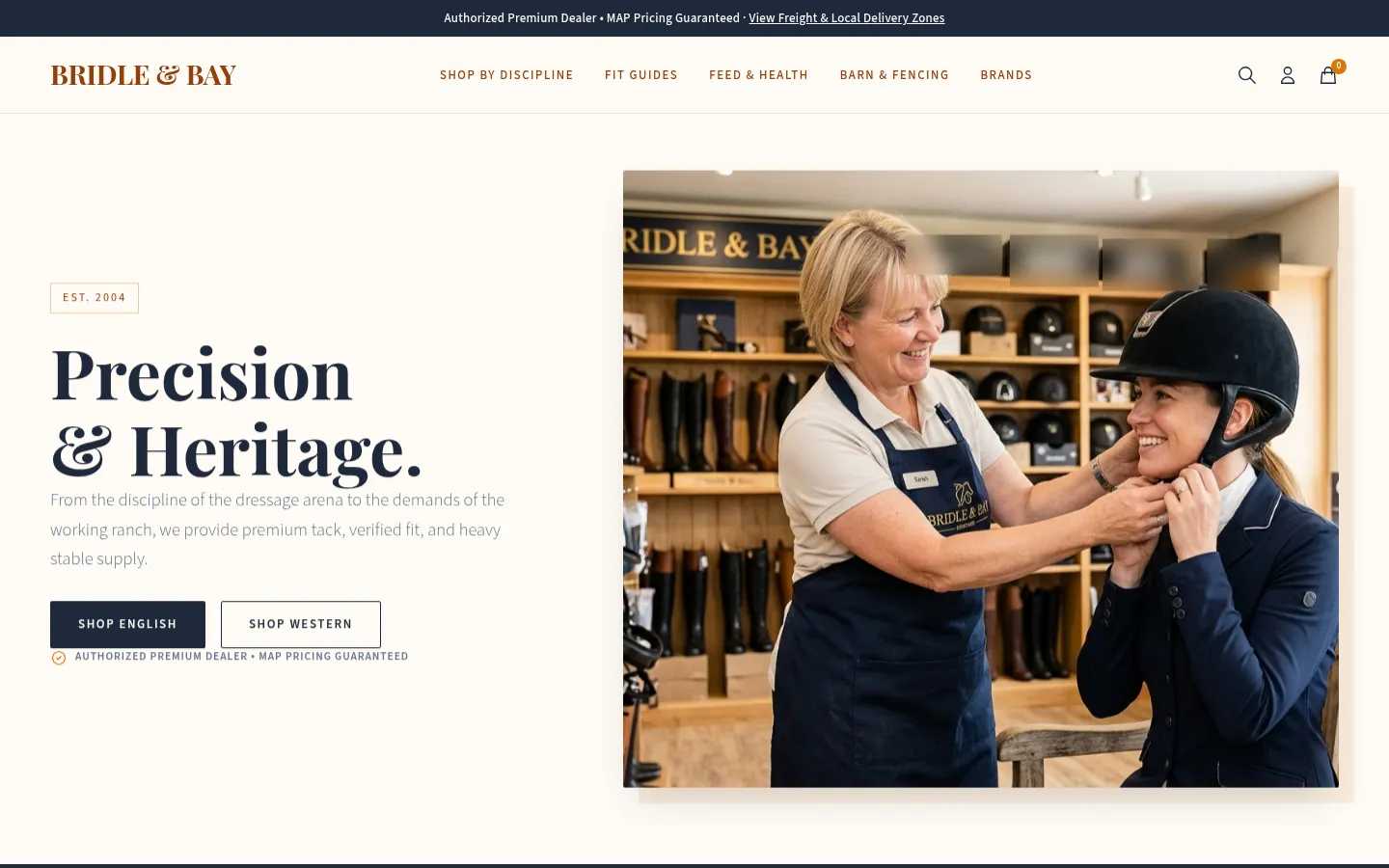
Tack-room authority built around discipline-first aisles: English, Western, feed and barn each get their own depth, anchored by fit guidance no algorithm can replace.

Discipline-Split Shop Navigation. Bridle & Bay Equestrian is the build this campaign runs on: English, Western, feed and barn each get their own depth, with fit guidance sitting where a rider actually needs it rather than buried in a help centre.

Open the live demo → Browse all demos

Bridle & Bay Equestrian — live equestrian & horse supplies website built on WorkspaceCMS
Where the demand is

How equestrian & horse supplies buyers actually search

Nobody buys a saddle the way they buy a jacket. The rider is measuring a horse's back, arguing about tree width, and often booking a fitter before any money changes hands, which is why the searches that convert here read like specifications rather than product names: medium-wide tree, close contact, a seat size given to the half inch. The same customer will buy fly spray on a phone standing in the barn aisle, giving no thought to any of it. One catalogue has to answer both, and most tack shop sites are built as though only the second person exists.

Discipline is the dividing line the whole category runs along, and it is not cosmetic. English and Western buyers use different words for the same object, shop different brands, and read a page that mixes them as a shop that does neither properly. A hunter rider looking for a girth and a reiner looking for a cinch are describing similar equipment and will never accept each other's vocabulary. Aisles split by discipline rank for far more of the real language than a single accessories page ever can.

Demand also moves on weather and a show calendar rather than a marketing plan. Blanket season arrives in a week and empties a category; fly and sheet demand turns on a warm spell; show season sets when boots, coats and braiding supplies sell. Feed and hay behave differently again, being heavy, repeat, and genuinely local, which is the part of the business a national competitor cannot take and the part most tack shops leave hardest to find.

The keyword clusters we build around

  • Fit and sizing specificationsTree width, seat size, blanket length, bit width. These are the highest-converting searches in the category and the ones a general retailer answers worst.
  • Discipline vocabularyDressage, hunter, eventing, reining, trail. Aisles and guides written in each discipline's own language rather than one blended accessories page.
  • Weather and show-calendar triggersBlanket weight, fly protection, show attire and braiding supplies, published well ahead of the week the demand actually lands.
  • Local feed, hay and deliveryThe repeat, heavy, genuinely local half of the business, with a delivery radius and barn drop-off stated plainly.
  • Brand plus authorised dealerRiders search a brand and then look for somebody they can actually fit with. Being findable as a stocking dealer is its own set of pages.
The campaign

Three ways we go get the traffic

Local SEO, AI-assistant visibility and paid media, run by the agency team that has been doing it since long before WorkspaceCMS existed.

Local SEO

The fit knowledge is the campaign. Measuring guides for blanket length, tree width and bit sizing earn links, get cited, and pull in exactly the buyer who is about to spend properly. Aisles are split by discipline so each one can rank in its own vocabulary instead of competing with itself. Seasonal pages are built and indexed months ahead of the weather that sells them, and the feed and hay side gets real local treatment with a stated delivery radius, because that is the revenue nobody can take remotely.

AI search visibility

Assistants recommending a tack shop repeat what is written plainly: which brands you are a stocking dealer for, whether a fitter is on staff, what a fitting appointment involves, how sizing is measured, and where you deliver feed. A shop that publishes a real measuring method and honest suitability notes gets quoted; one with a product grid and a phone number has given ChatGPT, Perplexity and AI Overviews nothing to say beyond the name.

Paid media

Creative sells this category in a way a text ad cannot: a saddle fitted on a horse, a blanket that stays put through a wet night, a braiding job before a show. Paid social carries that, weighted hard into the short seasonal turns and switched off between them. The local half of the business, feed delivery and fitting appointments, has genuine nearby intent worth bidding on. Where the wider retail catalogue is concerned, what fits is worth a conversation with the team rather than an assumption.

Campaigns are an add-on to a WorkspaceCMS plan and start from $499/mo. The plan itself is a monthly subscription. The build is included, the platform is not free. Local SEO campaigns are scoped to single and multi-location businesses rather than national or global SEO. Paid search management covers service businesses rather than online stores; ad spend is billed by Google or Meta directly to your own account. Full campaign scope → · Plan pricing →

What gets in the way

Six things that hold equestrian & horse supplies sites back

01

One accessories aisle serving two disciplines

English and Western buyers use separate words for near-identical equipment. A blended catalogue matches neither vocabulary and reads to both as a shop that specialises in nothing.

02

Fit knowledge that only exists on the phone

The staff answer sizing questions all day and none of it is written down. That expertise is the single most searchable asset a tack shop owns and it usually never reaches a page.

03

Blanket weather beating the website

Seasonal pages published the week the cold arrives have no chance of ranking for it. The turn happens faster than indexing does, every year, and it is entirely predictable.

04

Feed and hay invisible outside the front door

The repeat local revenue is the hardest thing for a national competitor to touch, and it is routinely buried without a delivery radius, barn drop-off terms or anything a nearby search can match.

05

Marketplace listings outranking your own pages

The same product sits on a marketplace with more authority and thinner information. Winning it back means saying something the listing cannot: fit, suitability, and what to buy instead.

06

Returns driven by sizing rather than taste

Blankets and saddles come back because they did not fit, not because the rider changed their mind. Measurement guidance on the page removes cost that discounting never will.

Campaign add-ons

Pick the campaign that fits the market

Every package below is bought from your dashboard once your site is live. Names, prices and deliverables are read from the catalog at page load, so what you see here is what you would be buying.

Questions

Equestrian & Horse Supplies marketing, answered

Should English and Western share one site?

One site, two clearly separate aisles. The buyers use different words for the same equipment and neither trusts a shop that blends them, so the split lets each set of pages rank in its own vocabulary while the brand stays whole.

How do we compete with the big catalogue retailers?

Not on breadth or delivery speed, which are lost causes. On the things a warehouse cannot do: fit guidance from people who measure horses, honest suitability notes, a fitter on staff, and feed that arrives at the barn.

Can we publish fit guides for brands we do not stock?

Yes, and it is usually worth it. Riders search a brand and then look for someone who can actually help them fit it, so a guide that is genuinely useful brings in the customer even when the sale ends up being a different label.

Does the feed and hay side need separate treatment?

It needs its own pages and its own local signals. It is heavy, repeat and bought from whoever is close and reliable, which makes it the most defensible revenue in the business and the part most often left hardest to find.

How do we cut returns on blankets and saddles?

By putting the measurement on the page instead of behind a phone call. Most of these returns are fit failures rather than changes of mind, so a clear measuring method and honest sizing notes remove cost that no discount recovers.

Your free site is one click away

Ready to grow a equestrian & horse supplies business?

Get the site built, then put a campaign behind it. Start online, or talk it through with a strategist first.

Want the full picture? See what a campaign includes