
Growth campaigns · Photography

Campaigns that turn portfolio views into booked photography sessions

A prospect judges your style in the time a gallery takes to load, then asks two questions: are you free on the date, and what does a session include. The campaign has to match the work to the search and answer both before they browse on.

Live Photography demo

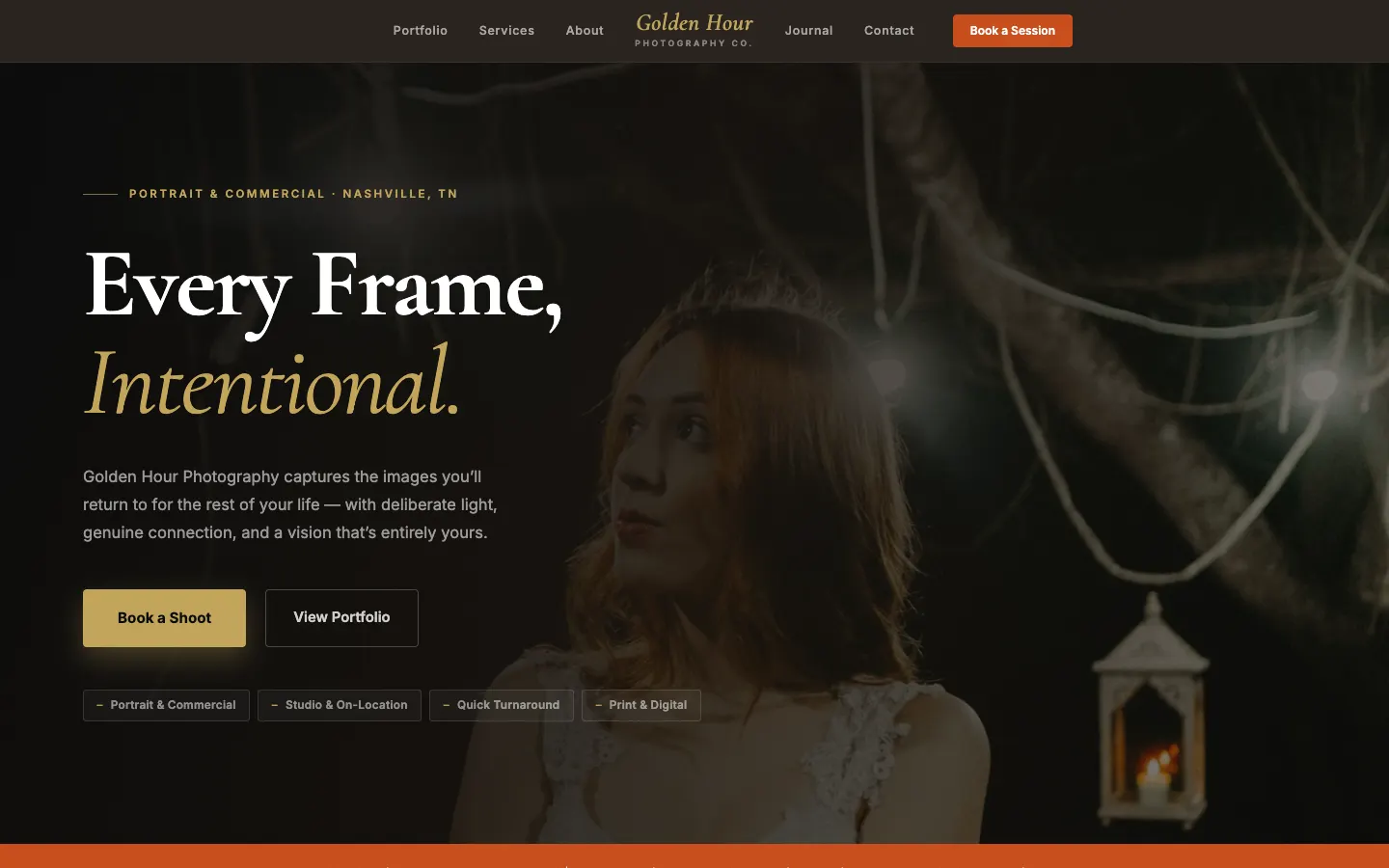
Golden Hour Photography Co.

A warm dark-charcoal photography studio site with Cormorant Garamond headings, masonry portfolio gallery, and session package cards.

Masonry Portfolio Gallery + Session Packages. Golden Hour Photography Co. pairs a fast masonry portfolio with session package cards and a date-first booking path, which is the combination this campaign needs: style confirmed at a glance, then availability answered without a phone call.

Open the live demo → Photography websites

Golden Hour Photography Co. — live photography website built on WorkspaceCMS
Where the demand is

How photography buyers actually search

Evaluation in this industry is visual and immediate, and it happens before a single word is read. A prospect scans a gallery, decides whether the style is theirs, and either inquires or leaves; no amount of copy rescues a mismatch. That has a direct campaign consequence, which is that the work shown on a landing page has to match the search that brought the visitor to it. Sending a newborn-session searcher to a mixed portfolio wastes the click twice over.

The business is really several businesses with different rhythms sharing one brand. Weddings book a year or more ahead and are decided by a couple comparing a handful of shortlisted photographers. Senior portraits cluster into a tight seasonal window. Brand and headshot work comes from businesses on a short timeline with a budget already approved. Families and newborns are booked reactively, often within weeks. Each of these has its own search language, its own lead time, and its own objection, and a single services page serves none of them well.

Two things decide the inquiry once style has passed. The first is the date: for wedding and event work the entire conversation collapses if the date is taken, so anything that makes availability easy to check protects the inquiry. The second is price transparency. Photographers routinely withhold packages hoping to sell on a call, but a prospect comparing several will simply drop the one that made them ask, and the ones who inquire anyway arrive less qualified and negotiate harder.

The keyword clusters we build around

  • Session typeWedding, engagement, newborn, senior portraits, brand headshots, family. The primary segmentation, and each needs its own page with a matched gallery rather than a shared portfolio.
  • Venue and location pairingsSearches naming a specific venue, park, or neighborhood. Highly convertible, low competition, and a natural fit for a photographer who has genuinely shot there.
  • Style languageDocumentary, editorial, light and airy, moody, film. Prospects search style before they search photographer, and naming yours plainly filters for the clients you actually want.
  • Package and pricing intentSearches about what sessions cost and what is included. Publishing package structure captures this traffic and screens out mismatched budgets before a call is spent.
  • Seasonal windowsSenior portrait season, holiday mini sessions, spring engagement bookings. Time-boxed demand that needs its pages published and indexed ahead of the window.
The campaign

Three ways we go get the traffic

Local SEO, AI-assistant visibility and paid media, run by the agency team that has been doing it since long before WorkspaceCMS existed.

Local SEO

One portfolio serving weddings, newborns, seniors, and headshots asks every visitor to filter for themselves, so it gets split into session-type pages with galleries matched to each, then extended with pages for the venues and neighborhoods you have genuinely shot. Technical work is unusually load-bearing here: large files, gallery performance on a phone, and image markup that keeps a session associated with your studio when frames get reposted. Senior portrait and mini-session pages publish ahead of their windows rather than inside them.

AI search visibility

People ask assistants to find a photographer for a particular kind of session in a particular place, and the answers name studios that published concrete detail. Yours becomes citable through session types, what a package covers, coverage radius and travel, gallery turnaround, second-shooter arrangements, and the venues you have worked, marked up rather than buried inside image captions. We build that structure so ChatGPT, Claude, Perplexity, and Google AI Overviews recommend your studio instead of a directory listing every photographer in the county.

Paid media

Segmentation follows the mix, because a wedding books a year out while a newborn session books within weeks. Search campaigns run per session type, geofenced around the areas you will actually travel to, and weighted into the windows that matter for your calendar: senior portrait season, engagement season, holiday minis. Paid social is the natural home for this work, since the creative already exists, and venue-specific or recently shot sets persuade far harder than a written claim about style ever will.

Campaigns are an add-on to a WorkspaceCMS plan and start from $499/mo. The plan itself is a monthly subscription. The build is included, the platform is not free. Local SEO campaigns are scoped to single and multi-location businesses rather than national or global SEO. Paid search management covers service businesses rather than online stores; ad spend is billed by Google or Meta directly to your own account. Full campaign scope → · Plan pricing →

What gets in the way

Six things that hold photography sites back

01

One portfolio serving five different buyers

A gallery mixing weddings, newborns, and corporate headshots asks every visitor to hunt for proof that you shoot their thing. Splitting into session-type pages with matched galleries lets each search land somewhere that immediately confirms fit, and it gives the campaign something specific to rank.

02

Social platforms hold the audience and the traffic

Discovery happens in feeds, and photographers understandably invest there, but that audience is rented and search demand goes uncontested. The site has to be the place that captures the searcher who is ready to inquire, which is a different and more valuable person than a follower.

03

Hidden pricing burns the best-fit inquiries

Withholding packages produces more calls but worse ones, and it loses the organized prospect who is comparing three photographers on a deadline. Published structure, even as a starting range described without a figure on this page, qualifies the inquiry and shortens the sales conversation considerably.

04

Date availability is invisible until someone asks

For weddings and events the first real question is whether you are free. A contact form that does not ask for the date, or a process that takes days to answer it, loses a couple who are messaging several photographers the same evening and booking whoever responds first with a yes.

05

Image-heavy sites load slowly and lose the visitor

The work is the product, so the files are large, and a portfolio that stalls on a phone loses the visitor before the first frame renders. Getting galleries fast without degrading the images is genuinely technical work and it is the most common unaddressed problem on photography sites.

06

Every image is public and nothing is attributed

Photographs travel, get reposted, and get pinned without a link back, which means the work builds someone else's page rather than yours. Structuring galleries so the images stay associated with the studio, and so search engines can read what each session actually was, recovers value that is otherwise given away.

Campaign add-ons

Pick the campaign that fits the market

Every package below is bought from your dashboard once your site is live. Names, prices and deliverables are read from the catalog at page load, so what you see here is what you would be buying.

Questions

Photography marketing, answered

Should every session type have its own page and gallery?

Yes. A couple, a new parent, and a marketing manager book on different timelines and need to see matching work immediately. A mixed portfolio makes each of them hunt for proof you shoot their thing, and most will leave rather than keep scrolling.

I would rather discuss packages on a call. Is publishing them necessary?

Not compulsory, but the organized prospect comparing several photographers tends to drop whoever made them ask. Published package structure usually lowers inquiry volume and raises inquiry quality, and it gives assistants something specific to say about your studio when someone asks.

How much does date availability really matter to an inquiry?

For weddings and events it is the entire conversation. Couples message several photographers the same evening and book whoever confirms the date first, so a form that never asks for the date, or a reply that waits until Monday, loses bookings your work had already won.

Our galleries are slow on phones. Is that a ranking problem?

It is a booking problem first. The work is the product, and a portfolio that stalls before the first frame renders loses the visitor while they are still judging style. Making image-heavy pages fast without visibly degrading the files is genuinely technical work.

Our images get reposted with no link back. Can anything be done?

Some of it is recoverable. Structuring galleries so each session stays described and attributed, and marking up what the shoot actually was, lets search engines and assistants connect a circulating image to your studio rather than to whoever pinned it.

Your free site is one click away

Ready to grow a photography business?

Get the site built, then put a campaign behind it. Start online, or talk it through with a strategist first.

Want the full picture? See what a campaign includes