Growth campaigns · Restoration & Water Damage

Own the Emergency Search Before the Franchise Truck Does

Nobody comparison shops a flooded basement at three in the morning. This campaign is built for one search, one call and whoever answers it, and behind that for the adjuster quietly checking your certifications and drying documentation before adding a vendor.

Live Restoration & Water Damage demo

Meridian Restoration Group

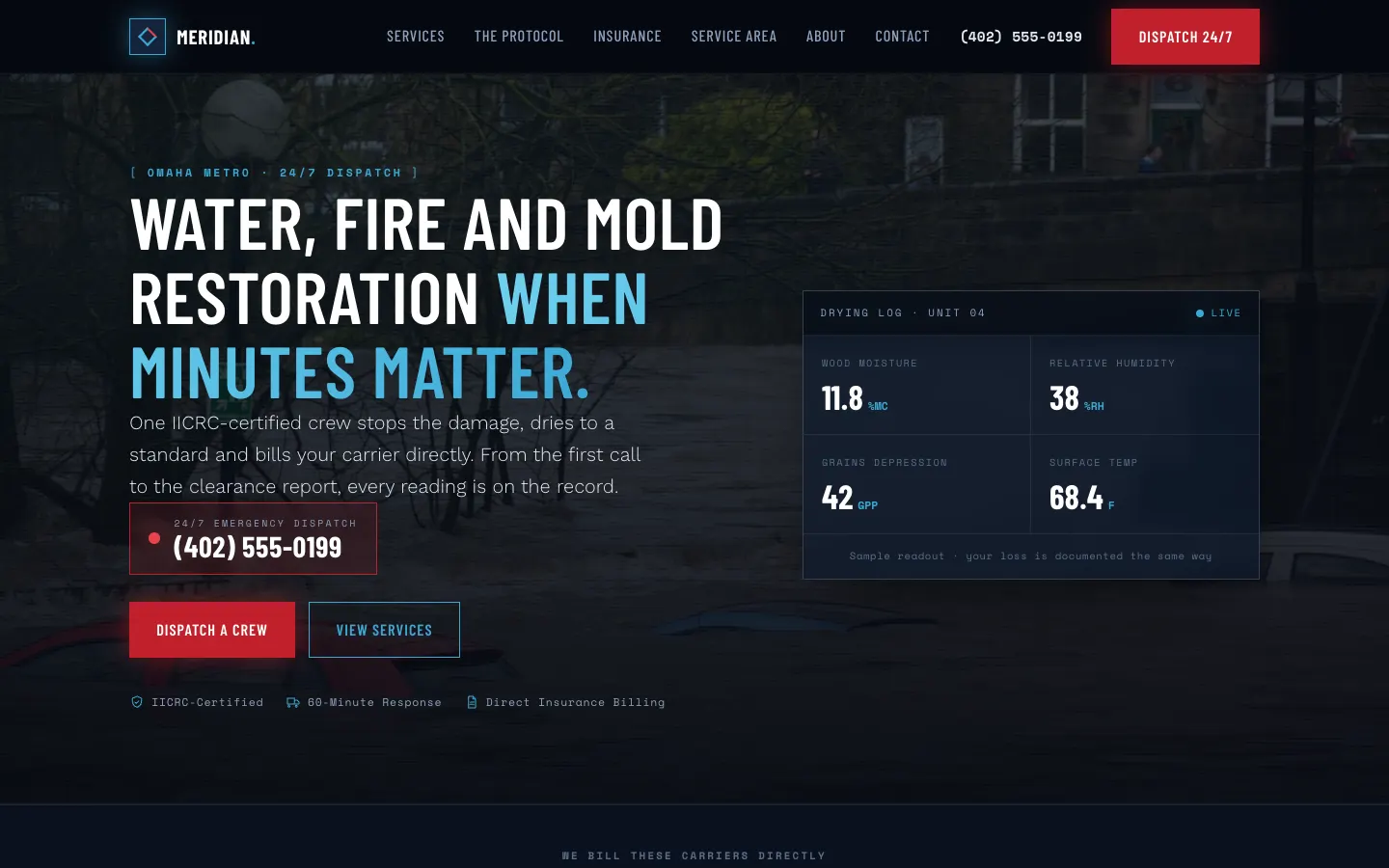
A near-black navy and emergency-red site for a 24/7 IICRC-certified Omaha restoration firm: water extraction and structural drying, fire and smoke, mold remediation, storm intrusion, and biohazard cleanup, with a live drying-log readout, a five-stage documented protocol, a direct-billing carrier list, a service-area page, field-report reviews, an FAQ, a blog, and a dispatch form.

Documented Drying Log + Five-Stage Response Protocol. Meridian Restoration Group is the shape this needs: a dispatch form above everything else, with the five-stage protocol and a real drying log immediately behind it for the reader who is verifying rather than panicking.

Open the live demo → Restoration & Water Damage websites

Meridian Restoration Group — live restoration & water damage website built on WorkspaceCMS
Where the demand is

How restoration & water damage buyers actually search

Restoration is the least considered purchase in home services. There is no comparison shopping, no second quote, no browsing. A supply line lets go at three in the morning and the homeowner searches from a hallway with standing water in it, calls the first two results, and hires whoever picks up. Every part of the campaign has to serve a visitor who is stressed, on a phone, and gone in seconds.

Underneath that is a second buyer who never appears in the search data at all. Adjusters, carriers, and third-party administrators send a large share of the work, and they choose vendors on documentation, certification, response time, and direct-billing capability rather than on marketing. That means the public site is doing double duty: it converts a panicked homeowner, and it reassures a claims professional who is checking whether your firm is a real, credentialed operation before adding it to a program.

Demand is also event-driven in a way that no other trade has to plan for. A hard freeze, a hurricane band, or a week of heavy rain can produce a month of work in two days, and the same event pulls in storm chasers from out of state who buy the local ad terms and vanish afterward. Between those spikes, mold and fire work provides a steadier baseline with a slower research cycle, because those searches often start with a health question rather than an emergency.

The keyword clusters we build around

  • Emergency water intentBurst pipe, flooded basement, sewage backup, and standing water queries. Highest urgency, lowest patience. These go to pages that load fast and put dispatch above everything else.
  • Mold and indoor airA slower, more informational path that often starts with symptoms or a smell. Answered with real testing and remediation content before the service pitch.
  • Fire, smoke, and sootLower volume, larger jobs, and a longer decision window while the claim opens. Content covers contents cleaning, odor, and the sequence of a fire claim.
  • Insurance and direct billingSearches about whether damage is covered and who bills whom. Capturing these builds trust early and pulls the carrier list into view.
  • Certification and process proofIICRC credentials, drying standards, and documented protocols. This is the material that convinces an adjuster as much as a homeowner.
  • Service area and response radiusLocation pages that state where crews actually dispatch from, so the coverage claim matches the response time.
The campaign

Three ways we go get the traffic

Local SEO, AI-assistant visibility and paid media, run by the agency team that has been doing it since long before WorkspaceCMS existed.

Local SEO

Two readers, two builds. Emergency pages are stripped to dispatch, response radius and credibility, because a homeowner standing in water reads nothing below the fold. Mold, fire and contents work is the opposite: slower searches that begin with a smell or a health worry and need testing, exposure and remediation-sequence detail. Location pages name the point crews actually roll from rather than listing counties, which is what holds position against a franchise name during a freeze event, and the drying-standard and IICRC material carries both audiences at once.

AI search visibility

Assistants field the questions homeowners are too rattled to search properly: what to do first when a supply line lets go, whether a policy covers mold, how long structural drying takes before drywall goes back. Those answers get assembled from sources that publish documented protocols, moisture-mapping and drying-log detail, IICRC credentials, a named dispatch radius and straight answers about who bills the carrier. A firm that writes all of that down is quotable by ChatGPT, Claude, Perplexity and Google AI Overviews; one advertising round-the-clock service in general terms is not.

Paid media

Restoration paid media has a throttle on it, and that is the whole design. Weight sits on burst pipe, sewage backup and standing water intent, and it comes off within the hour when crews are committed, because leads landing in a four-day queue cost more than they return. After a freeze or a storm band, out-of-state crews flood the same auction for a fortnight and bidding into them is rarely worth it. Mold and fire work runs on a longer, calmer cycle, which is where paid social does real work.

Campaigns are an add-on to a WorkspaceCMS plan and start from $499/mo. The plan itself is a monthly subscription. The build is included, the platform is not free. Local SEO campaigns are scoped to single and multi-location businesses rather than national or global SEO. Paid search management covers service businesses rather than online stores; ad spend is billed by Google or Meta directly to your own account. Full campaign scope → · Plan pricing →

What gets in the way

Six things that hold restoration & water damage sites back

01

The decision is made in under a minute

There is no funnel here. A slow page, a buried phone number, or a form that asks for a preferred appointment window loses the job outright. Pages for emergency intent are stripped down to dispatch, coverage, and credibility.

02

Storm chasers buying your terms for two weeks

Out-of-area crews flood the paid auction after a weather event and leave when the work dries up. Established local authority in organic results and location pages that name real dispatch points are what survive those spikes.

03

National franchise brands with name recognition

Homeowners recognize the franchise before they recognize you. The counter is specificity: named technicians, documented drying logs, local response times, and a service area you can actually defend rather than a national footprint you cannot.

04

Two audiences on one site

A frightened homeowner and a claims adjuster want completely different pages. The site has to serve dispatch-first content to one and documentation, certification, and carrier-billing detail to the other without either path getting in the way.

05

Feast-and-famine capacity

Marketing that produces steady lead flow is worthless if a freeze event means you cannot answer for four days. Campaign pacing is tied to crew availability, and the paid side is built to be throttled fast rather than left running into a queue you cannot serve.

06

Mold work that stalls in the research phase

Mold searches often begin with a health worry and no intention to hire anyone yet. Those visitors need testing, exposure, and remediation-process content that earns the callback later, not an emergency dispatch banner they are not ready for.

Campaign add-ons

Pick the campaign that fits the market

Every package below is bought from your dashboard once your site is live. Names, prices and deliverables are read from the catalog at page load, so what you see here is what you would be buying.

Questions

Restoration & Water Damage marketing, answered

How does a campaign behave during a storm event?

Paid can be scaled or paused inside the day, which matters most when out-of-area crews are bidding hardest. Organic cannot move that fast, so the dispatch and process pages are built in quiet weeks and are already ranking when the freeze arrives.

Can marketing get us onto a carrier's vendor program?

No agency can place you there. What the site can do is carry the certification, drying documentation and direct-billing detail a claims professional checks before adding a firm, and that same material ranks for the coverage questions homeowners search.

How do we serve a panicked homeowner and an adjuster on one site?

By splitting the paths early. Emergency intent lands on dispatch-first pages with nothing between the visitor and a phone call, while protocol, certification and documentation pages sit one click away for the reader who is verifying rather than drowning.

Is mold work marketed the same way as water damage?

No. Mold searches usually start with a health question and no intention of hiring anyone that week, so those pages lead with testing, exposure and the remediation sequence rather than an emergency banner the reader is not ready for.

We dispatch from two locations across several counties. How is that handled?

Each dispatch point gets its own geographic footprint and its own map presence, so the response-time claim on a page matches the crew that would actually arrive instead of blurring both into one regional promise.

Your free site is one click away

Ready to grow a restoration & water damage business?

Get the site built, then put a campaign behind it. Start online, or talk it through with a strategist first.

Want the full picture? See what a campaign includes