
Growth campaigns · Dental

Growth campaigns for dental practices

The question that decides most dental appointments is whether you take the caller's insurance. We build the local search, AI citation and paid presence that answers it before the phone rings, and that puts your practice in the map pack when it does.

Live Dental demo

BrightSmile Family Dental

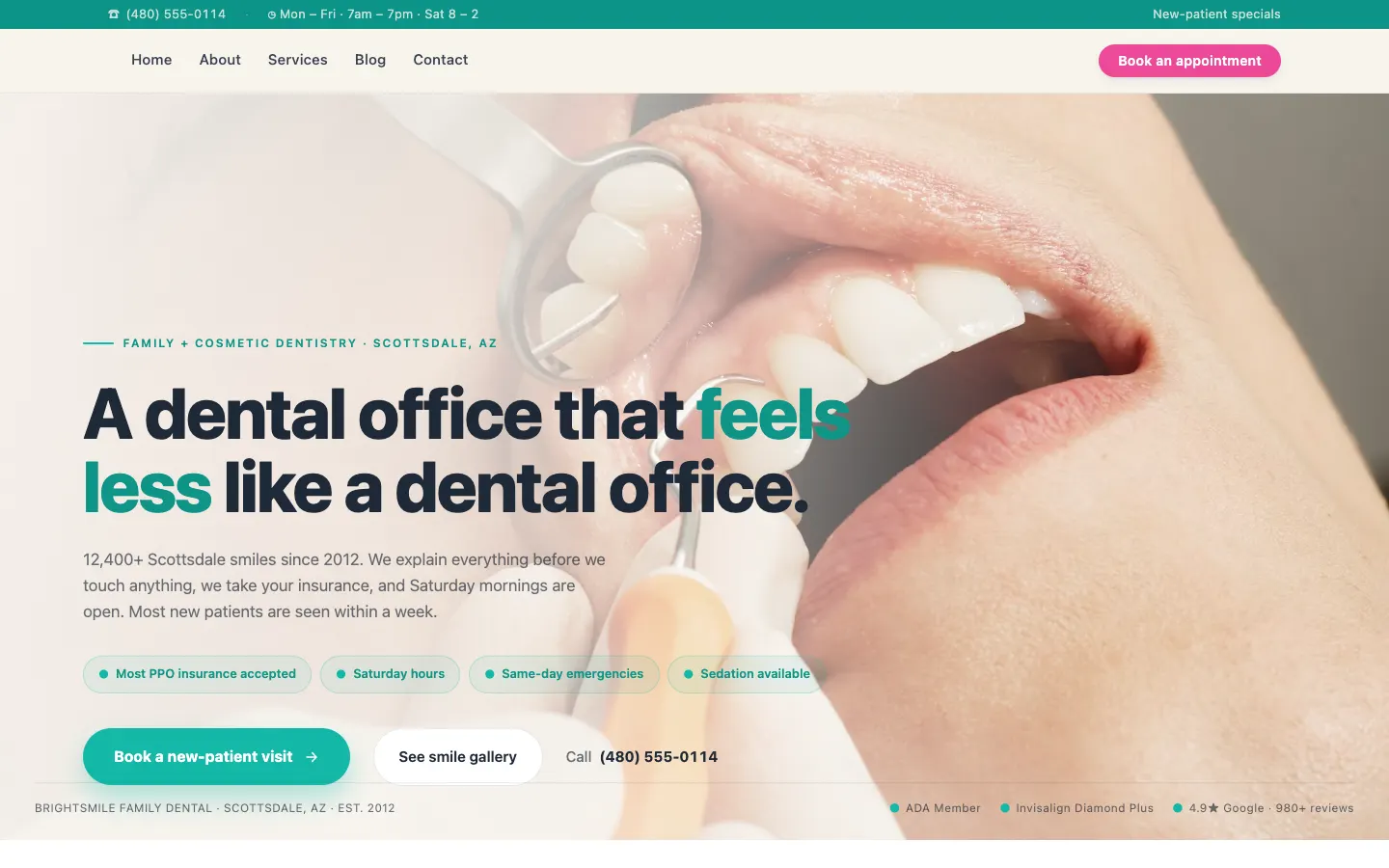
Friendly teal-and-coral practice site with a smile gallery, online booking, and insurance clarity.

Smile Before/After Gallery. BrightSmile Family Dental at dent.workspacecms.ai is the reference build: a smile before-and-after gallery, online booking and plain insurance information arranged the way the campaign traffic needs to land.

Open the live demo → Dental websites

BrightSmile Family Dental — live dental website built on WorkspaceCMS
Where the demand is

How dental buyers actually search

Insurance is the gate. Before anyone compares clinical philosophy or office aesthetics, they want to know whether their plan works at your practice, and a site that hides that behind a contact form loses them to the next result. The highest-value organic pages in dentistry are frequently the least glamorous ones: which plans are in network, what an out-of-network claim looks like, what a new patient exam includes, and what happens if there is no coverage at all.

Above that sits a genuinely split demand curve. Emergency searches for a cracked tooth or an abscess spike in the evening and over weekends, convert within hours, and reward whoever is visibly available. Elective work runs on the opposite clock: implants, veneers and full-mouth cases are researched over weeks, compared across several practices, and often decided by financing terms as much as by clinical detail. One campaign has to serve both without letting the emergency traffic drown out the case work.

The competition is increasingly not a solo practice down the street. Group and investor-backed offices bid aggressively on generic dentist terms, run continuous promotional offers and can absorb click costs a single-location practice cannot. That pushes independents toward the ground they can actually hold: neighbourhood and procedure-level search, a review corpus that reads like real patients, and content that names the specific things a corporate landing page never bothers to say.

The keyword clusters we build around

  • Insurance and payment queriesPlan names, in-network questions, financing and membership plan searches. These get their own page written in plain language rather than a line buried in the footer.
  • Dental emergency intentCracked tooth, abscess, lost crown, evening and weekend searches. The target is a page that states availability, what to do before arrival and how to reach the practice now.
  • Cosmetic case researchVeneers, whitening and smile makeover terms searched repeatedly over weeks. Content supports comparison and pairs with the before-and-after gallery.
  • Implants and restorativeHigh-consideration searches where the patient is weighing bridges, dentures and implants. Pages explain the process, the timeline shape and the financing conversation.
  • Family and hygiene recallCleanings, kids' first visits and accepting-new-patients searches. This is the recurring base the practice runs on, and it is won on proximity, reviews and hours.
  • Anxiety and comfortSedation, gentle dentistry and dental fear searches from people who have avoided care. These convert when the page addresses the fear directly instead of listing equipment.
The campaign

Three ways we go get the traffic

Local SEO, AI-assistant visibility and paid media, run by the agency team that has been doing it since long before WorkspaceCMS existed.

Local SEO

Organic work centres on the profile, the procedure pages and the questions that stop bookings. We build out insurance, financing and new-patient-exam content, separate emergency intent from elective research, wire the before-and-after gallery into the procedure pages it supports, and target the surrounding neighbourhoods by name rather than fighting only for the town-level term.

AI search visibility

When someone asks an assistant which local dentist takes their plan or what a crown involves, the practices that get named are the ones publishing checkable specifics. Structured service, location and FAQ markup, an accepted-plans page an assistant can read, clear procedure explanations and a live review corpus are what make a practice citable in ChatGPT, Claude, Perplexity and AI Overviews.

Paid media

Emergency and elective belong in separate campaigns, because a broken tooth at nine in the evening and a whitening enquiry share nothing but a category. Plan vocabulary is the strongest lever available: ads naming the networks you take qualify the click before it costs anything. Landing pages have to mirror the ad exactly, since a generic services page loses the emergency caller who had one question. Health audience targeting is off the table, so intent and radius carry the campaign.

Campaigns are an add-on to a WorkspaceCMS plan and start from $499/mo. The plan itself is a monthly subscription. The build is included, the platform is not free. Local SEO campaigns are scoped to single and multi-location businesses rather than national or global SEO. Paid search management covers service businesses rather than online stores; ad spend is billed by Google or Meta directly to your own account. Full campaign scope → · Plan pricing →

What gets in the way

Six things that hold dental sites back

01

Insurance answers live behind a contact form

The most searched dental question on any practice site is whether a plan is accepted, and most sites answer it with a phone number. Publishing the plan list, the out-of-network explanation and the membership option as real content removes the single biggest reason a ready patient closes the tab.

02

Group practices outspend you on generic terms

Investor-backed offices can hold the top paid positions on dentist-near-me indefinitely. The workable response is not matching their bid, it is owning neighbourhood-level and procedure-level search where their generic landing pages have nothing specific to say, and building a review profile that reads as a real local office.

03

Emergency traffic and case work want different sites

Someone in pain at nine in the evening and someone researching veneers for the third week are in completely different states of mind. When a homepage tries to serve both, it serves neither well, and the fix is separate entry points with separate calls to action rather than one blended message.

04

The before-and-after gallery is not indexed as evidence

Cosmetic galleries are usually the most persuasive asset a practice owns and the least discoverable, because the images carry no descriptive context and sit outside the procedure pages. Wiring the gallery into the veneer, whitening and implant pages turns it into search-visible support rather than a decorative slider.

05

Reviews are collected in bursts, then stall

A practice asks for reviews during a push, gets a cluster, then goes quiet for months. Recency is visible to patients and to the ranking systems, and an uneven pattern reads as stale. The campaign builds asking into the visit workflow so the corpus grows continuously instead of in spikes.

06

Health ad targeting rules narrow the paid options

Ad platforms restrict audience building and remarketing based on health and medical conditions, so the retargeting sequences common in other industries are limited here. Paid dental campaigns have to be driven by query and geography, which makes negative keyword discipline and landing page match far more important.

Campaign add-ons

Pick the campaign that fits the market

Every package below is bought from your dashboard once your site is live. Names, prices and deliverables are read from the catalog at page load, so what you see here is what you would be buying.

Questions

Dental marketing, answered

How much should we say about what treatment costs?

More than most practices are comfortable with. Cost is the second question after insurance, and a page giving honest ranges and explaining what moves them removes the main reason somebody abandons the search and calls the practice that did explain.

Will you manage our ad budget inside your own account?

No. The spend stays in your Google and Meta accounts under your billing, so the history and the data remain yours if we ever part ways. We handle the management work: structure, ad copy, targeting, negatives, landing pages and reporting.

Can you guarantee we rank first for dentist in our city?

No, and no honest agency will. Ranking is decided by systems we do not control, and proximity alone limits how far a single office can reach. We commit to the work and to monthly reporting on what changed, not to a position or a date.

How much does our insurance and PPO participation matter to the campaign?

More than almost anything else on the site. A large share of dental searches end at whether you take a specific plan, so the plans you participate in belong in readable text on their own page, not buried in a form, and kept current as your contracts change.

Can we advertise a new patient special?

Usually, but dental advertising offers are governed by your state dental board as well as the ad platforms, and the rules on disclaimers and fee advertising vary. We build the campaign around whatever your practice has cleared, and we will flag anything that looks likely to be a problem.

Your free site is one click away

Ready to grow a dental business?

Get the site built, then put a campaign behind it. Start online, or talk it through with a strategist first.

Want the full picture? See what a campaign includes