
Growth campaigns · HVAC

Growth campaigns for heating and air contractors

The first hard freeze and the first genuinely hot week decide most of an HVAC year. We get the no-heat and no-cool pages, the assistant answers and the ad accounts warm before the weather turns, then swing everything toward replacement and tune-up work through the shoulder months.

Live HVAC demo

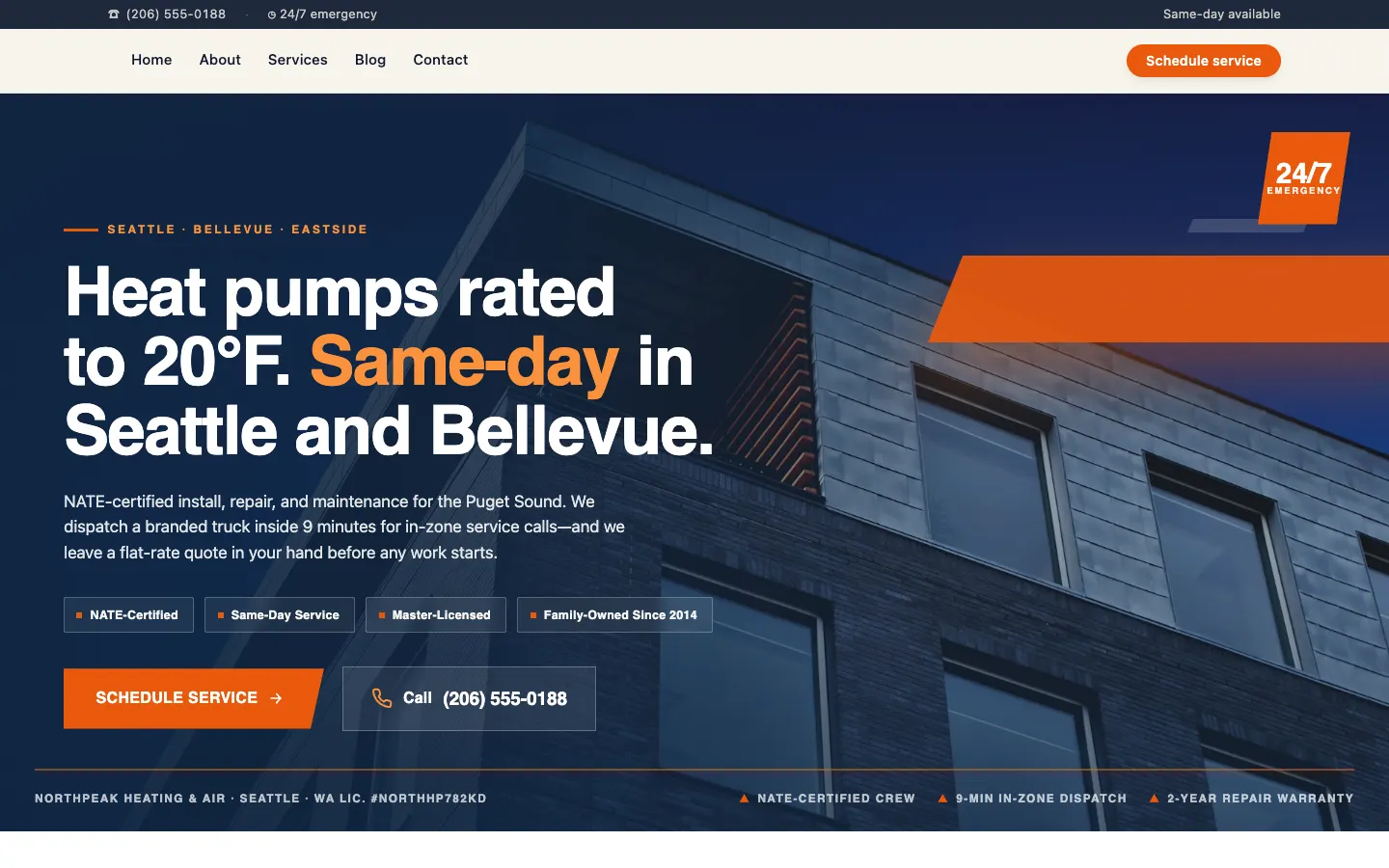
NorthPeak Heating & Air

Steel-blue trades site with a Puget Sound service-area map and same-day dispatch confidence.

Puget Sound Coverage Map. NorthPeak Heating and Air is the reference build: its Puget Sound coverage map breaks a vague service radius into suburb pages that each carry their own crew, response window and housing stock.

Open the live demo → HVAC websites

NorthPeak Heating & Air — live hvac website built on WorkspaceCMS
Where the demand is

How hvac buyers actually search

Almost nothing in home services swings like HVAC. The first genuinely hot week of the summer and the first hard freeze of the fall both produce a wall of no-cool and no-heat searches inside about forty-eight hours, and the contractors who capture that wall are the ones whose pages, review profile and ad accounts were already warm before the weather turned. Standing a campaign up during the spike is too late; the queries are gone by the time anything has settled.

The other half of the business behaves nothing like the emergency half. A system replacement is a considered purchase with financing, utility rebates, tax credits and a spouse involved, and the homeowner will usually collect several proposals over a week or two. Those searchers use different language: they type equipment brands, tonnage, SEER ratings, heat pump versus furnace, and they land on manufacturer dealer locators before they land on a contractor. If a dealer badge, an equipment page and a financing explanation are missing from the site, that homeowner never reaches a form.

Competition has also changed shape. Consolidators have bought up dozens of independent shops in most metros and run centralized ad budgets with a bidding tolerance a family business cannot match head-on. The counterweight is specificity. A named technician, a real service-area page for the suburb the truck actually covers, honest notes on the age of housing stock in each neighborhood and which equipment fits it, and a maintenance-agreement page that explains what a visit includes will outrank and out-convert generic regional buying on the terms that carry a service call.

The keyword clusters we build around

  • No-heat and no-cool emergenciesHomeowner with a dead system typing the failure plus a town name. Point them at a service page with dispatch language and a call button, not a general contact page.
  • System replacement researchComparison shopping across equipment types and brands. Answer with equipment pages, financing explanation and what a load calculation actually involves.
  • Maintenance agreements and tune-upsSeasonal, low-urgency, high-retention. A clear page on what a plan covers turns a one-time repair customer into a recurring visit.
  • Indoor air quality and ductworkAllergy, humidity and duct-leak searches that most competitors treat as a footnote. Individual pages here face almost no serious content competition.
  • Service-area and neighborhood termsTown, suburb and zip-level queries. Each page carries the crews, response expectations and housing stock for that area rather than a swapped city name.
  • Commercial and light-commercial workProperty managers and small facility owners searching rooftop units and after-hours coverage. Different proof, different page, different call to action.
The campaign

Three ways we go get the traffic

Local SEO, AI-assistant visibility and paid media, run by the agency team that has been doing it since long before WorkspaceCMS existed.

Local SEO

A furnace that quits at nine at night is not a browsing session, so the page that earns the click has to name the suburb, the symptom and the dispatch window in its opening lines. We build a page per town the trucks genuinely cover and a page per failure: no heat, a frozen line set, short cycling, water pooling at the base of the air handler. Replacement gets separate treatment again, since heat pump versus furnace, load calculations and duct sizing are read by a different household on a different timeline. Review requests go out at job close so the profile is still gaining ground in April and October, when the phone has gone quiet.

AI search visibility

Ask an assistant who services a particular heat pump line in a particular suburb and the answer gets assembled from things it can check. What makes a heating and air company quotable is the dull, verifiable material: dealer certifications written out in text rather than shown as a logo strip, what a diagnostic visit actually includes, tonnage and sizing explained in sentences a homeowner can follow, which refrigerant an older condenser uses and what that means for repairing it now. ChatGPT, Claude, Perplexity and Google AI Overviews repeat that kind of detail. They cannot repeat a photograph of a wrapped truck.

Paid media

Pacing is where most heating and air accounts leak. Spend spread evenly across the day runs dry by mid-morning on the first ninety-degree afternoon, then coasts through October with nothing worth buying. Campaigns get weighted to the forecast instead: emergency terms pushed hard through a heat wave or a freeze event, the same money moved to replacement, financing and maintenance-agreement messaging once the calls stop arriving on their own. Local Services Ads carry the dispatch work, search carries the equipment shopper reading brand comparisons, and call tracking separates a booked changeout from a homeowner pricing a capacitor.

Campaigns are an add-on to a WorkspaceCMS plan and start from $499/mo. The plan itself is a monthly subscription. The build is included, the platform is not free. Local SEO campaigns are scoped to single and multi-location businesses rather than national or global SEO. Paid search management covers service businesses rather than online stores; ad spend is billed by Google or Meta directly to your own account. Full campaign scope → · Plan pricing →

What gets in the way

Six things that hold hvac sites back

01

The season starts before the campaign does

Rankings and review velocity take time to build, and the heat wave does not wait. Work has to be front-loaded into the shoulder months so the site is already earning the emergency terms when they spike.

02

Consolidators outbid you on the obvious terms

Roll-ups run centralized budgets on ac repair and furnace repair. Competing only on head terms means paying the acquisition price they set. Neighborhood, equipment and problem-specific coverage is where an independent shop wins economics.

03

Replacement leads and repair leads get one page

A homeowner comparing heat pumps and a homeowner with no heat need completely different pages. One combined services page serves the emergency caller badly and loses the replacement shopper entirely.

04

Manufacturer dealer locators intercept the buyer

Brand searches route through equipment-maker locators before they reach a contractor site. Without brand and dealer pages of your own, those buyers meet you as one identical row in a list.

05

Maintenance plans are invisible online

Most HVAC sites mention a plan in a sentence and never explain what a visit covers, what it costs to skip, or how it affects warranty. The recurring revenue line gets the least page real estate.

06

After-hours calls go to voicemail

Emergency search intent peaks in the evening. If the site pushes a form when the office is closed and nothing sets expectations about on-call coverage, those searchers dial the next result while the page sits there looking fine.

Campaign add-ons

Pick the campaign that fits the market

Every package below is bought from your dashboard once your site is live. Names, prices and deliverables are read from the catalog at page load, so what you see here is what you would be buying.

Questions

HVAC marketing, answered

Do heat pumps and gas furnaces need separate pages?

Yes, because they are separate arguments. A dual-fuel or heat pump shopper is reading about cold-climate performance, backup heat and utility rates, while the furnace buyer is comparing stages and venting. One combined equipment page answers neither of them well enough to win a written proposal.

Roll-ups have bought most of the shops in our metro. How do we compete?

Not on ac repair and furnace repair, where centralized budgets set the price of a call. You win on the terms they never bother writing: individual suburbs, specific failure symptoms, indoor air quality, duct work, and the age of housing stock in each neighborhood and what equipment fits it.

Should we name the equipment brands we are certified to install?

Name them in text, with what the certification required. Brand searches route through manufacturer dealer locators before they ever reach a contractor site, and a real dealer page is what stops you appearing as one indistinguishable row in that list.

Can we market the maintenance agreement rather than just mention it?

It usually deserves its own page. Most sites give the plan one sentence and never explain what a spring and fall visit covers, how skipping a season affects a warranty claim, or how members get scheduled ahead of everyone else during a freeze.

Does the commercial rooftop side belong on the same site?

In its own section, with its own proof. A property manager searching after-hours rooftop coverage and preventive maintenance contracts wants response commitments and unit histories, which reads as noise on a page built for a homeowner with no heat.

Your free site is one click away

Ready to grow a hvac business?

Get the site built, then put a campaign behind it. Start online, or talk it through with a strategist first.

Want the full picture? See what a campaign includes