
Growth campaigns · Personal Training

Growth campaigns for personal trainers and PT studios

Nobody searches for a personal trainer in the abstract. They search for a goal, a deadline and a body they no longer recognise, and the trainer whose site speaks to that specific person books the consult.

Live Personal Training demo

FitForge Personal Training

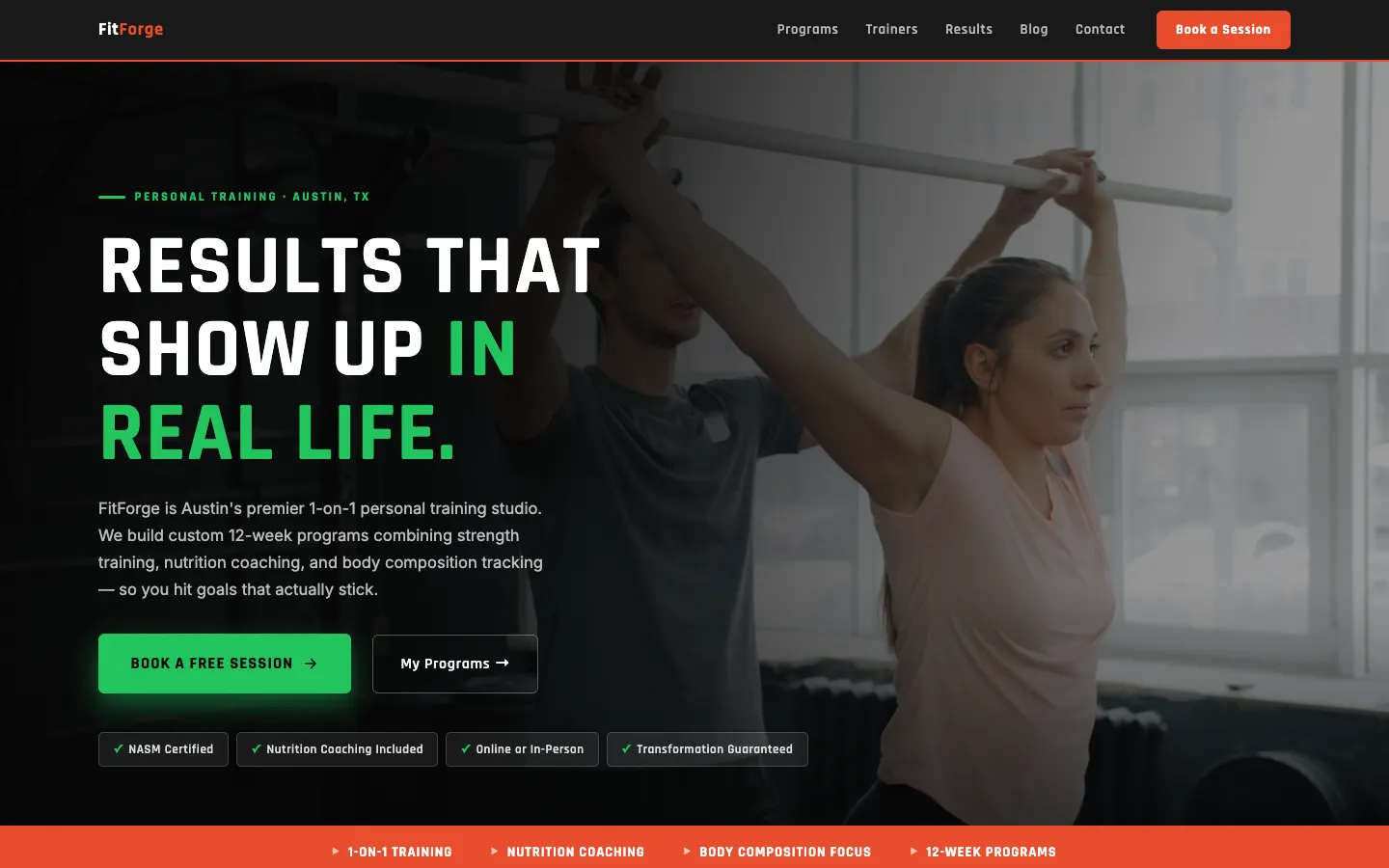
A dark charcoal fitness site with Rajdhani uppercase headings, training program cards, and transformation-focused testimonials.

Training Program Menu + Trainer Matchup. FitForge Personal Training is the build the campaign points at: program cards that name what each block is for, trainer detail a referred prospect can vet, and a consult booking path that does not dead-end.

Open the live demo → Personal Training websites

FitForge Personal Training — live personal training website built on WorkspaceCMS
Where the demand is

How personal training buyers actually search

Search behaviour in personal training is goal-shaped and life-stage-shaped rather than category-shaped. The queries carry a qualifier almost every time: strength coaching after an injury, training around a desk job, getting fit before a wedding, working with a trainer in your fifties. A generic trainer page competes for none of these well, whereas a trainer who has published a page for each population they genuinely serve picks up exactly the enquiries they are best placed to keep.

The purchase is high-ticket and relationship-led, which changes what the campaign has to accomplish. Prospects are not buying a session; they are buying a block of sessions or a monthly package, and they will not commit to that from an ad. The realistic objective is a consultation or an assessment, and the differentiator at that stage is trust: certifications stated plainly, a specialism that sounds like a specialism rather than a list of everything, and evidence of working with people who look like the prospect.

Two structural pressures shape the market. Referral is still the dominant acquisition channel, so the campaign's job is often to make an already-referred prospect findable and credible rather than to create demand from nothing, which means brand and name searches matter more than volume charts suggest. And the rise of app-based and remote coaching has muddied intent: some searchers want someone in the room, others do not care about geography at all, and a site that fails to state which it offers loses both.

The keyword clusters we build around

  • Goal-qualified searchQueries carrying an outcome such as strength, fat loss or post-injury return. Each real specialism earns a page written for that population rather than a line on a services list.
  • Life stage and populationPrenatal, over-fifty, desk-worker, youth athlete. Narrow, high-conviction searches that a generalist page cannot win.
  • Trainer name and credentialsReferred prospects checking you out. Low volume, extremely high conversion, and the search most often lost to a thin or missing bio page.
  • Consultation and assessmentThe actual conversion event. Ads and organic both point at a booking flow that says what the first session involves and what it costs to find out.
  • In-person versus remoteSearchers who want someone in the room, and searchers who do not. Stating which you offer stops both groups from bouncing.
The campaign

Three ways we go get the traffic

Local SEO, AI-assistant visibility and paid media, run by the agency team that has been doing it since long before WorkspaceCMS existed.

Local SEO

We build a page per genuine specialism and population, because that is how the searches are phrased, and we treat the trainer bio as a first-class ranking page since referred prospects search by name. Session structure, package shape and what an assessment involves get published rather than reserved for a call. Location signals are tuned to the studio catchment, with in-person and remote offerings stated explicitly so intent resolves correctly.

AI search visibility

Someone asks an assistant for a trainer near them who works with post-injury clients, and the answer is built from structured, published detail. We mark up services, credentials, session formats and location as machine-readable data, publish real FAQs on assessments, package structure and cancellation, and keep reviews accumulating. Certifications named in text, not implied by a logo image, are what make a trainer quotable.

Paid media

Generic fitness terms are a losing fight against chains and apps, so the win comes from goal-qualified and population-specific searches where the competition thins and conviction is high: post-natal, pre-surgical, over-fifty strength, sport-specific preparation. A trainer's own name also deserves defending, since referrals check you before they call. All weight-loss and body-composition creative is drafted against platform policy first, because a rejected ad costs momentum a solo trainer cannot spare.

Campaigns are an add-on to a WorkspaceCMS plan and start from $499/mo. The plan itself is a monthly subscription. The build is included, the platform is not free. Local SEO campaigns are scoped to single and multi-location businesses rather than national or global SEO. Paid search management covers service businesses rather than online stores; ad spend is billed by Google or Meta directly to your own account. Full campaign scope → · Plan pricing →

What gets in the way

Six things that hold personal training sites back

01

Generalist positioning wins nothing

A trainer who trains everyone ranks for no one. The pages that convert name a population and a goal, which feels narrowing and is the opposite.

02

Nobody buys a package from an advert

The ticket is too high for an impulse purchase. The campaign has to be engineered around booking a consultation, with the sale happening in the room.

03

Referrals arrive and find nothing to read

Most enquiries are already warm when they search your name. A thin bio, no credentials and no pricing guidance can undo a personal recommendation in under a minute.

04

Remote coaching muddies local intent

If the site does not say clearly whether sessions are in person, hybrid or online, local searchers assume the wrong answer and leave.

05

Transformation claims are a compliance minefield

Ad platforms restrict body-image and weight-loss messaging, and results imagery invites both disapproval and scrutiny. Creative has to be built for that from the outset.

06

Retention is the whole business and gets no marketing

A client who renews is worth far more than a new enquiry, yet almost all effort goes to acquisition. Onboarding and re-engagement deserve the same attention.

Campaign add-ons

Pick the campaign that fits the market

Every package below is bought from your dashboard once your site is live. Names, prices and deliverables are read from the catalog at page load, so what you see here is what you would be buying.

Questions

Personal Training marketing, answered

Should we market a specialism or stay broad?

Specialise on the page. Goal and population searches convert far better than generic trainer terms, and you can still take general clients who arrive through them.

Can ads sell a training package directly?

Rarely. The realistic goal is a consultation or assessment booking. The package is sold in the room, so the campaign is judged on qualified consults rather than on direct sales.

Can you run campaigns for our online coaching programme?

Our SEO and AI campaigns are scoped to local and multi-location businesses, not national or global programmes. If online coaching is a significant part of the business, raise it with the team directly.

Do you handle a studio with several trainers?

Yes. Each trainer gets a real bio page with their own credentials and specialism, which is what referred prospects and AI assistants both need to find.

Should we market a niche or stay broad?

Narrow almost always wins for an individual trainer. Competing on general fitness means competing with chains and apps, while post-natal, pre-surgical or sport-specific work faces thinner competition and reaches a client who already believes they need a specialist.

Your free site is one click away

Ready to grow a personal training business?

Get the site built, then put a campaign behind it. Start online, or talk it through with a strategist first.

Want the full picture? See what a campaign includes