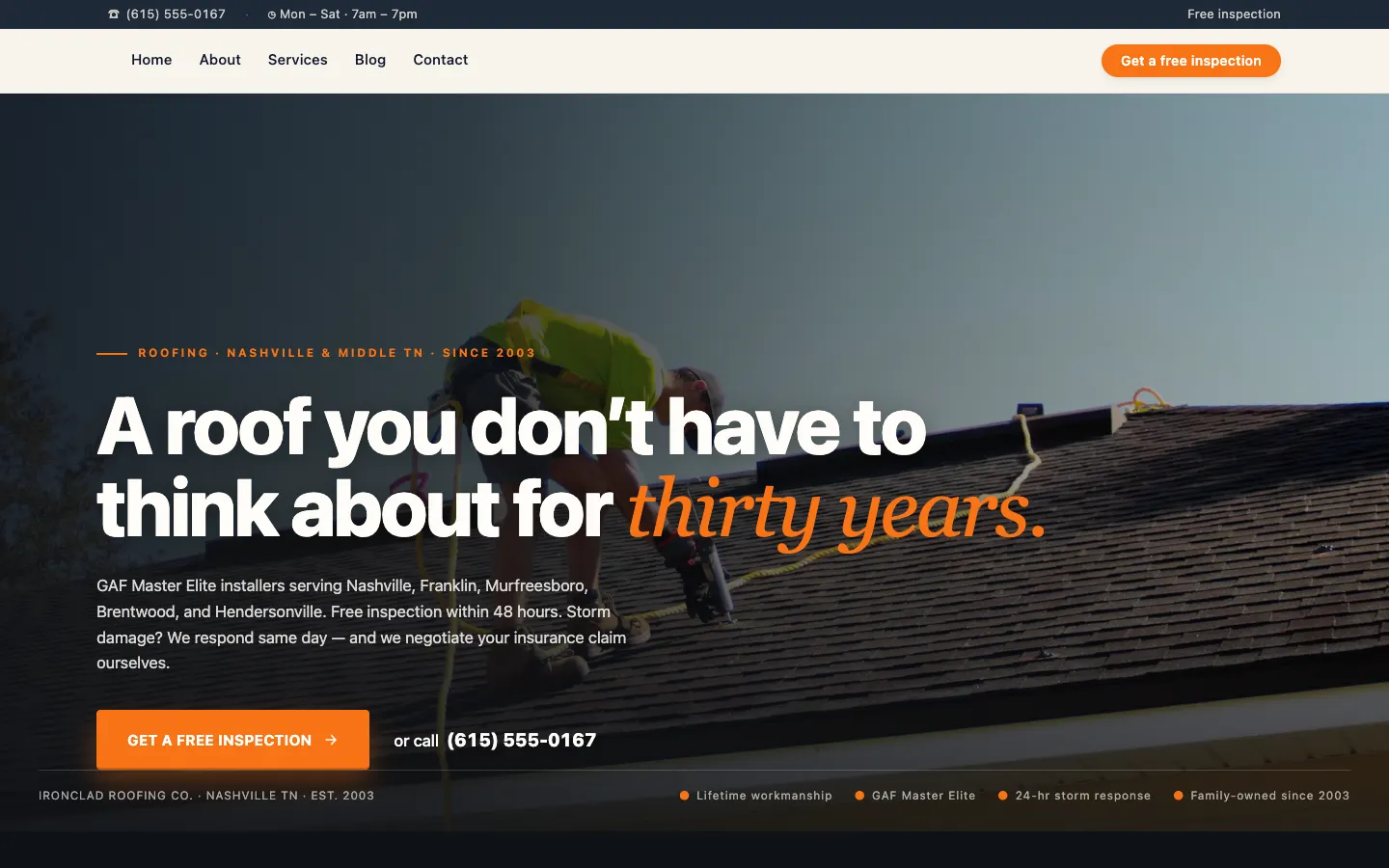
Roofing demand is weather-triggered and brutally uneven. A single hail or wind event can generate more replacement inquiry in one week than the previous quarter, and it also imports competition: out-of-area crews follow storm tracks, knock doors, and are gone before the first warranty claim. Local roofers win that fight on verifiability, not volume. A homeowner deciding between a stranger on the porch and a company with a physical address, a permit history and photographs of roofs on nearby streets will usually pick the one they can check.
The insurance layer makes this unlike any other trade on this list. Much of the work is not really sold to the homeowner at all; it is negotiated with an adjuster, and the homeowner's questions are about deductibles, supplements, claim timelines and whether filing will affect their premium. Roofing sites almost universally skip that entire conversation and lead with shingle brands instead. Content that explains the claim process honestly, without promising an outcome, intercepts a searcher who is anxious and has not yet chosen anyone.
Outside storm season the business runs on age and transactions. Roofs reach end of life, home sales trigger inspections, and buyers start with searches about remaining life, repair versus replace, and financing. Those searchers are slower and more comparison-driven, and they respond to proof: certifications, workmanship warranty terms, crew photos, and before-and-after documentation of jobs in the same neighborhood with the same architecture. That evidence is also what carries the campaign through the months when the sky stays quiet.