Growth campaigns · Yoga Studio

Growth campaigns for yoga studios

Yoga searchers name a style, a temperature and sometimes a teacher. They are also one tap away from a free class on their phone, which means the studio has to argue for the room itself.

Live Yoga Studio demo

Stillpoint Yoga

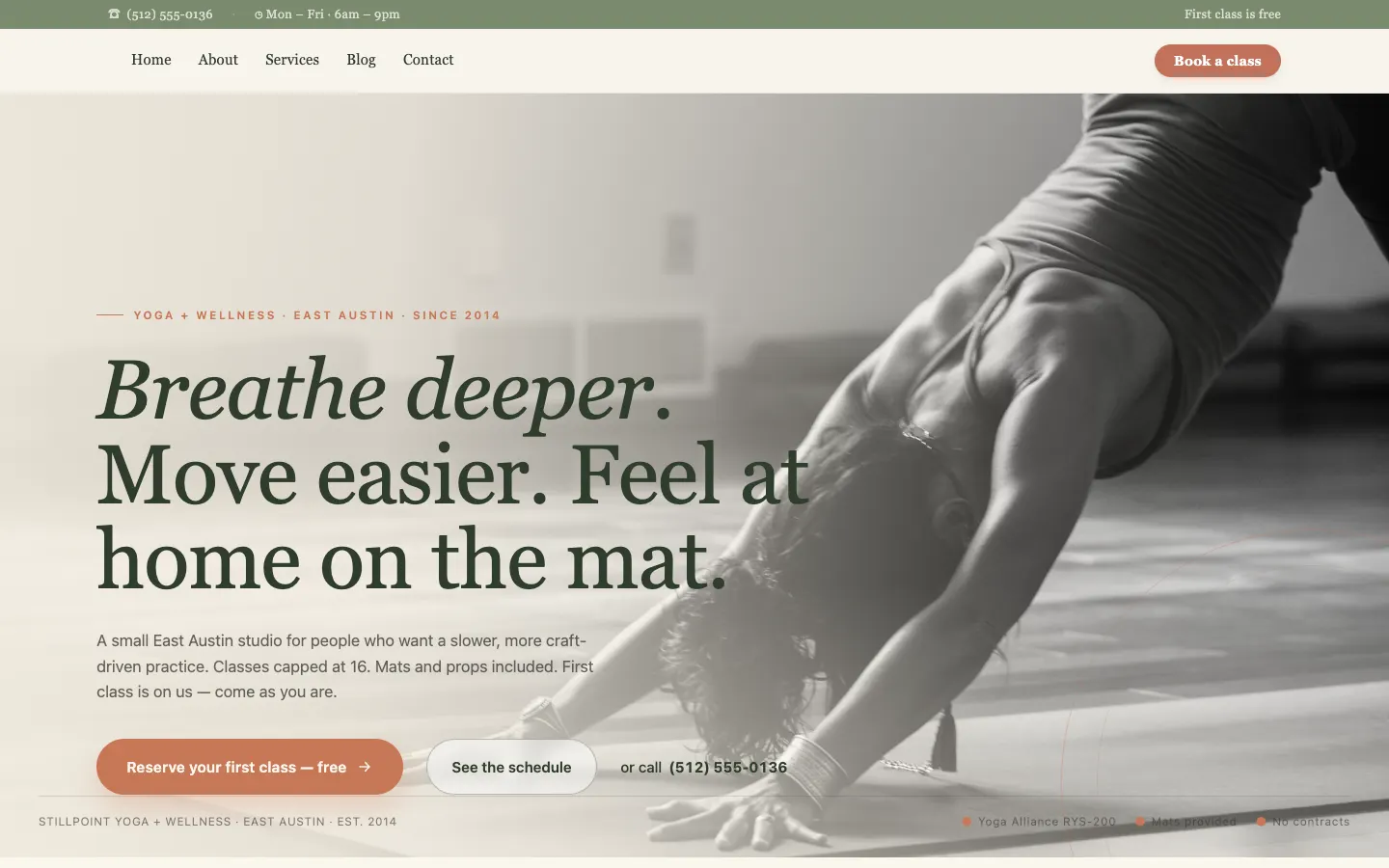
Calm, cream-and-forest studio site organized around a glanceable weekly class grid.

Weekly Schedule Grid. Stillpoint Yoga is organised around the glanceable weekly class grid, which is the page every one of these campaigns is ultimately trying to get the right person onto.

Open the live demo → Yoga Studio websites

Stillpoint Yoga — live yoga studio website built on WorkspaceCMS
Where the demand is

How yoga studio buyers actually search

The defining commercial pressure here is substitution. A prospective student weighing a studio membership is comparing it not only with the studio down the road but with a subscription app and an endless supply of free video, both of which are cheaper and available at any hour. That comparison is only winnable on things a screen cannot deliver: hands-on adjustment, a teacher who notices a knee, and the social accountability of a room. Sites that lead with serene photography and never make that argument lose quietly to a phone.

Search vocabulary is precise and style-led. People look for vinyasa, yin, hot, restorative, prenatal or beginner-friendly classes, and each of those carries a different expectation about heat, pace and what happens if you cannot touch your toes. A single schedule page cannot serve them, whereas a studio with a real page per style, stating what a class actually feels like and who it suits, captures searches the generic competition never sees. Beginner anxiety in particular is its own search intent and its own objection.

Teacher loyalty makes the market fluid. Students follow individual teachers between studios, so a teacher's departure moves revenue, and studio brand terms are contested by class-pass aggregators bidding on them. The other structural feature is the intro offer: nearly every studio runs one, most convert it badly, and the money is made in the fortnight after that offer expires. Teacher training and workshops sit on a longer, higher-value cycle and deserve their own treatment rather than a mention in a newsletter.

The keyword clusters we build around

  • Style-specific searchVinyasa, yin, hot, restorative and prenatal are separate products with separate expectations. Each earns its own page describing pace, heat and who it suits.
  • Beginner reassurancePeople who are worried about being the least flexible person in the room. A page that addresses that directly converts better than any studio photography.
  • Schedule and drop-inSearchers checking whether a class fits their week and whether they can attend without a membership. The grid is the highest-intent page on the site.
  • Teacher training and workshopsLong-cycle, high-value research that draws from a wider radius. It needs dedicated pages with dates, hours and curriculum, not a newsletter mention.
  • Brand and teacher namesYour studio and your teachers, which class-pass aggregators bid on. Holding these placements protects students who have already chosen you.
The campaign

Three ways we go get the traffic

Local SEO, AI-assistant visibility and paid media, run by the agency team that has been doing it since long before WorkspaceCMS existed.

Local SEO

A page per style stating pace, heat and who the class suits, a beginner page that answers the flexibility worry head on, and a weekly grid kept genuinely current because it is the page people actually land on. Teacher profiles are treated as ranking pages, and teacher training gets a proper set of pages with dates and curriculum. Location signals target the walk and short-drive radius that studio membership realistically comes from.

AI search visibility

Assistants are asked for a beginner-friendly studio near a neighbourhood with evening classes, and they quote from structured, published detail. We mark up class types, schedules, teacher credentials and location as machine-readable service data, publish drop-in and membership structure as real pages, and write FAQs on what to bring, what heat to expect and cancellation terms. Atmospheric copy with no specifics is not citable.

Paid media

Aggregators bid studio and teacher names and then rent your class to somebody who never becomes a member, so defending those terms usually returns more than any prospecting campaign. Beyond that, style and level vocabulary is where intent is unambiguous: a beginner looking for restorative is a different person from somebody hunting a hot power class. Workshops and teacher trainings justify short bursts rather than continuous spend, since they sell on a deadline.

Campaigns are an add-on to a WorkspaceCMS plan and start from $499/mo. The plan itself is a monthly subscription. The build is included, the platform is not free. Local SEO campaigns are scoped to single and multi-location businesses rather than national or global SEO. Paid search management covers service businesses rather than online stores; ad spend is billed by Google or Meta directly to your own account. Full campaign scope → · Plan pricing →

What gets in the way

Six things that hold yoga studio sites back

01

The competition is a subscription app

Free video and cheap subscriptions are the real alternative. The site has to argue for adjustment, teaching and the room, because price alone is an argument the studio cannot win.

02

Aggregators bid on the studio's own name

Class-pass platforms buy your brand terms and take a margin on a student who had already chosen you. Defending those placements is cheap and usually overdue.

03

Intro offers convert badly

Almost every studio runs one and most treat expiry as the end. The fortnight after the offer runs out is where the membership is won or lost.

04

Beginner anxiety goes unaddressed

The most common reason someone does not book is the fear of being visibly worst in the room. Not answering that on the page loses students silently.

05

Students follow teachers out of the door

When a popular teacher leaves, their classes go with them. Building the studio's own authority alongside teacher profiles is the only hedge.

06

Teacher training gets marketed like a class

It is a long-cycle, high-value decision researched from further away, and it needs its own pages, dates and curriculum rather than a schedule footnote.

Campaign add-ons

Pick the campaign that fits the market

Every package below is bought from your dashboard once your site is live. Names, prices and deliverables are read from the catalog at page load, so what you see here is what you would be buying.

Questions

Yoga Studio marketing, answered

How do we compete with cheap yoga apps?

Not on price. The argument is hands-on adjustment, a teacher who can see you, and the accountability of a room, and it has to be made explicitly on the page rather than implied by photography.

Should we bid on our own studio name?

Usually yes, because class-pass aggregators do. Conceding that placement means paying a margin on students who had already decided to come to you.

Can you market our teacher training?

Yes, and it deserves its own pages with dates, hours and curriculum. It is a longer, higher-value decision researched from a wider radius than a drop-in class.

Do you work with studios that have several locations?

Yes. Local SEO and AI campaigns cover single and multi-location businesses, with each studio getting its own page and location signals.

How do we stop the pass platforms taking our members?

By defending your own name and making direct booking obvious. Aggregators bid studio and teacher names and then rent your class to somebody who never becomes a member, so the first win is simply not paying them for traffic that was already yours.

Your free site is one click away

Ready to grow a yoga studio business?

Get the site built, then put a campaign behind it. Start online, or talk it through with a strategist first.

Want the full picture? See what a campaign includes