
Search visibility
How Performance Auto Parts Stores Get Found First on Google and in AI Search
When someone searches "cold air intake for a 2018 Mustang GT" or asks ChatGPT which turbo kit fits their build, one store gets the click and the rest never get seen. Getting found first is a mechanical, solvable problem. Here's exactly what lifts a performance-parts catalog up the results, and how WorkspaceCMS and the 1Digital team do that work for you.
Enthusiasts buy from the store they find first
Almost every performance-parts purchase now starts with a search: a specific year/make/model plus a part, a fitment question, or a comparison between two brands. Buyers don't scroll to page two. They click the handful of stores that show up first, load instantly, and clearly answer "does this fit my car and is it in stock?"
That makes your ranking the front door to your catalog. A store sitting below the fold on Google is invisible to the exact people ready to spend on their build this weekend. The good news: the factors that move a parts catalog up the results are concrete and buildable.
What actually moves a parts catalog up the results
Search visibility for a performance-parts store compounds from a short list of factors. Miss them and you stall behind the big marketplaces; get them right and you surface on the long-tail fitment searches those marketplaces handle poorly:
- Product-level SEO structure: every part, category, and fitment page built so Google understands the year/make/model, the part type, and the brand, and can match it to "[part] for [vehicle]" searches.
- Technical health means clean, crawlable code and product schema that tells search engines what you sell, the price, and whether it's in stock, so your listings can win rich results.
- Speed on mobile. Enthusiasts research parts on their phones in the garage and the parking lot. A catalog that loads fast outranks a heavier one that stutters.
- Content that answers real questions: install guides, fitment notes, dyno context, and buyer's guides that capture the informational searches that lead to a purchase.
- Reputation and consistency. Genuine reviews and consistent business listings reinforce that you're a trusted specialist, not a drop-shipper.
Getting found in AI search, not just Google
More buyers now ask ChatGPT, Gemini, or Perplexity "what's the best exhaust for my WRX?" and act on the answer. These assistants don't rank blue links. They read structured, well-organized catalogs and summarize them. If your product data is clean, marked up, and answers the obvious fitment questions, you're the store the AI recommends. If it isn't, you're not in the conversation.
WorkspaceCMS builds every storefront with the schema, structure, and clarity that both Google and AI assistants rely on, so you show up in the old search box and the new one. On the Premium plan, an AI Visibility Tracker shows how often assistants surface your store across ChatGPT, Claude, Perplexity, and Gemini.
How we do the getting-found for you
Every free storefront we build starts with the SEO foundation baked in: product-level structure, schema, speed, and mobile-perfect design from day one, with technical SEO handled from the start rather than bolted on later. That's the platform doing its job.
When you want to actively climb for competitive terms like "turbo kit [platform]" or "coilovers [chassis code]," a growth campaign puts the 1Digital team to work on your product SEO, content, and AI visibility. You get the strategy and the execution. Real people do the ranking work while you focus on sourcing parts and shipping orders.
Grow your practice
Guides for growing your performance auto parts
Practical guides to get found on search, book more appointments, and win new patients.
- Get found on searchShow up first when enthusiasts search for performance parts
- Sell more onlineTurn parts shoppers into buyers, not bounces
- Win new customersWin new customers with campaigns run by a real team
- See examplesSee a real performance-parts store built to get found and sell
- Agency vs DIYWhy DIY stores rarely rank or sell, and what to do instead
See it in action
A real site, live on the web
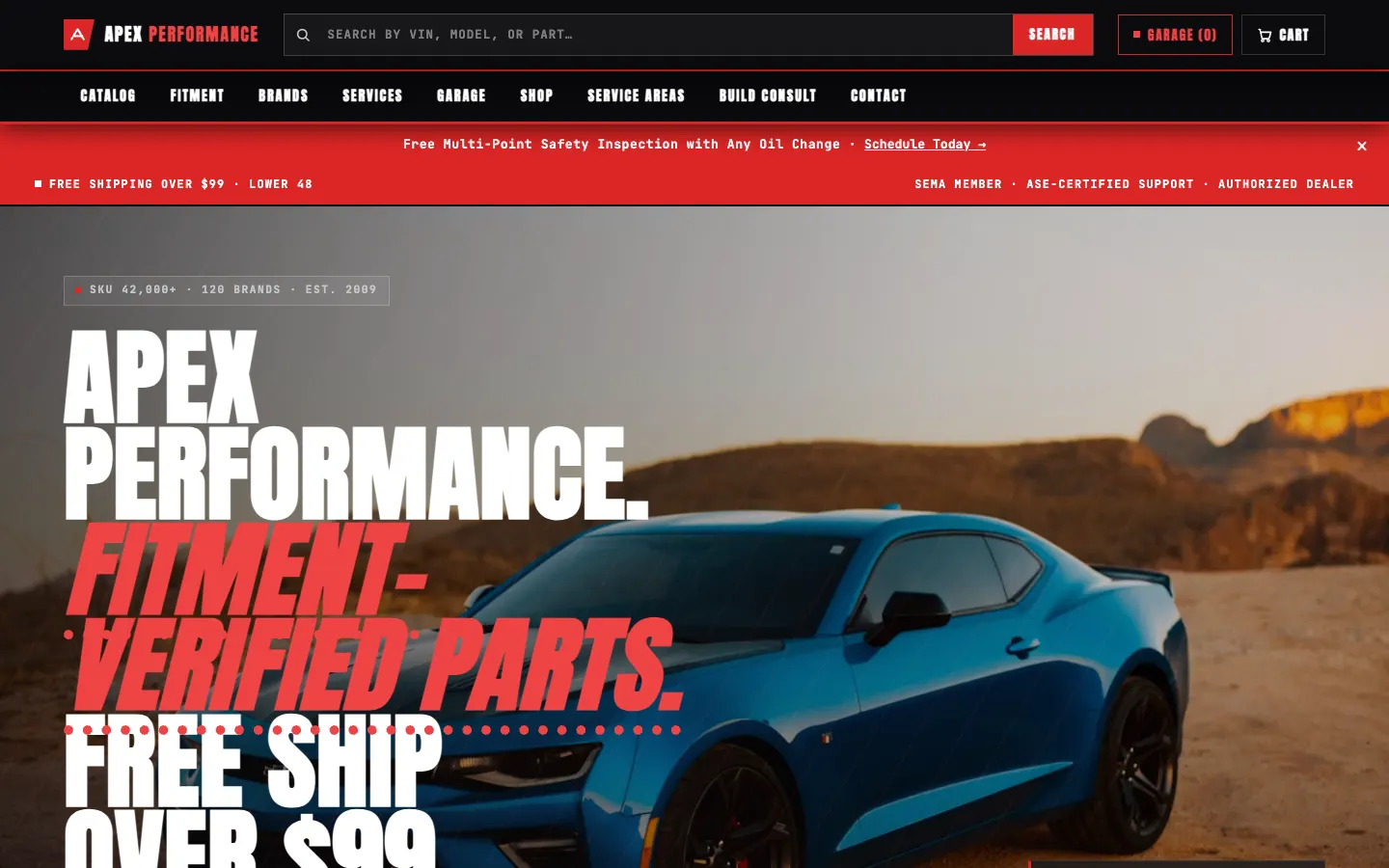
A real site we designed and built, live on the web. This one is our Automotive Parts build. Explore it, then picture it with your services, your photos, and your words.
Automotive Parts Demo
Apex Performance
- VIN-verified fitment catalog display by vehicle make/model
- Product catalog organized by category and application
- Customer build gallery — show car and track builds
- B2C and B2B account options displayed clearly
Questions,
answered.
How long does it take a new parts store to rank on Google?
A technically sound, well-structured catalog can start appearing for specific long-tail fitment terms within weeks, but climbing for competitive category terms is an ongoing effort that compounds over months. We build the foundation on day one and, with a growth campaign, work the rankings continuously rather than treating SEO as a one-time setup.
Does this help me appear in ChatGPT, Perplexity, and Gemini answers?
Yes. Those tools summarize sites that are structured, accurate, and quick to load, and we build to that standard by default. Premium adds an AI Visibility Tracker so the results are measurable, not a guess.
Can I outrank the big marketplaces for my parts?
For broad terms the marketplaces are tough, but they handle specific fitment and enthusiast intent poorly. A specialist catalog with clean product SEO, real install content, and fast pages wins the long-tail searches, and a growth campaign works those rankings continuously.
Ready to get your Performance Auto Parts website built, free?
Annual plan includes a free semi-custom website build: 3 to 12 pages, depending on your plan.
No setup fees · 12-month term, then month-to-month · 30-day money-back guarantee