Growth campaigns · Bike Shop & Repair

Marketing for bike shops and repair workshops

The bike arrived in a box from a direct-to-consumer brand, but the skipping derailleur, the fit that never felt right and the battery that stopped holding charge all end up in your bay. This campaign builds demand around the work that cannot be shipped.

Live Bike Shop & Repair demo

Cog & Cobble Bicycles

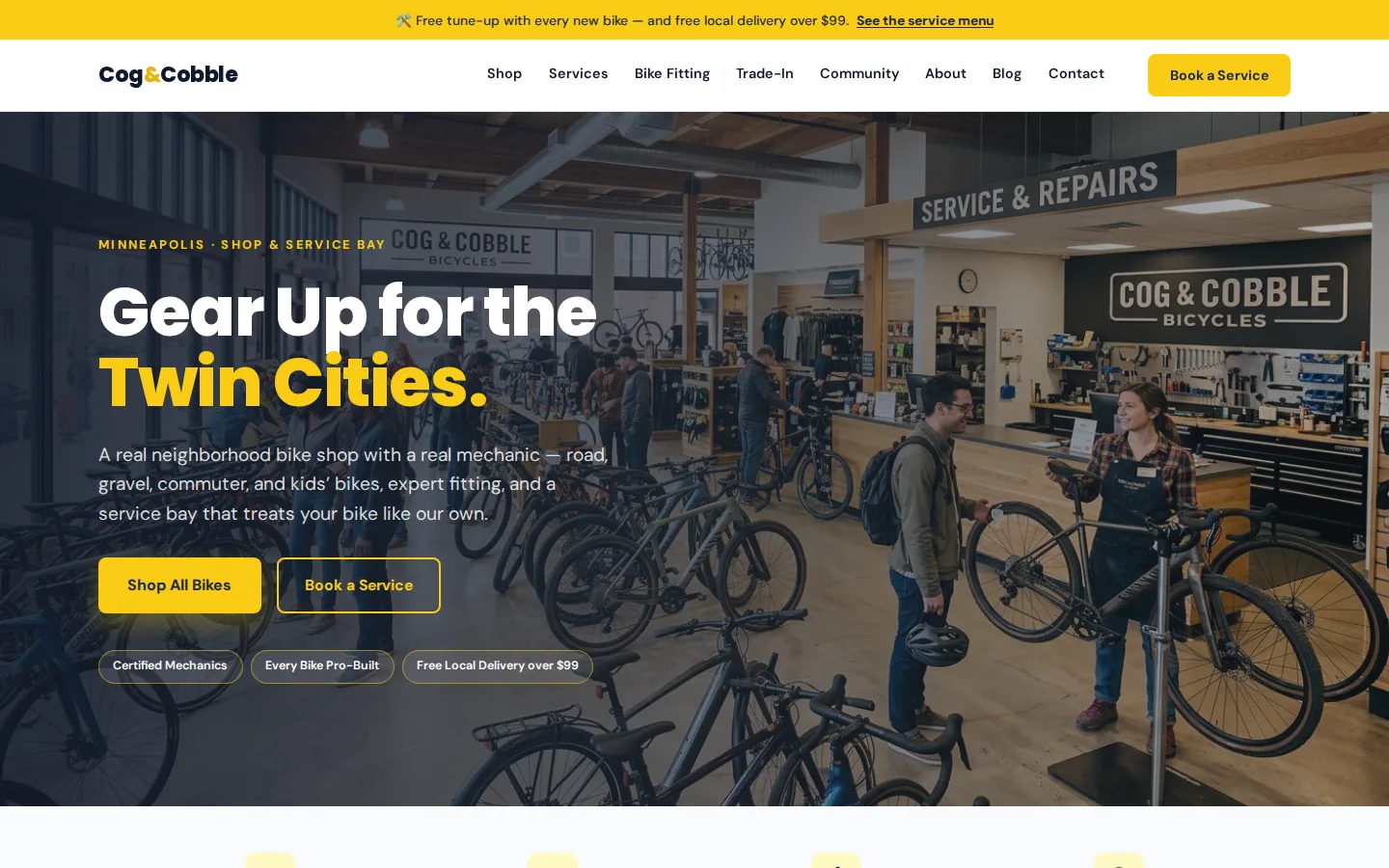
A bold, workshop-warm bike-shop site from Minneapolis, signal yellow on deep slate with a Poppins/DM Sans pairing, built on the brand's own shop photography. Shop-by-category (road / gravel / commuter / kids) with full spec sheets and Product schema, a priced service-bay menu with turnarounds, an interactive booking widget, a professional bike-fitting page, a trade-in flow, weekend group rides, and a working journal.

Shop + Service Bay + Booking Widget + Bike Fitting. Cog & Cobble Bicycles is the pattern in practice: a priced service-bay menu with turnarounds, a fitting page written as a process, and spec-complete product pages that support a test ride rather than replacing it.

Open the live demo → Bike Shop & Repair websites

Cog & Cobble Bicycles — live bike shop & repair website built on WorkspaceCMS
Where the demand is

How bike shop & repair buyers actually search

Two different customers arrive through search here and they behave nothing alike. The service customer is transactional and immediate: a derailleur is skipping, a wheel is out of true, an e-bike will not hold charge, and they are looking for turnaround time and a price before they are looking for a brand. The bike buyer is the opposite, having read reviews and spec sheets for weeks, arriving with a shortlist and a question about sizing that they secretly want a human to settle.

The pressure on the retail side comes from brands selling straight to riders, and it is not going away. Direct-to-consumer pricing is difficult to answer with a price of your own, so shops that hold their ground do it by owning the things that only exist locally: fit, test rides, assembly done properly, warranty handling, and a mechanic who will look at the bike the rider already has. That reframes the whole marketing plan. Retail pages support the visit; service, fitting and community are what actually earn the search.

Seasonality is sharper than most retail categories and it comes in two waves. The first warm weekend of the year produces a flood of neglected bikes and a service backlog that can last a month, and the shops that captured those bookings in advance are the ones that published tune-up pages and pricing weeks earlier. Then there is the newer, steadier wave: e-bikes, which arrive with heavier service needs, battery and motor questions, and owners who have discovered that the online retailer who sold them the bike has no way to fix it.

The keyword clusters we build around

  • Repair and tune-up intentSymptom and job searches with immediate intent. Each tier of service gets a page with what is included, a price and a realistic turnaround, so the rider can decide before calling rather than after waiting on hold.
  • E-bike service and diagnosticsMotor and battery systems by brand, plus owners of online-bought e-bikes with nowhere to go. Say which drive systems you are trained on and which you will not touch, because that is precisely what the search is trying to establish.
  • Bike fittingHigh-value, appointment-based, and searched deliberately after a rider has developed pain or bought a bike that never felt right. A fitting page explaining the process, the time and the outcome converts far better than a line on a services list.
  • Category shoppingRoad, gravel, commuter and kids' bikes, usually with a spec or budget qualifier. These pages support the visit rather than closing a sale online, so test rides, sizing help and assembly quality do the persuading.
  • Trade-in and usedRiders upgrading or offloading, and families sizing up a child. A trade-in path captures inventory and a customer in the same enquiry, and used stock brings in price-sensitive buyers the new range never reaches.
  • Rides and communityGroup ride and route searches look unrelated to revenue and are not. They build the local authority and the repeat foot traffic that make a shop the default, and they generate the local links no paid channel produces.
The campaign

Three ways we go get the traffic

Local SEO, AI-assistant visibility and paid media, run by the agency team that has been doing it since long before WorkspaceCMS existed.

Local SEO

Most shop sites lead with bikes and bury repairs under a Services link, which inverts the actual search demand. The organic plan puts the bay and the fitting studio first: a tiered service menu stating what each tier includes and a realistic in-season turnaround, drive systems named by brand so orphaned e-bike owners can tell whether you will touch theirs, and a fitting page written as a process rather than a line item. Category pages get framed around rider type instead of model number, since model names belong to national retailers. Ride calendars and route guides earn the local links.

AI search visibility

The questions put to ChatGPT and Perplexity in this category are blunt: who services this drive system, what does a tune-up cost near me, who will work on a bike bought online. Answering them requires specifics written down, so service tiers carry prices and turnarounds, supported motor and battery systems are listed by name alongside the ones you decline, product pages carry real spec data, and the online-purchase question is met head on instead of avoided. A shop site that is mostly photography of the shop gets skipped by every assistant.

Paid media

Search demand splits cleanly between a rider whose bike is unrideable today and one who has been reading reviews for a month, and the two want different ads. The bay takes the urgent half: repair, tune-up and e-bike diagnostic terms, tightly geofenced, running hardest through the first warm weekends when every shop in town is backed up. Fitting deserves its own campaign, because that intent arrives after pain rather than after a purchase. Paid social carries the rest, since a workshop bench and a finished build convert better as imagery than as a keyword.

Campaigns are an add-on to a WorkspaceCMS plan and start from $499/mo. The plan itself is a monthly subscription. The build is included, the platform is not free. Local SEO campaigns are scoped to single and multi-location businesses rather than national or global SEO. Paid search management covers service businesses rather than online stores; ad spend is billed by Google or Meta directly to your own account. Full campaign scope → · Plan pricing →

What gets in the way

Six things that hold bike shop & repair sites back

01

Direct-to-consumer brands set the price expectation

A rider comparing your floor price against an online brand is not comparing like for like, but the site has to say so. Pages that spell out assembly, fit, warranty support and the free follow-up service reframe the number without arguing about it, and they give your staff the same words to use in person.

02

The service bay is the business and the site buries it

Most shop sites lead with bikes and hide repairs behind a Services link. That inverts the actual search demand, which is heavily weighted toward repair. A published, priced service menu with turnaround times is usually the single highest-return change a bike shop site can make.

03

The spring backlog is won in winter

When the first warm weekend hits, every shop is full and rankings are irrelevant because nobody can take the work. The bookings that matter were captured weeks earlier through off-season tune-up content and pre-season pricing, which also smooths the workload for the mechanics.

04

E-bike owners arrive orphaned and unqualified

Riders who bought online often need service on systems a shop may not support, and answering that by phone one call at a time wastes a lot of counter time. Stating supported drive systems and battery policies plainly filters the enquiries down to the ones you actually want.

05

Product pages compete with the whole internet

A shop will not out-rank national retailers on a model name, and chasing it wastes the budget. Local qualifiers, in-stock and test-ride language, and category pages built around who the bike suits are where a shop can realistically win the search.

06

Fitting is oversold and under-explained

Riders do not know what a professional fit involves, so they treat it as an upsell rather than the reason their back hurts. A page that walks through the assessment, the adjustments, the time it takes and who genuinely needs one turns a service most shops mention into one people search for by name.

Campaign add-ons

Pick the campaign that fits the market

Every package below is bought from your dashboard once your site is live. Names, prices and deliverables are read from the catalog at page load, so what you see here is what you would be buying.

Questions

Bike Shop & Repair marketing, answered

How do we answer a rider comparing our floor price to an online brand?

Not with a number. The site's job is to make assembly quality, sizing, test rides, warranty handling and the follow-up service visible, so the comparison stops being price against price and starts being what happens after delivery.

Is it worth marketing repairs when spring already backs us up?

That is the argument for it. Off-season tune-up content and pre-season booking move work out of the crush and into the quiet weeks, which suits the mechanics far better than another flood arriving on the first warm weekend.

Should we say which e-bike drive systems we refuse to touch?

Yes, plainly. Riders who bought online have nowhere obvious to go, and answering that one call at a time burns counter hours. Naming the motor and battery systems you support, and the ones you do not, filters enquiries before they reach the phone.

Does a group ride night have anything to do with search?

More than it looks. Ride and route pages pull in local searches nothing else reaches, and they generate links from clubs, event listings and local media that no advertising channel produces, which is what makes a shop the default result.

Why does bike fitting need its own page?

Because riders treat it as an upsell until someone explains it. Walking through the assessment, the adjustments, the time involved and who genuinely needs one turns a service most shops merely mention into one people search for by name.

Your free site is one click away

Ready to grow a bike shop & repair business?

Get the site built, then put a campaign behind it. Start online, or talk it through with a strategist first.

Want the full picture? See what a campaign includes