Growth campaigns · Golf Equipment Retail

Marketing for golf equipment retailers

A golfer can watch every testing video ever made and still not know which shaft suits their swing. That gap is your business. The campaign is built around fitting demand, the release calendar this whole category moves to, and the trade-in that funds the next set.

Live Golf Equipment Retail demo

Fairway & Iron Golf Supply

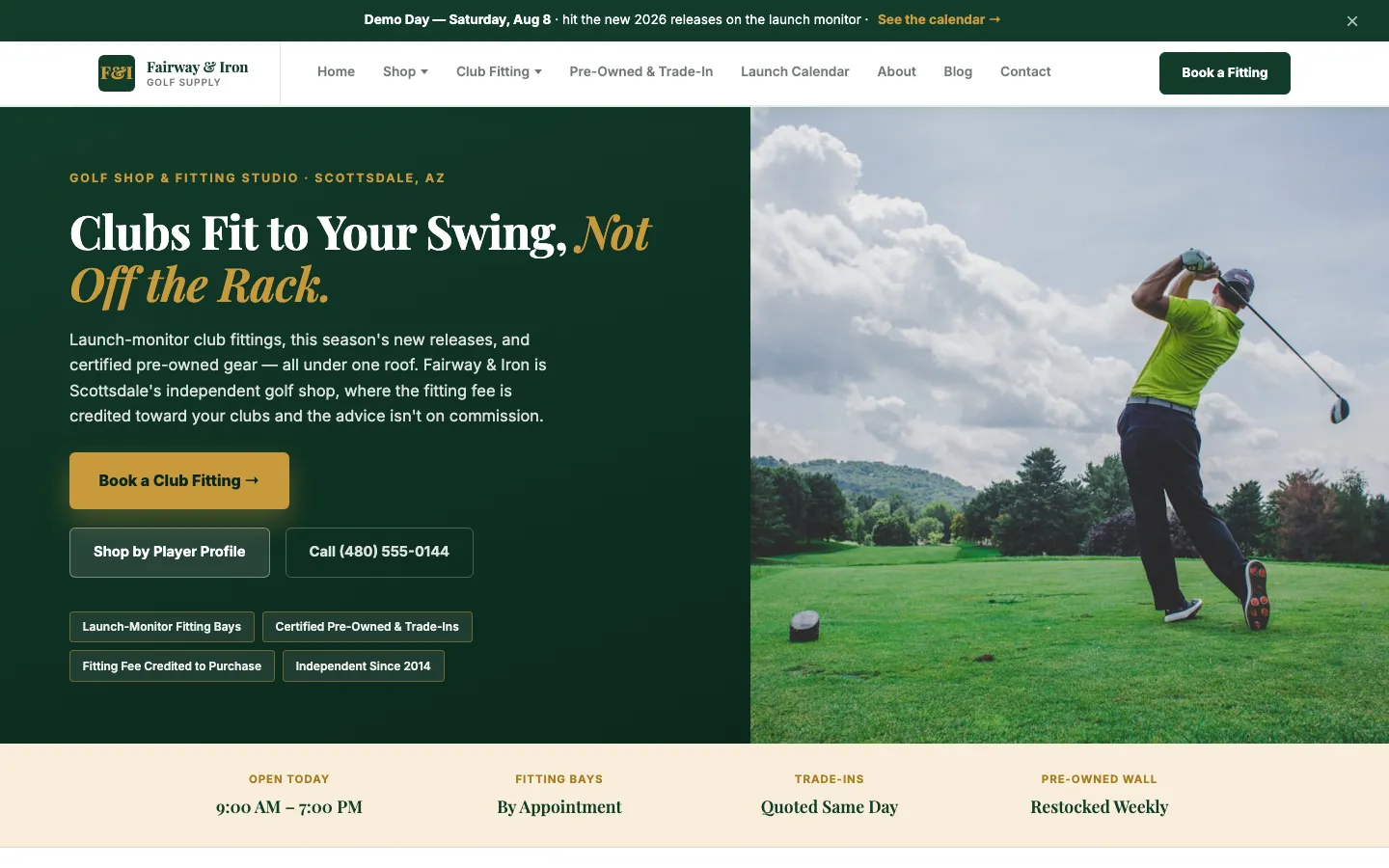
A pine-green-and-brass golf shop site for Scottsdale: a club-fitting booking flow, shop-by-player-profile merchandising, a pre-owned & trade-in quote path, a 2026 launch calendar with demo days, and spec/review-schema product pages.

Club-Fitting Booking + Shop-by-Player-Profile Grid. Fairway & Iron Golf Supply demonstrates the structure this campaign feeds: a club-fitting booking flow front and centre, shop-by-player-profile merchandising, a pre-owned trade-in quote path, and a demo-day calendar built off the release schedule.

Open the live demo → Golf Equipment Retail websites

Fairway & Iron Golf Supply — live golf equipment retail website built on WorkspaceCMS
Where the demand is

How golf equipment retail buyers actually search

Equipment demand in golf follows the manufacturers' release calendar with a precision almost no other retail category has. New drivers and irons land in a predictable window each year, and for several weeks the searches are pure model names, comparisons between two heads, and shaft questions from golfers who have already watched more testing footage than any salesperson has time for. The shops that own that window published their comparison and spec content before the launch, not after the shelves filled.

What a local shop actually sells, though, is the fitting. A golfer can buy a driver anywhere, and increasingly does, straight from the manufacturer. What cannot be bought online is an hour on a launch monitor with someone reading the numbers, and that is where the local search intent concentrates: fitting, lessons, regripping, loft and lie adjustment, a session that turns a browsing golfer into a set order. Framing the shop around fitting rather than around inventory changes both what ranks and what walks through the door.

The trade-in path deserves its own attention because it is the quiet engine underneath the category. Golfers upgrade constantly and finance the upgrade with what they already own, so a quote path for used clubs pulls in sellers, inventory and buyers at the same time. Layer on the seasonal shape, a spring surge as courses open, a gifting crush in December, demo days and outings through the summer, and the calendar practically writes the content plan. The competition is big-box golf retail, the manufacturers selling direct, and used marketplaces, none of which can hand a golfer a fitted club that afternoon.

The keyword clusters we build around

  • Club fittingThe highest-value local search in the category and the least replicable online. A fitting page should explain the session, the technology, what the golfer walks away with and how the fee is handled against a purchase.
  • Launch and model comparisonModel-name and head-to-head searches concentrated into narrow release windows. Comparison and spec content published ahead of a launch captures attention that arrives all at once and disappears just as fast.
  • Player-profile shoppingGolfers self-describe by handicap, swing speed and miss pattern before they know what they want. Merchandising by player profile matches how they actually search and gives the site pages that a national retailer's category tree does not have.
  • Trade-in and pre-ownedSellers looking for a value and buyers looking for last season's model at a better number. A quote path serves both, brings in inventory, and captures a customer at the exact moment they are planning an upgrade.
  • Service and quick jobsRegripping, shaft swaps, loft and lie work, lie board sessions. Small tickets with immediate intent that bring golfers into the shop repeatedly and give you a reason to be found between purchases.
  • Demo days and eventsEvent searches with a date attached, plus the manufacturer's own audience looking for where to try the new range locally. Event pages published early rank for the season and then feed the fitting calendar afterwards.
The campaign

Three ways we go get the traffic

Local SEO, AI-assistant visibility and paid media, run by the agency team that has been doing it since long before WorkspaceCMS existed.

Local SEO

Nothing in this category ranks in time unless it is written before the manufacturers announce. Comparison and spec content for a new head or shaft has to exist the week a range is revealed, because the searches arrive at once and are gone by the time stock lands. Around that sits the steady base: a fitting page explaining the session and what the golfer walks out with, quick-job pages for regripping and loft and lie work, and merchandising by player profile, handicap, swing speed, miss pattern, which is how golfers describe themselves and which no national category tree mirrors. Demo day pages rank early and feed the fitting book afterwards.

AI search visibility

What suits a swing speed like mine, how do these two irons actually differ, where can I get fitted locally: assistants answer this category constantly, and ChatGPT and Google AI Overviews reach for pages carrying lofts, lie angles, shaft options, head weights and stock grips as marked-up data. Supplier feeds rarely include any of it. Comparisons that state a trade-off, and say who a club is wrong for, get quoted far more readily than pages praising everything in the rack, and a fitting page explaining how the fee is credited gives an assistant something concrete to repeat.

Paid media

Timing does more work than budget here. Auctions on a new model name are contested by the manufacturer, the big-box chains and the used marketplaces from the day of the announcement, so effort concentrates on what a golfer can only get within driving distance: fitting appointments, lessons, demo days on the local range, and trade-in quotes as courses open in spring and again through the gifting run. Paid social suits demo days particularly, because the sell is a date and a venue, and a launch monitor on video explains the offer faster than any headline.

Campaigns are an add-on to a WorkspaceCMS plan and start from $499/mo. The plan itself is a monthly subscription. The build is included, the platform is not free. Local SEO campaigns are scoped to single and multi-location businesses rather than national or global SEO. Paid search management covers service businesses rather than online stores; ad spend is billed by Google or Meta directly to your own account. Full campaign scope → · Plan pricing →

What gets in the way

Six things that hold golf equipment retail sites back

01

Manufacturers sell direct and control the launch narrative

Brand sites, their fitting locators and their launch campaigns dominate every model search for the first weeks. A shop cannot outrank them for the model name alone. It can own the local qualifier, the comparison content and the fitting availability, which is what the golfer is looking for once the brand page has done its job.

02

Fitting is treated as a fee instead of the product

Golfers hesitate at a fitting charge because nothing explains what it buys. Describing the session, the data captured, the adjustments made and how the fee works against a purchase turns the fitting from a barrier into the reason to choose you over an online order.

03

The calendar is brutally compressed

Release windows, the spring opening and the gifting run each concentrate a lot of demand into a short period. Content and campaigns planned reactively always land after the peak. The plan has to be built backwards from the manufacturer calendar and the local course opening dates.

04

Big-box retail owns generic category search

National chains and marketplaces will hold the broad equipment terms indefinitely. Spending against them is wasted. The realistic territory is fitting, local demo days, trade-in quotes, service work and player-profile merchandising, all of which reward specificity over domain strength.

05

Product pages ship without the data golfers want

Golfers compare lofts, lie angles, shaft options, head weights and stock grips. Pages built from a supplier feed rarely include them, which loses both the reader and the structured data that search and assistants rely on. Complete, honest spec pages are a competitive advantage in a category this technical.

06

Trade-in enquiries stall for want of a process

Golfers want a number before they carry a bag across town. Without a quote path they use a marketplace instead and you lose the inventory and the upgrade together. A structured quote flow with condition and model captured up front converts sellers who would otherwise never have called.

Campaign add-ons

Pick the campaign that fits the market

Every package below is bought from your dashboard once your site is live. Names, prices and deliverables are read from the catalog at page load, so what you see here is what you would be buying.

Questions

Golf Equipment Retail marketing, answered

When does content for a new release need to be live?

Before the announcement, ideally. The searches spike the week a range is revealed and fade quickly, so comparison and spec pages published once stock arrives collect what is left over rather than the wave itself.

Should the fitting fee be shown on the site?

Yes, together with how it credits against a purchase. The fee is the thing golfers hesitate over, and explaining it plainly removes the hesitation while filtering out browsers who were never going to book a session anyway.

Why merchandise by handicap and swing speed instead of by brand?

Because that is how golfers describe themselves before they know what they want. Brand and category trees already belong to national retailers, whereas a page built for a slower swing with a persistent slice matches both the search and the fitting-bay conversation.

Is a trade-in quote path really worth building?

It brings sellers, used inventory and upgrade buyers through one form. Without it a golfer takes the old set to a marketplace, and you lose both the stock and the customer who was about to spend on a new one.

Can a shop compete with the manufacturer's own fitting locator?

Not for the brand name, but the locator only tells a golfer that fitting exists somewhere nearby. Availability this week, who reads the numbers back to them, and which brands you can put side by side in one session are things it cannot answer.

Your free site is one click away

Ready to grow a golf equipment retail business?

Get the site built, then put a campaign behind it. Start online, or talk it through with a strategist first.

Want the full picture? See what a campaign includes