
Growth campaigns · Performance Auto Parts

Website Marketing for Performance Auto Parts Retailers

A builder types a chassis code, a year range and a component, then decides inside a sentence whether your page understands their car. Get that sentence right and you have not won an order, you have won someone who buys in stages across a whole build.

Live Performance Auto Parts demo

Apex Performance

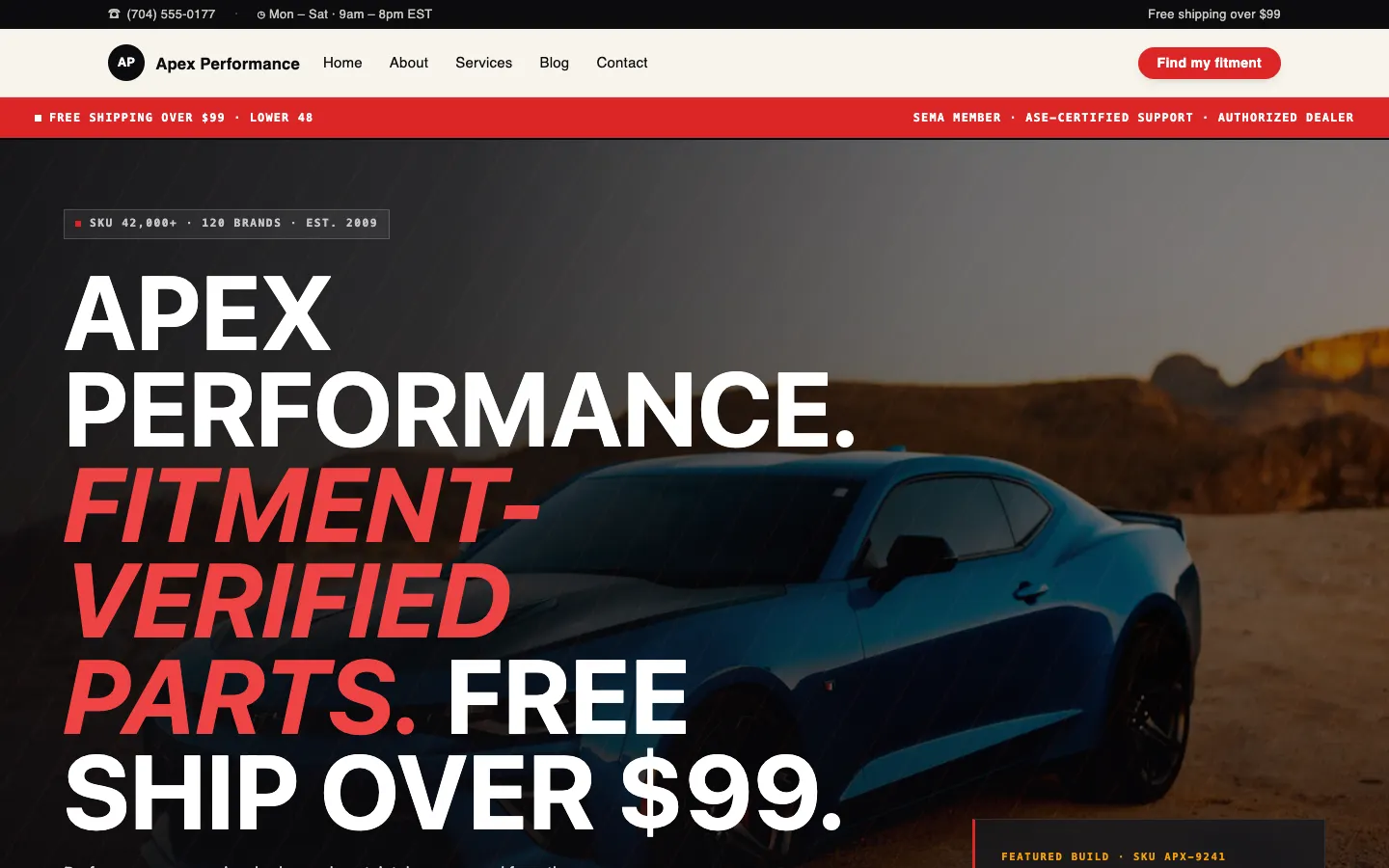
Charlotte e-commerce for fitment-verified performance parts: VIN lookup, free shipping ladder, install-shop locator.

VIN-Verified Fitment. Apex Performance shows the target: chassis-level fitment stated in text, install notes living on the product page, and a shop locator that turns a national parts search into a local booking.

Open the live demo → Performance Auto Parts websites

Apex Performance — live performance auto parts website built on WorkspaceCMS
Where the demand is

How performance auto parts buyers actually search

Nobody searching for performance parts types a generic phrase. They type a platform, a generation and a component, sometimes with a trim code or an engine designation attached, because a part that fits the wrong sub-model is a return and a lost weekend. Fitment confidence, not price, decides the click. That single behavior explains why a well-built fitment layer outperforms almost any other investment in this category, and why the site's quality is judged in the first sentence of a product page.

The sales cycle is longer and stranger than most retail. A build gets planned across forum threads, install videos and a spreadsheet before a single order goes in, then arrives as several purchases over months from a customer who is fiercely loyal once a part has landed and fit. So the content that earns the sale is rarely the product page alone; it is the stage-by-stage build guide, the honest note about what else has to change when you go bigger, and the compatibility caveat a competitor left out.

Seasonality follows the driving and event calendar. Track and autocross season pulls suspension and braking demand up in spring, refund season funds a lot of builds, and the fall trade-show cycle floods the market with new part releases that generate searches before anyone has published a real page about them. Meanwhile the giant catalog retailers and the marketplaces sit on every broad term, so the ground worth taking is platform-specific depth and the local install network you can point people at.

The keyword clusters we build around

  • Platform and generation fitmentYear, make, model and engine code queries paired with a part type. These need pages that state compatibility explicitly rather than hiding it in a selector widget.
  • Stage and build-pathSearches about what to do first, what pairs with what, and what supporting mods a part demands. These build trust ahead of the transaction.
  • Brand and part-lineShoppers loyal to a specific manufacturer or product line. Brand pages that carry real application data outrank thin brand landing pages.
  • Install and tuning localitySearches for a shop that will actually fit the part, or a tuner for the platform. The install-shop locator turns a national product search into a local relationship.
  • Comparison and troubleshootingHead-to-head part questions and problem-driven searches like noise, fitment interference or tune requirements. Long-tail, high intent, and rarely answered well.
The campaign

Three ways we go get the traffic

Local SEO, AI-assistant visibility and paid media, run by the agency team that has been doing it since long before WorkspaceCMS existed.

Local SEO

Compatibility has to escape the year-make-model dropdown and land in the page text, because a selector that fires after load is invisible to the search that sent the visitor. Everything you carry for a chassis gathers onto one platform page, brand and part-line pages get real application data instead of a logo wall, and the stage guides admit what else has to change once fueling, cooling or drivetrain becomes the limit. The install-shop locator then earns a page per market, which is the local advantage a marketplace structurally cannot copy.

AI search visibility

Will this fit my car is one of the most common questions put to ChatGPT and Claude, and the answer gets assembled from whatever a retailer stated outright. Fitment therefore gets written as sentences, required supporting modifications get listed rather than implied, torque figures and install notes go into text instead of a downloadable PDF, and core charges, warranty terms and oversized freight get plain answers. The pages that get quoted are the ones carrying the caveat the manufacturer blurb left out, because the caveat is what the question was really about.

Paid media

Paid social is where this category actually breathes. Build footage, a fitment walkthrough shot under a lift, an install time-lapse and honest before-and-after driving impressions travel further than any product photograph, and they let you target by chassis community rather than by generic auto-parts interest. The creative calendar tracks the show season, when a part is announced and search interest appears before anybody has published a real page, and the spring run-up when suspension and braking demand climbs. The install network gives you a second lane aimed squarely at buyers who cannot fit the part themselves.

Campaigns are an add-on to a WorkspaceCMS plan and start from $499/mo. The plan itself is a monthly subscription. The build is included, the platform is not free. Local SEO campaigns are scoped to single and multi-location businesses rather than national or global SEO. Paid search management covers service businesses rather than online stores; ad spend is billed by Google or Meta directly to your own account. Full campaign scope → · Plan pricing →

What gets in the way

Six things that hold performance auto parts sites back

01

Fitment locked inside a selector widget

If compatibility only exists inside a dropdown that fires after page load, no search engine ever reads it. The platforms and year ranges a part fits belong in the page text, where they can be matched to the way people actually search.

02

Product pages that copy the manufacturer's blurb

Every retailer carrying that part pasted the same paragraph. Nothing differentiates the page, so the marketplaces win by authority. What differentiates is your own install notes, torque specs and the sentence about what else has to change.

03

Build guides that stop at the easy stage

Bolt-on content is everywhere. The content nobody writes covers what happens at the next stage, where fueling, cooling or drivetrain limits start to matter, and that is exactly what a serious builder searches for.

04

An install network you never made searchable

Buyers who cannot fit a part themselves search for someone who can. A shop locator that exists as a page per city turns fitment traffic into a local advantage that a national catalog cannot copy.

05

New releases with no page until the reviews land

A part gets announced at a trade show and search volume appears immediately. If your page goes up weeks later, the position is already gone to whoever published on announcement day.

06

Returns driven by ambiguity, not by product

Vague compatibility copy generates orders that come straight back, and each one costs shipping twice. Precise fitment language on the page is a marketing job and a margin job at the same time.

Campaign add-ons

Pick the campaign that fits the market

Every package below is bought from your dashboard once your site is live. Names, prices and deliverables are read from the catalog at page load, so what you see here is what you would be buying.

Questions

Performance Auto Parts marketing, answered

Our product copy comes from a supplier feed. Will those pages ever rank?

Not on their own, because every retailer carrying that part pasted the identical paragraph and nothing distinguishes yours. The pages that move are the ones carrying something you added: fitment in your own words, install notes, the supporting modifications the part demands, and photographs of it actually mounted on a car.

A part was just announced at a trade show. When should the page go live?

On announcement, not on arrival. Search interest for a new part name appears the week it is shown, and a page that exists while people are searching it for the first time holds position far more easily than one published after the reviews land and the position is gone.

How do we cut returns caused by fitment confusion?

By writing compatibility precisely enough that an ambiguous order never gets placed. Vague copy produces orders that come straight back and cost freight twice, so the fitment language on the page is a margin decision as much as a marketing one, especially on sub-model and trim-specific parts.

Do we really need pages for the shops that install what we sell?

Yes, because a large share of buyers cannot fit the part themselves and search for someone who can. A locator with a page per market converts a national parts search into a local relationship, and it is the one thing a marketplace listing has no way of offering.

Should we publish build guides that tell people to spend money elsewhere first?

Absolutely, because that is the content nobody writes and exactly what a serious builder searches for. Explaining that the next stage needs fueling or cooling before it needs your part earns the trust that makes you the default supplier for every stage that follows.

Your free site is one click away

Ready to grow a performance auto parts business?

Get the site built, then put a campaign behind it. Start online, or talk it through with a strategist first.

Want the full picture? See what a campaign includes